Why Are My Tomato Leaves Turning Purple?
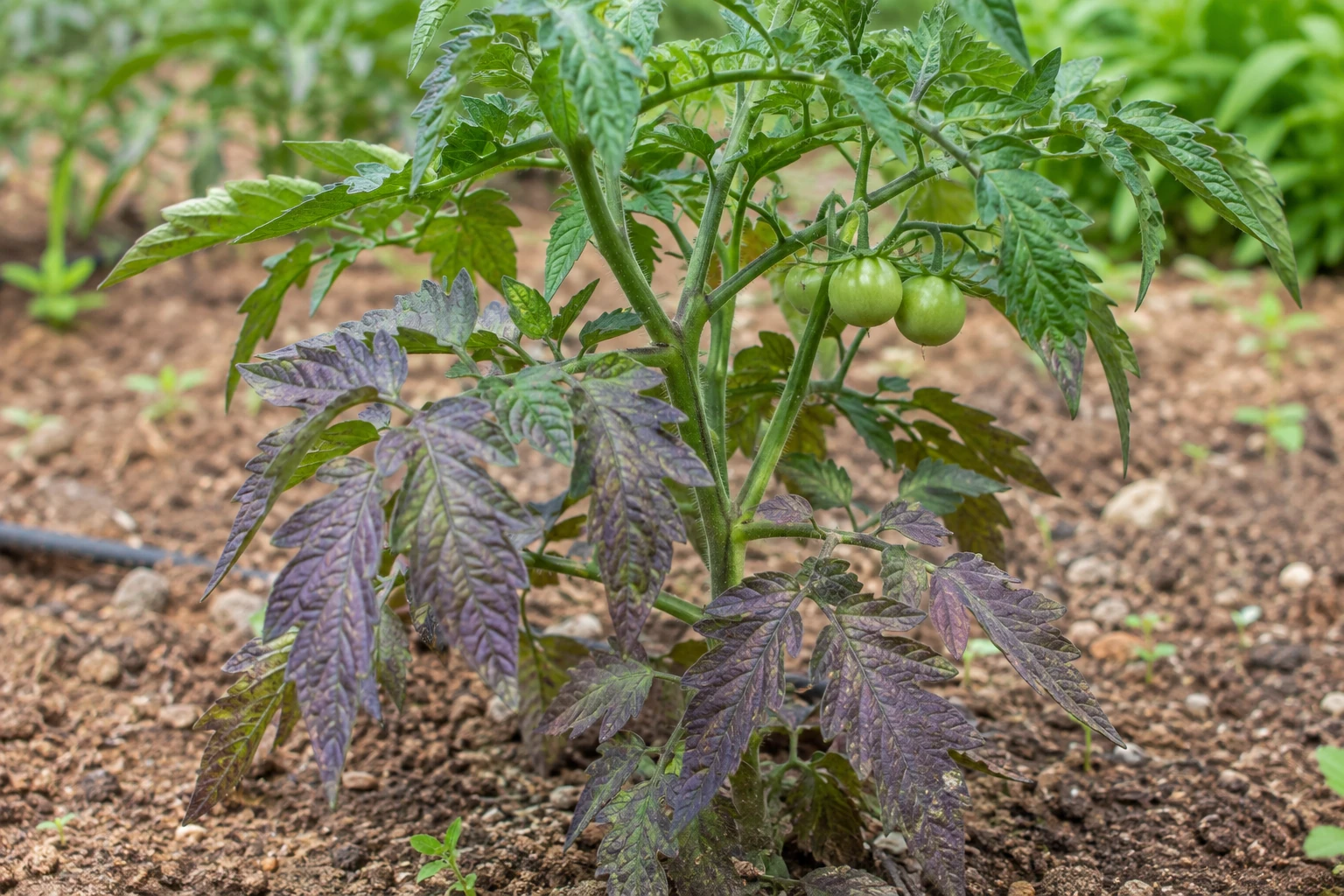
A purple tint on tomato seedlings can follow cool growing conditions without indicating a shortage of phosphorus in the soil. Assess root temperature and growth rate before buying a corrective fertilizer.
Compare New Growth as the Soil Warms
If the plant resumes strong growth under warmer conditions, an uptake limitation may have been temporary. Some cultivars also show more purple pigmentation than others. A color change alone is less compelling than persistent stunting combined with a compatible soil-test result.
| What you notice | Likely cause | What to do |
|---|---|---|
| Purple tint after cool nights | Cold-related phosphorus stress | Wait for warmer soil and protect young plants from chill |
| Slow growth and dark foliage | Nutrient uptake problem | Check soil temperature, drainage, and balanced feeding |
| Purple undersides on a vigorous plant | Normal variety trait | Monitor growth before treating |
| Purple leaves with soggy soil | Root stress | Improve drainage and avoid overwatering |
Check the weather first
Tomatoes dislike cold soil. When roots stay cool, they may not take up phosphorus efficiently even when the nutrient is present in the soil.
Look at overall growth
A healthy plant that only shows mild purple tones may simply be reacting to temperature. A stunted or stalled plant deserves closer attention.
Avoid overcorrecting with fertilizer
Adding more fertilizer does not always fix the issue. If the real problem is cold soil or damaged roots, extra feeding can make stress worse.
Support recovery
Protect seedlings from unsuitable cold, maintain appropriate moisture, and watch growth as the root zone warms. Dark plastic can warm soil under suitable conditions; a heavy organic mulch may keep spring soil cooler.
Avoid a Blanket Phosphorus Addition
Adding nutrients cannot warm cold roots or repair waterlogged tissue. Excess phosphorus can accumulate in soil and is not justified simply by leaf color. Review the potting mix or soil test and fertilizer history before supplementing a nutrient that may already be present.
Compare purple coloring with the actual growth rate over several days. Some seedlings keep a mild purple underside while producing compact healthy new leaves. Others stall because cold wet conditions impair root function. Those plants need environmental correction before a nutrient experiment. A seed-starting mix with known fertilizer content provides useful context that color alone cannot supply.