Yellow Tomato Leaves: Read the Pattern Before Treating
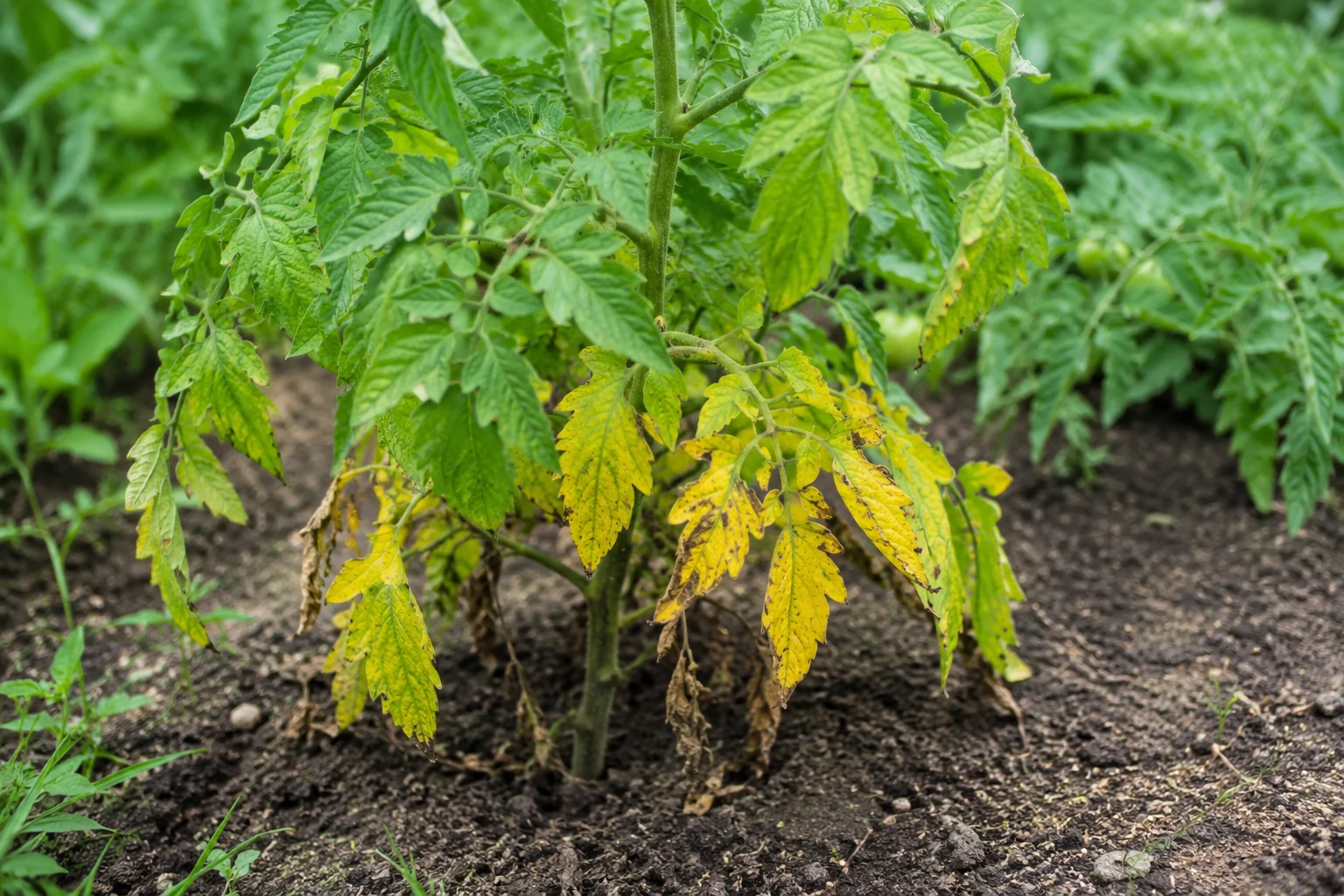
A yellow lower leaf and a pale growing tip tell different stories on a tomato plant. Compare their position, the moisture around the roots, and any spots before deciding whether the plant needs water, nutrients, or disease management.
Compare Three Leaves From Different Heights
Choose an old leaf near the soil, a middle leaf, and one near the growing tip. Uniform paling of older foliage differs from yellow tissue between green veins. Photograph the same leaves so spreading lesions are easier to distinguish from slow aging. One-sided wilt or dark stem tissue warrants a plant-clinic diagnosis; a stem inspection alone cannot establish which pathogen is present.
| What you see | Most likely clue | What to check next |
|---|---|---|
| Oldest leaves yellow first; plant otherwise healthy | Aging or nitrogen stress | Check new growth, overall vigor, and fertilizer history |
| Yellow leaves + soggy soil | Overwatering/root stress | Pause irrigation and check drainage |
| Yellow between green veins on older leaves | Possible magnesium imbalance | Review pH and soil test |
| Yellowing + brown/black spots | Leaf disease | Inspect lesion pattern and remove affected foliage |
| Yellowing + wilt on one side | Fusarium/Verticillium possible | Check lower stem vascular tissue |
Natural Aging of Lower Leaves
If one or two of the oldest leaves near the soil line turn yellow while the rest of the plant is vigorous, the plant may simply be shedding shaded, inefficient foliage. Remove leaves that are fully yellow, especially if they touch the soil, and keep watching new growth. Widespread yellowing is not normal aging.
Too Much Water or Poor Drainage
Tomato roots need both water and oxygen. Soil that stays saturated can make the plant look hungry even when nutrients are present because stressed roots cannot function normally. Check the soil several inches down before watering again. If it is wet and heavy, let it drain and correct drainage problems rather than watering on a fixed calendar.
Too Little Water and Heat Stress
Drought stress may start as drooping and progress to yellow or scorched foliage. Deep watering at the root zone is more useful than frequent light sprinkling. A mulch layer can reduce moisture swings and help moderate hot soil.
Nitrogen Deficiency
Nitrogen is mobile inside the plant, so deficiency often appears first on older leaves as an overall pale green-to-yellow color. Do not assume nitrogen is the cause from color alone. If growth is slow and the whole plant is pale, review your fertilization history and use a soil test when possible before adding more nitrogen.
Magnesium or Other Nutrient Imbalances
Older tomato leaves can develop interveinal chlorosis—yellow tissue between greener veins—when magnesium is limited or unavailable. Nutrient uptake can also be disrupted by pH, root damage, or an imbalance of other minerals. Correct the underlying soil issue instead of repeatedly adding single nutrients without a diagnosis.
Fungal or Bacterial Leaf Disease
Yellowing accompanied by brown spots, target-like rings, black specks, or rapidly expanding lesions is more suspicious for disease. Remove badly affected lower leaves, avoid splashing soil onto foliage, improve airflow, and identify the disease before choosing any labeled treatment.
Fusarium or Verticillium Wilt
When yellowing begins on lower leaves and is followed by wilting—sometimes more strongly on one side of the plant—soil-borne vascular wilts become a concern. Cutting a lower stem lengthwise may reveal brown or tan vascular tissue. Infected plants generally do not recover reliably; resistant varieties and rotation are better long-term tools.
Transplant or Root Stress
Newly transplanted tomatoes may yellow temporarily after root disturbance, cold soil, or abrupt sun exposure. If the growing tip remains healthy and new leaves emerge normally, give the plant consistent care and avoid over-correcting with fertilizer.
How to Fix Yellow Tomato Leaves Step by Step
- Identify whether yellowing starts on old leaves, new leaves, or the whole plant.
- Check soil moisture 2–3 inches below the surface.
- Inspect both sides of leaves for spots, insects, webbing, or distortion.
- Look at recent weather: heat, cold, heavy rain, drought, and transplant timing matter.
- Review fertilizer use and soil-test information.
- Remove fully yellow or diseased lower foliage with clean pruners.
- If wilt and vascular discoloration are present, treat the plant as a possible soil-borne disease case rather than a simple nutrient problem.
What Improvement Actually Looks Like
Correcting irrigation may stop further yellowing without restoring damaged leaves. Look for healthy expanding foliage and a canopy that holds its posture through cooler hours. Keep enough green leaf area to shade developing tomatoes, rather than stripping the plant every time another lower leaf fades.
Should I remove yellow leaves from my tomato plant?
Yes, remove leaves that are fully yellow, diseased, or touching the soil. Leave partially green leaves if they are still contributing to the plant and do not show disease.
Will Epsom salt fix yellow tomato leaves?
Only when a magnesium problem is actually present. Routine Epsom salt use can create nutrient imbalance, so diagnose first and use a soil test when possible.