How to Harden Off Tomato Seedlings
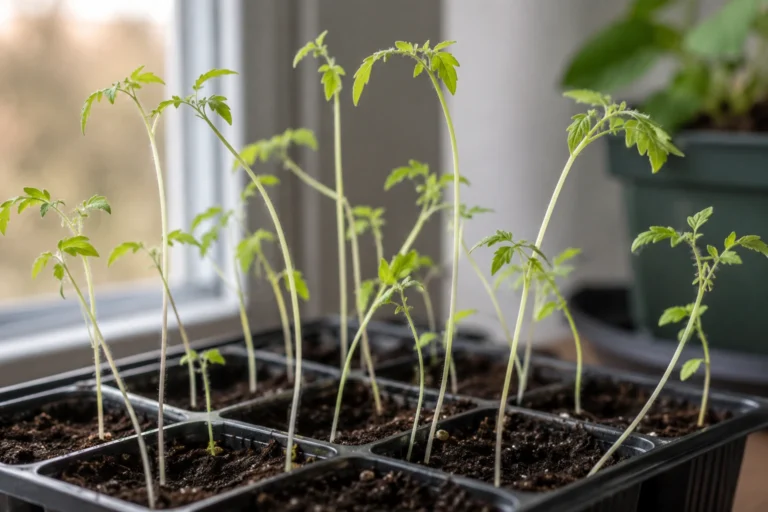
Tomato seedlings raised indoors need a gradual transition to direct sun and outdoor air movement. A flexible sequence based on weather works better than completing a fixed calendar regardless of leaf response.
Simple Hardening-Off Plan
| Day range | Outdoor exposure | Goal |
|---|---|---|
| Days 1–2 | 1 to 2 hours in bright shade | Introduce cooler air and gentle breeze |
| Days 3–4 | 2 to 4 hours with morning sun | Start light adaptation |
| Days 5–7 | Longer outdoor time with more sun | Build tolerance gradually |
| Days 8–10 | Most of the day outside if weather is mild | Prepare for transplanting |
Start in Bright Shelter and Increase Exposure
Begin with a short period in protected bright shade, then add mild morning sun and longer outdoor time. Strong wind and intense midday sun can overwhelm tender tissue. Bring seedlings back to protection when cold conditions threaten rather than using exposure as a toughness test.
Start in a protected spot
Choose a calm area with bright shade for the first outings. Avoid strong wind and intense afternoon sun right away.
Increase time gradually
Add a little more outdoor time every day. The goal is steady adaptation, not a sudden test of survival.
Keep the soil lightly moist
Small cells and pots dry quickly outdoors. Water when needed, but do not leave seedlings sitting in soggy trays.
Delay if weather turns rough
Cold nights, strong wind, or heavy rain can set seedlings back. Bring them in when conditions are harsher than they can handle.
Slow Down if Leaves Bleach or Stay Limp
Light injury will not vanish from an old leaf. Pause at a gentler exposure level while checking moisture and healthy new growth. Plant out after conditions are suitable and the seedlings hold their posture; hardening off does not make tomatoes frost-hardy.
A hardening-off period also changes water use: outdoor breeze and sun can dry a small seedling pot rapidly. Check moisture before and after each exposure without keeping the medium saturated overnight. Group plants where they remain sheltered from sudden gusts. The useful endpoint is a plant adapted to the expected planting conditions, not simply a counted number of days outdoors.