Houseplant Root Rot: Inspect Firm Tissue and Reset the Pot
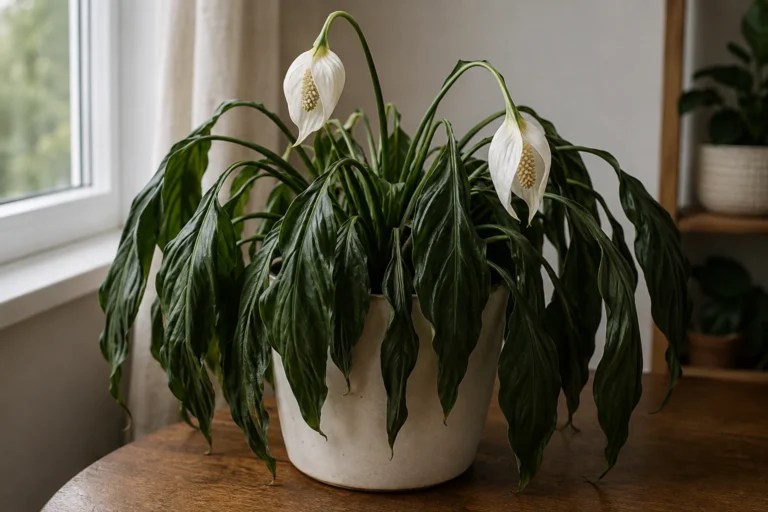
Root rot cannot be confirmed from yellow leaves alone. Unpot a declining plant when symptoms and persistently wet mix justify it, then judge roots by firmness and tissue integrity.
Dark Roots Are Not Automatically Rotten
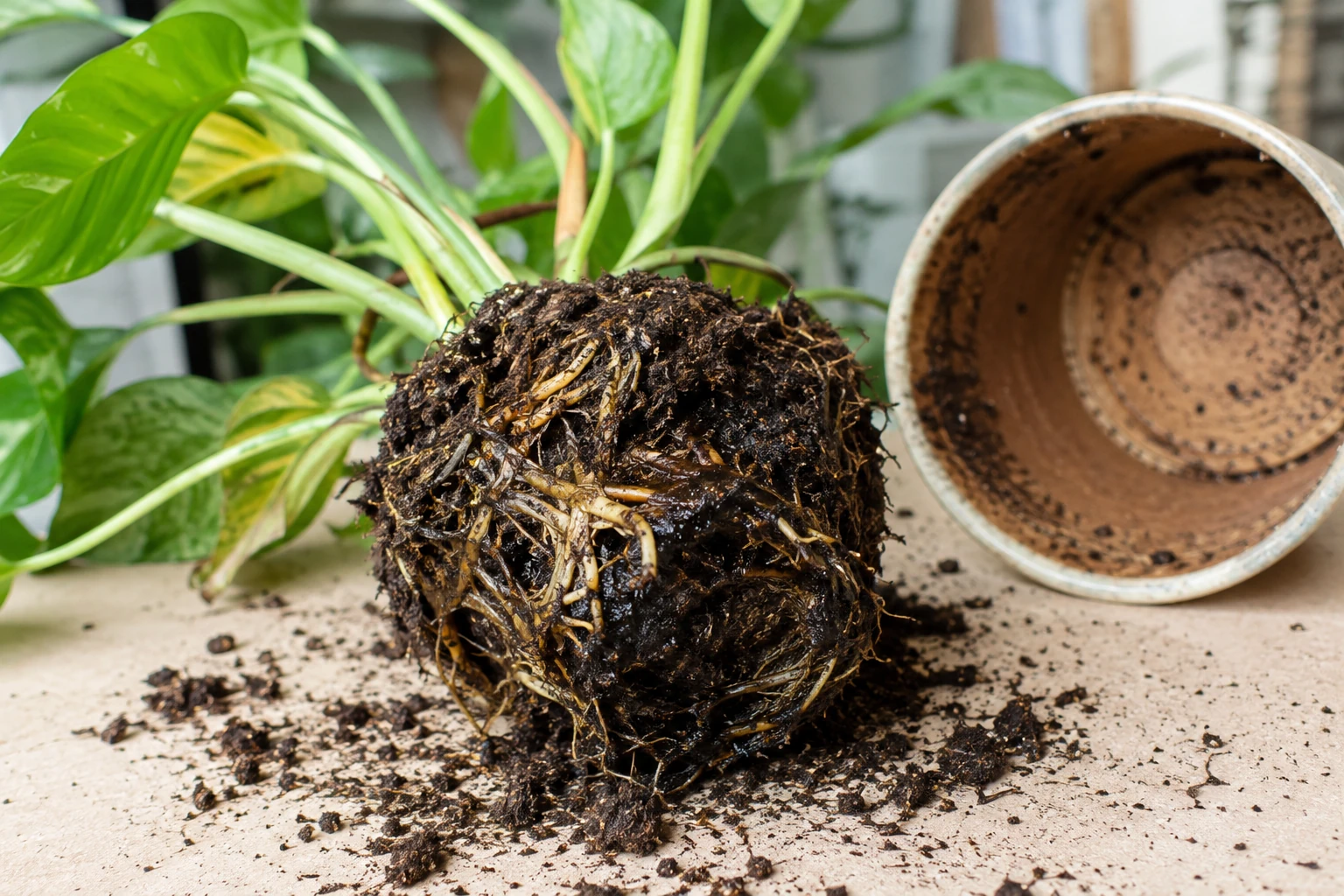
Healthy roots vary in color by species and growing medium. A root whose outer tissue slips off or feels soft is more concerning than a firm brown root. Preserve sound roots and remove clearly decayed portions with clean tools rather than cutting every nonwhite root away.
Look at the Root Ball, Not Just the Leaves
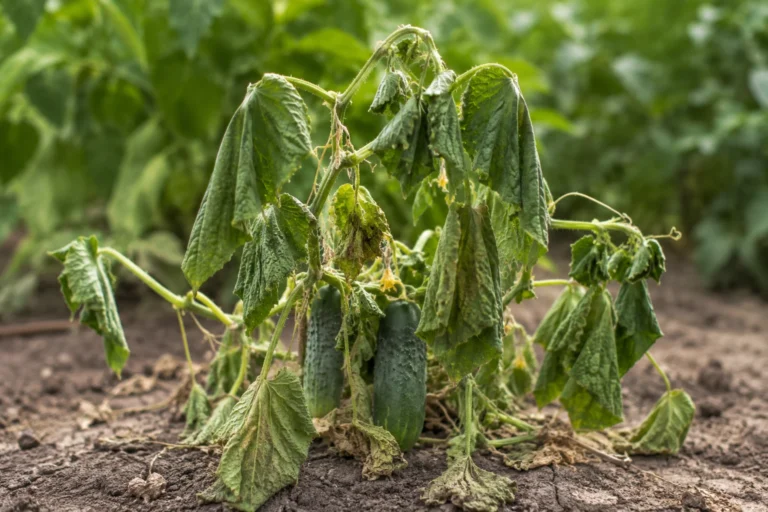
Many root-rot symptoms imitate underwatering or nutrient problems. The only reliable way to confirm it is to inspect the root zone.
| What you see | Most likely clue | What to do first |
|---|---|---|
| Wet soil plus drooping | Root stress or rot | Unpot and inspect roots |
| Black mushy roots | Active root rot | Trim damaged roots |
| Brown but firm roots | Not all brown roots are rotten | Check texture, not just color |
| Repeated yellowing after watering | Chronically saturated mix | Repot into better-draining soil |
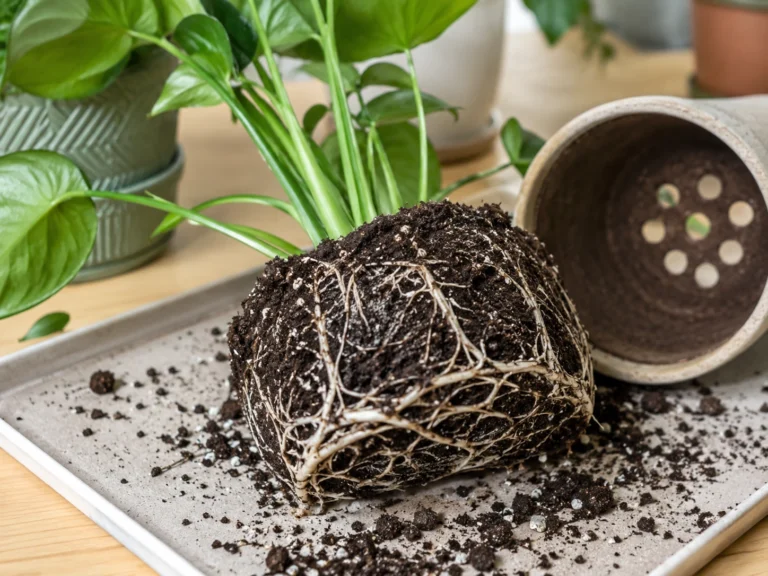
Remove the plant from the pot
Gently shake away loose soil and inspect the roots. Healthy roots are generally firmer; rotten roots are often dark, mushy, and may shed their outer layer.
Trim damaged roots
Use clean tools to remove obviously rotten roots. Leave as much healthy tissue as possible.
Repot into a better-draining mix
Choose a pot with drainage and a fresh, airy potting mix suited to the plant. Avoid oversized pots, which stay wet longer than needed.
Reset the watering routine
After repotting, water enough to settle the mix and then allow appropriate drying time before watering again. Future recovery depends on not repeating the original conditions.
Inspect, trim, repot, and simplify aftercare. Give the plant bright indirect light and stable warmth while it regrows roots.
Match the Recovery Pot to the Remaining Roots
After root loss, the plant may need a smaller effective root volume rather than a bigger container. Use fresh species-appropriate mix and drainage. Recovery watering must fit the remaining root system; a severely reduced plant will not use moisture at its former rate.