Why Are My Pepper Plants Wilting?
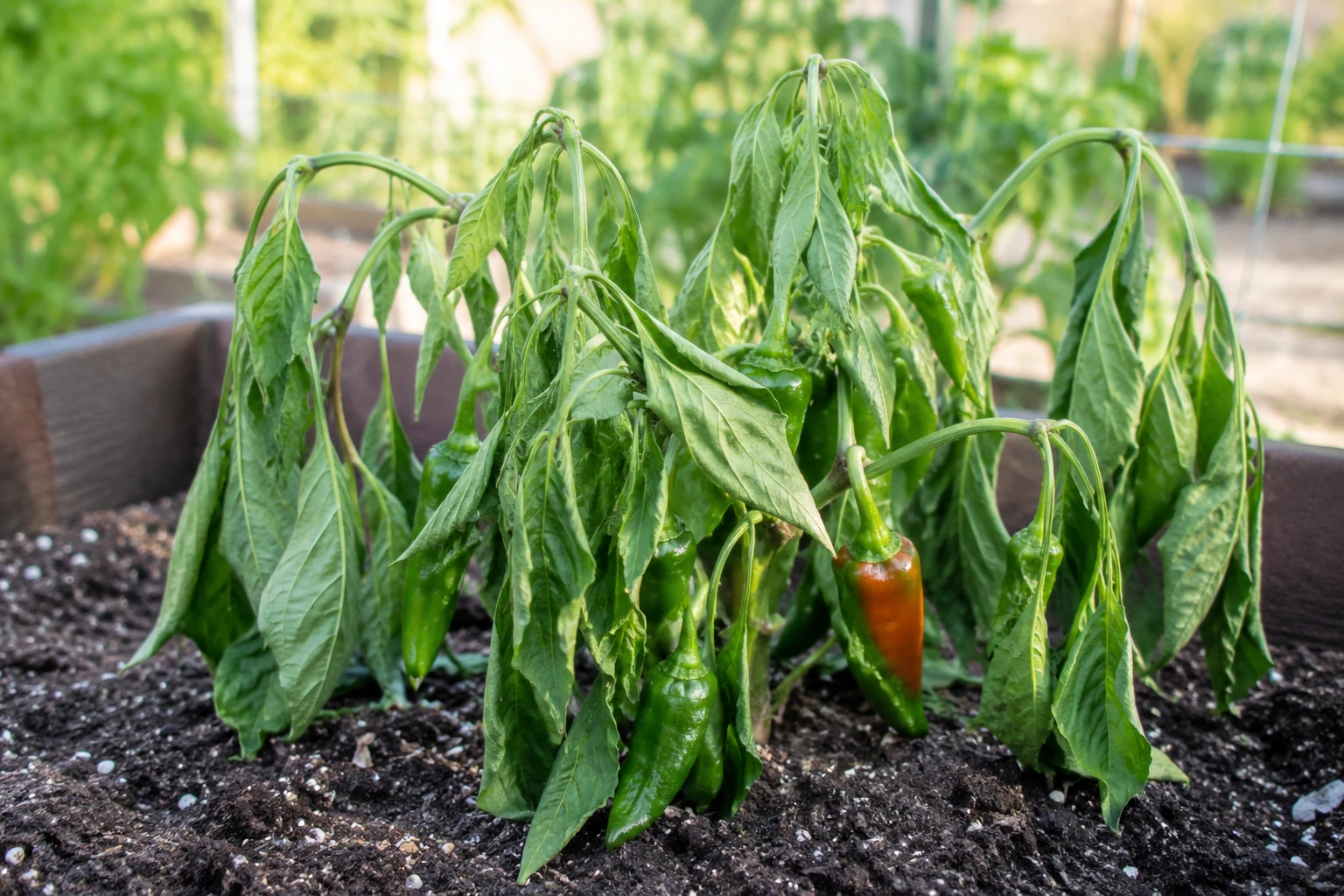
Peppers can wilt from heat or lack of water, but a collapsing plant in damp soil needs a different response. Note whether every plant droops or one plant fails while its neighbors remain upright.
Inspect the Soil-Line Stem
Dark or water-soaked tissue at the crown, especially after saturation, raises concern for root or crown disease. Keep runoff and moved soil away from healthy peppers while seeking advice. A label-specific treatment requires an identified problem; extra fertilizer does not correct damaged crown tissue.
Read the Wilt Pattern
Whole-plant wilt, one-sided wilt, or wilt that comes and goes can each point in different directions. Start with the simplest checks before treating.
| What you see | Most likely clue | What to check next |
|---|---|---|
| Leaves droop in afternoon only | Heat stress | Check recovery by evening |
| Dry soil and limp leaves | Underwatering | Water deeply |
| Wet soil and wilt | Root stress or rot | Improve drainage |
| Sudden collapse of one plant | Disease possible | Inspect stem and nearby plants |
Heat and water stress
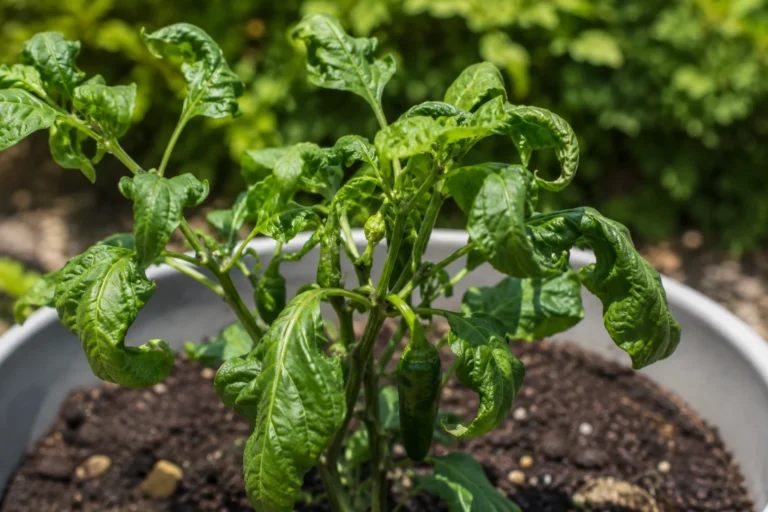
Peppers can wilt fast in hot weather, especially in raised beds and containers. Deep watering and mulch help the plant hold moisture longer.
Overwatering and poor drainage
Roots need air as well as water. A waterlogged bed can make a pepper wilt just as dramatically as drought does. Let the soil approach moderate dryness before watering again.
Root injury or transplant stress
Freshly planted or recently disturbed peppers may droop while roots re-establish. Keep conditions steady and avoid additional stress while they recover.
Disease issues
Persistent wilt on a single plant may signal a disease problem. Remove severely declining plants if they do not recover and avoid moving contaminated soil or tools through the bed.
Check soil moisture first, then observe recovery. Correct watering depth, protect roots with mulch, and remove clearly failing plants if disease seems likely.
A Morning Check Is More Useful Than a Noon Photo
Compare leaf posture before heat builds and again in the evening. Temporary recovery supports an environmental explanation. Persistent wilt with adequate moisture is a reason to inspect roots, drainage, and stem injuries rather than repeating irrigation automatically.