How to Tell If a Houseplant Is Root Bound
A root at a drainage hole is a reason to inspect, not automatic proof of severe crowding. The important question is how much usable mix remains and whether the root mass interferes with watering.
Separate Circling Roots From a Root-Filled Pot
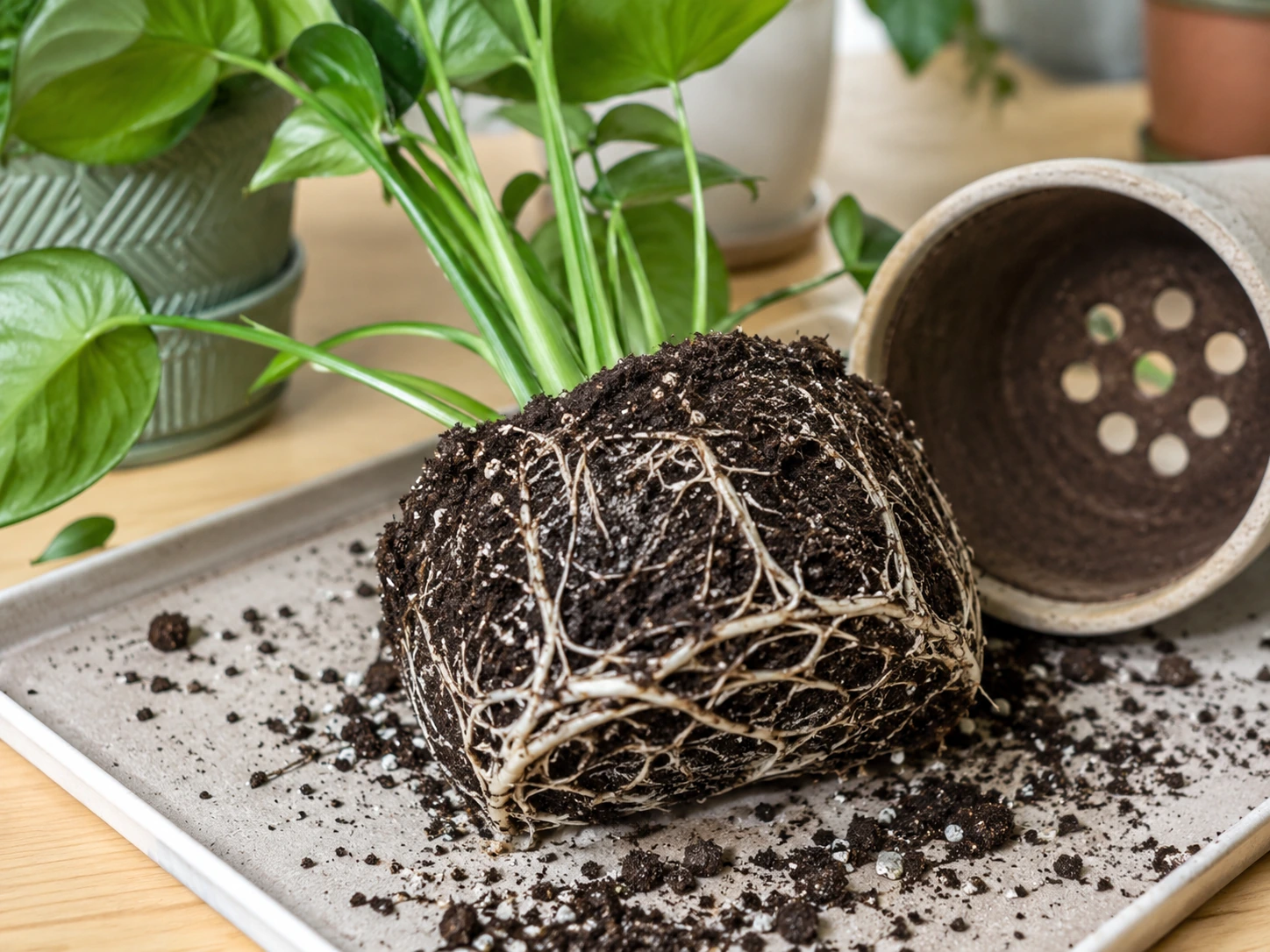
A few outer roots can occur on a plant that still has substantial mix inside. Severe crowding looks like a dense mass with little space for water-holding medium. Check whether frequent drying or stalling accompanies that structure before deciding how urgently to repot.
Signs of a Root Bound Houseplant
| Symptom | What it may mean | Action |
|---|---|---|
| Roots coming from drainage holes | Pot is crowded | Check the full root ball |
| Plant dries out very fast | Too little soil volume left | Water and assess repotting |
| Water runs through quickly | Root mass displacing soil | Inspect inside pot |
| Stalled growth | Limited root space | Repot if roots are dense |
Slide the plant out gently
Support the base and tip the pot to inspect the root ball. Healthy roots are often pale and firm, while root-bound plants show dense circling roots.
Judge the severity
A few visible roots do not always mean urgent trouble. If the root ball is mostly roots with very little soil left, repotting is usually worthwhile.
Choose the next pot carefully
Move up only slightly—often one pot size larger is enough. Jumping to a huge container can slow drying and create other care problems.
Loosen roots before repotting
Gently tease apart tight outer roots so they grow outward into the new mix instead of continuing to circle.
Avoid Tearing Apart Every Root
Loosen compact outer roots gently when appropriate for the species, rather than stripping the entire ball bare. Fragile-rooted plants need particular care. Select a modest size increase and suitable mix; a huge volume of unused wet medium can create a new root-health problem.
Water running through a crowded pot is not conclusive evidence of root binding. Dry water-repellent mix can also channel runoff around the edge. Inspect the root ball and test whether slow staged watering wets the center. A genuine root-filled container and a poorly wetted but uncrowded container need different work, even if both seem to dry immediately after watering.