Mushy Snake Plant Leaves: Salvage Firm Tissue Before Rot Spreads
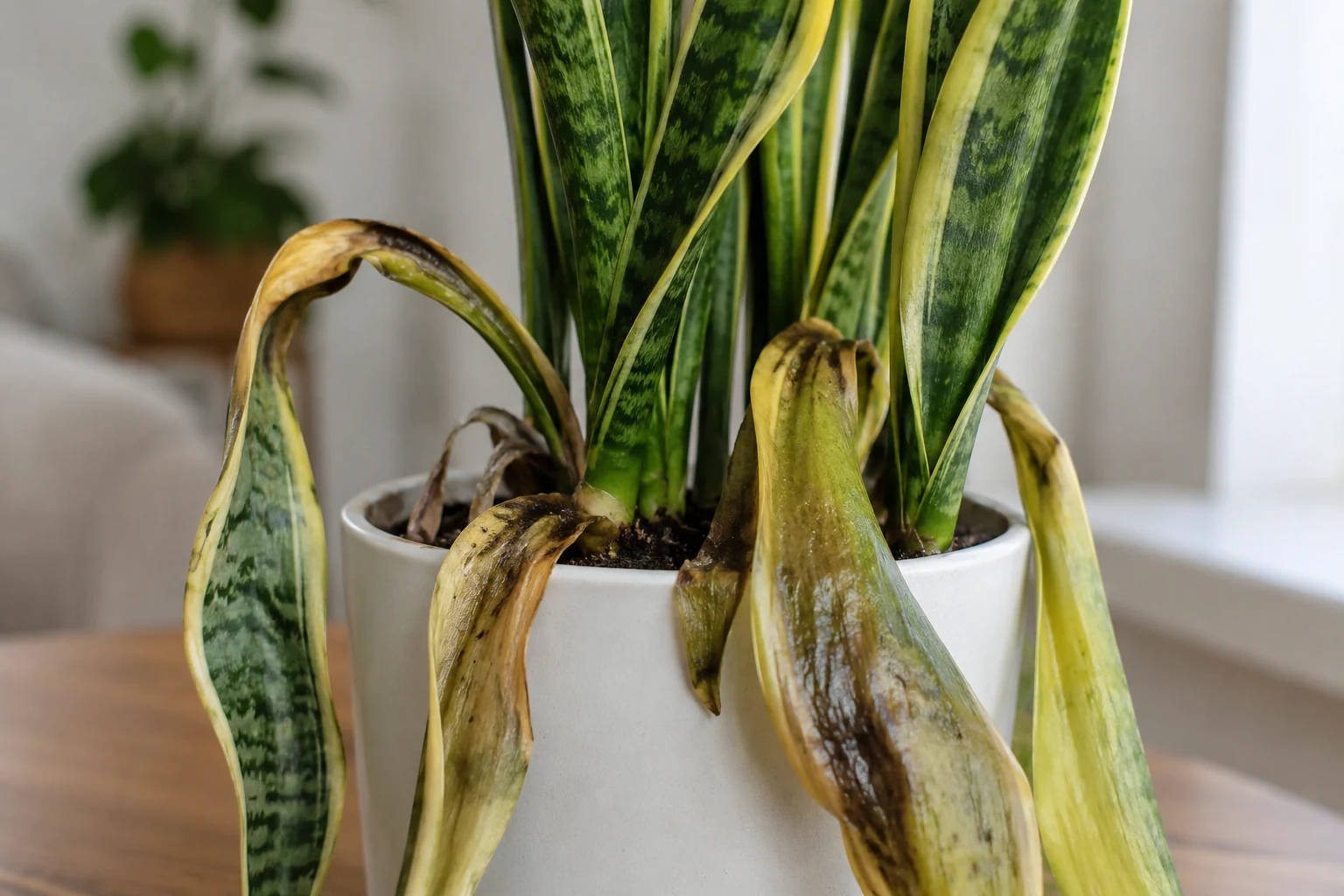
Soft snake plant leaves have lost structural integrity and will not become firm again. The urgent task is to determine whether intact rhizomes or healthy leaf sections remain above the damaged tissue.
Feel the Rhizome, Not Just the Leaf Tip
A leaf may look green near the top while its base is rotten. Inspect the underground connecting stem and leaf attachment points. Keep only solid, clean tissue when dividing the plant. Treat tools between cuts so decayed material is not carried into the next salvageable section.
| What you see | Most likely clue | What to check next |
|---|---|---|
| Leaf base feels soft or watery | Overwatering/root rot | Stop watering and inspect roots and rhizomes |
| One damaged leaf but roots are firm | Physical/cold damage | Remove the damaged leaf and correct the exposure |
| Several leaves yellow and collapse | Advanced root stress | Unpot immediately and remove rotten tissue |
| Leaves wrinkle but stay firm | Underwatering | Water thoroughly once the mix is dry |
Why snake plant leaves become mushy
Snake plants store water in thick leaves and rhizomes. They tolerate dry soil far better than constantly wet soil. When a dense potting mix, oversized pot, poor drainage, or frequent watering keeps the root zone saturated, oxygen levels fall and rot organisms can invade weakened tissue.
How to confirm root rot
Slide the plant from its pot and examine the roots and rhizomes. Healthy roots are firm. Rotten roots are dark, soft, slimy, or hollow and may smell sour. A healthy rhizome should feel solid when gently pressed.
How to save the plant
Cut away soft roots, mushy rhizome sections, and collapsing leaves with clean tools. Keep only firm, healthy tissue. Repot into a clean container with drainage holes and a fast-draining mix. If most of the root system is gone, healthy leaf sections or intact divisions can sometimes be propagated separately.
Watering after repotting
Do not immediately return to the old watering schedule. Let the mix dry well between waterings, and always empty any decorative cachepot or saucer that holds runoff. In lower light and cool weather, the plant will use water more slowly.
Plan Propagation Around the Variety
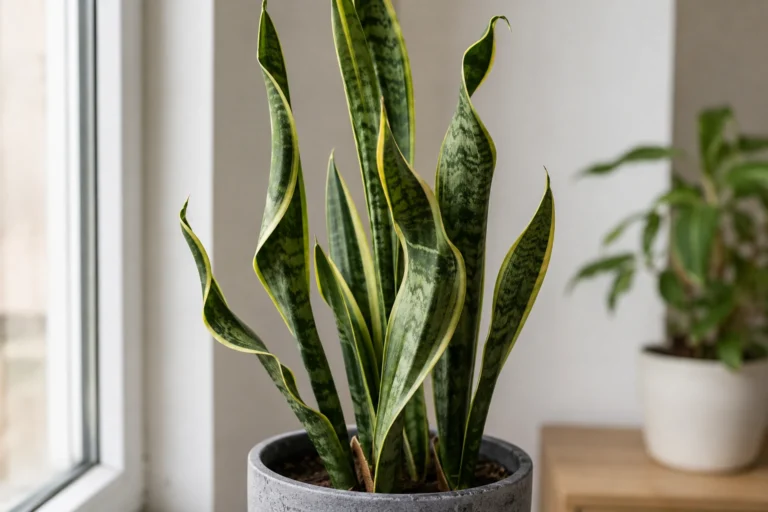
Leaf cuttings can sometimes rescue healthy material, but variegated snake plants may lose their patterned margins when propagated that way. A sound division is more likely to preserve the original appearance. Follow a succulent-appropriate rooting method instead of placing freshly cut tissue back into saturated mix.
How often should I water a snake plant?
There is no safe fixed calendar. Water only after the potting mix has dried substantially, then water thoroughly and allow excess to drain.