Why Are My Pepper Leaves Turning Yellow?
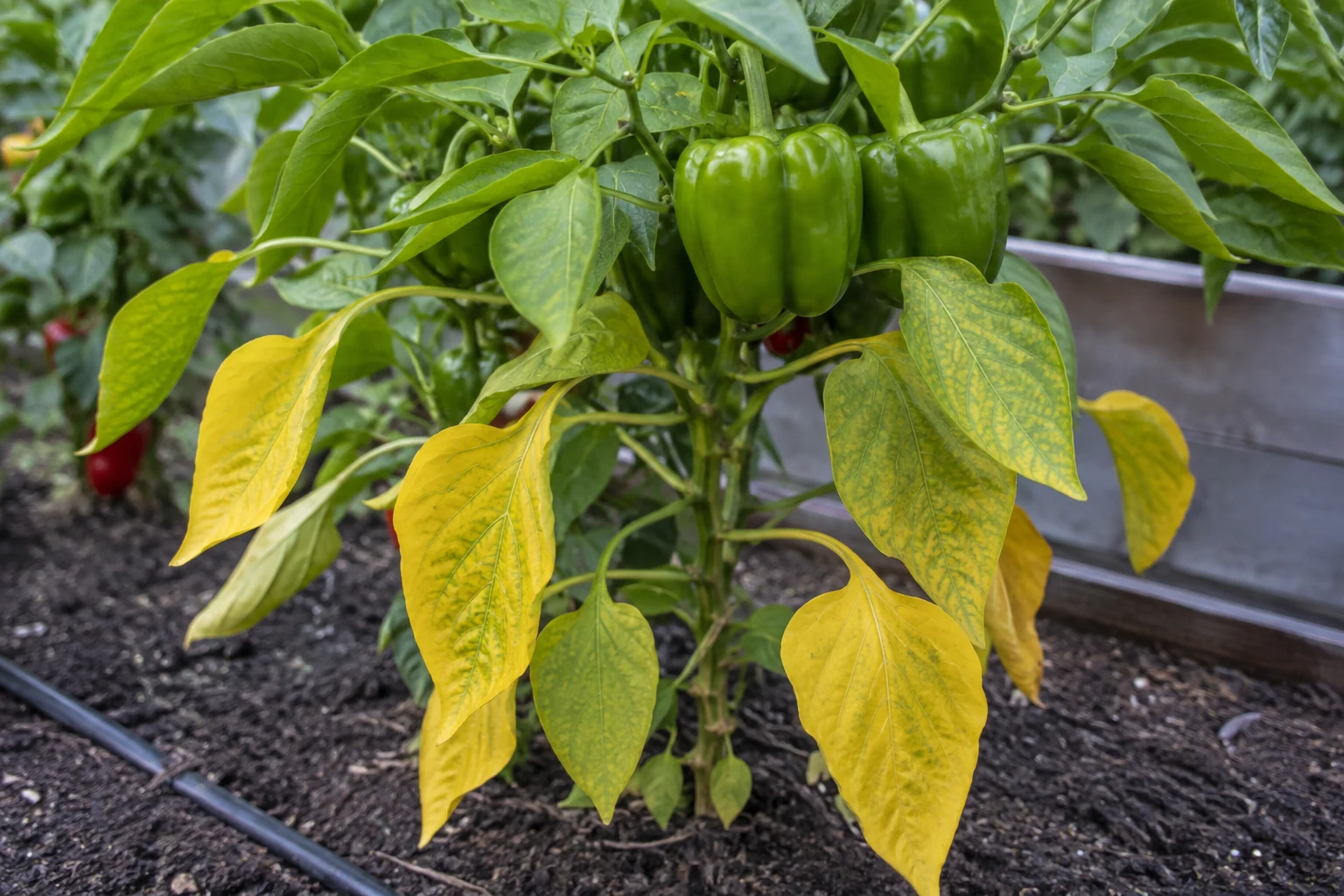
Peppers with yellow bottom leaves need a different investigation from plants whose newest leaves are pale between green veins. Locate the yellowing first, then connect it with drainage, temperature, and recent feeding.
Use Leaf Age to Narrow the Nutrient Question
Nitrogen-related paling usually begins on older foliage, while iron availability problems often show in newer leaves. Neither pattern proves a deficiency. Wet or cold roots can limit uptake in otherwise fertile soil, so check growth rate and root conditions before selecting a fertilizer.
| What you see | Most likely clue | What to check next |
|---|---|---|
| Older leaves uniformly yellow | Nitrogen or root stress | Review watering and fertility |
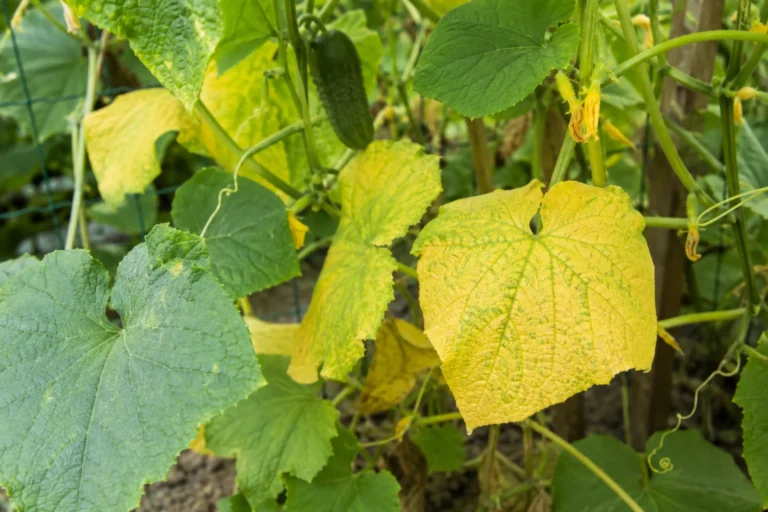
| Newest leaves yellow, veins greener | Iron availability/pH issue possible | Check pH and root conditions |
| Yellow + stippled leaves | Mites/thrips possible | Inspect undersides with a hand lens |
| Yellow + sticky clusters | Aphids | Check stems and leaf undersides |
| Yellow + wilt in wet soil | Root/crown problem | Inspect roots and drainage |
Overwatering and Poor Drainage
Pepper roots are sensitive to saturated soil. Constantly wet roots may produce yellow leaves, slow growth, and weak plants. Check moisture at root depth and make sure containers and beds drain freely.
Drought or Heat Stress
Severe drying can also lead to yellowing, especially after repeated wilting. Water slowly and deeply, and use mulch to reduce moisture swings during hot weather.
Nitrogen Deficiency
Older leaves may become uniformly pale green or yellow when nitrogen is genuinely limited. Confirm the pattern and consider a soil test before adding fertilizer because excess nitrogen can reduce flowering and fruiting.
Iron or Other Micronutrient Chlorosis
When the newest leaves are yellow but veins remain greener, an iron availability problem is possible. High soil pH, cold/wet roots, or root damage can prevent uptake even when iron is present.
Pests
Aphids, mites, and thrips can cause yellowing, stippling, distortion, or weak new growth. Inspect the undersides of leaves and growing tips. Look for insects, cast skins, webbing, or silvery feeding scars.
Root or Crown Disease
Yellowing combined with wilting, stunting, stem lesions, or root discoloration can signal a more serious root or crown problem. Remove severely affected plants and avoid moving suspect soil to healthy beds.
How to Fix Yellow Pepper Leaves
- Check soil moisture and drainage first.
- Compare old versus new leaves.
- Inspect undersides for aphids, mites, or thrips.
- Review soil pH and fertilizer history.
- Remove fully yellow leaves if they are diseased or no longer functional.
- Use a soil test before making repeated nutrient corrections.
Inspect the Crown When Yellowing Comes With Wilt
Look at the stem where it enters the soil. Dark lesions, soft tissue, and persistent wilt make a simple feeding problem less likely. Avoid moving soil from a declining pepper to healthy plants, and seek diagnostic advice if several plants deteriorate quickly.
Do yellow pepper leaves turn green again?
Mild chlorosis can sometimes improve, but fully yellow leaves usually do not become productive again. Watch the color and vigor of new growth.