Pepper Plants With No Fruit: Check Flowers Before Fertilizer
A leafy pepper with no flowers is different from one that blooms repeatedly but drops its blossoms. Separate those two situations before changing feeding, light, or pollination practices.
Count Flowers and Tiny Fruits Separately
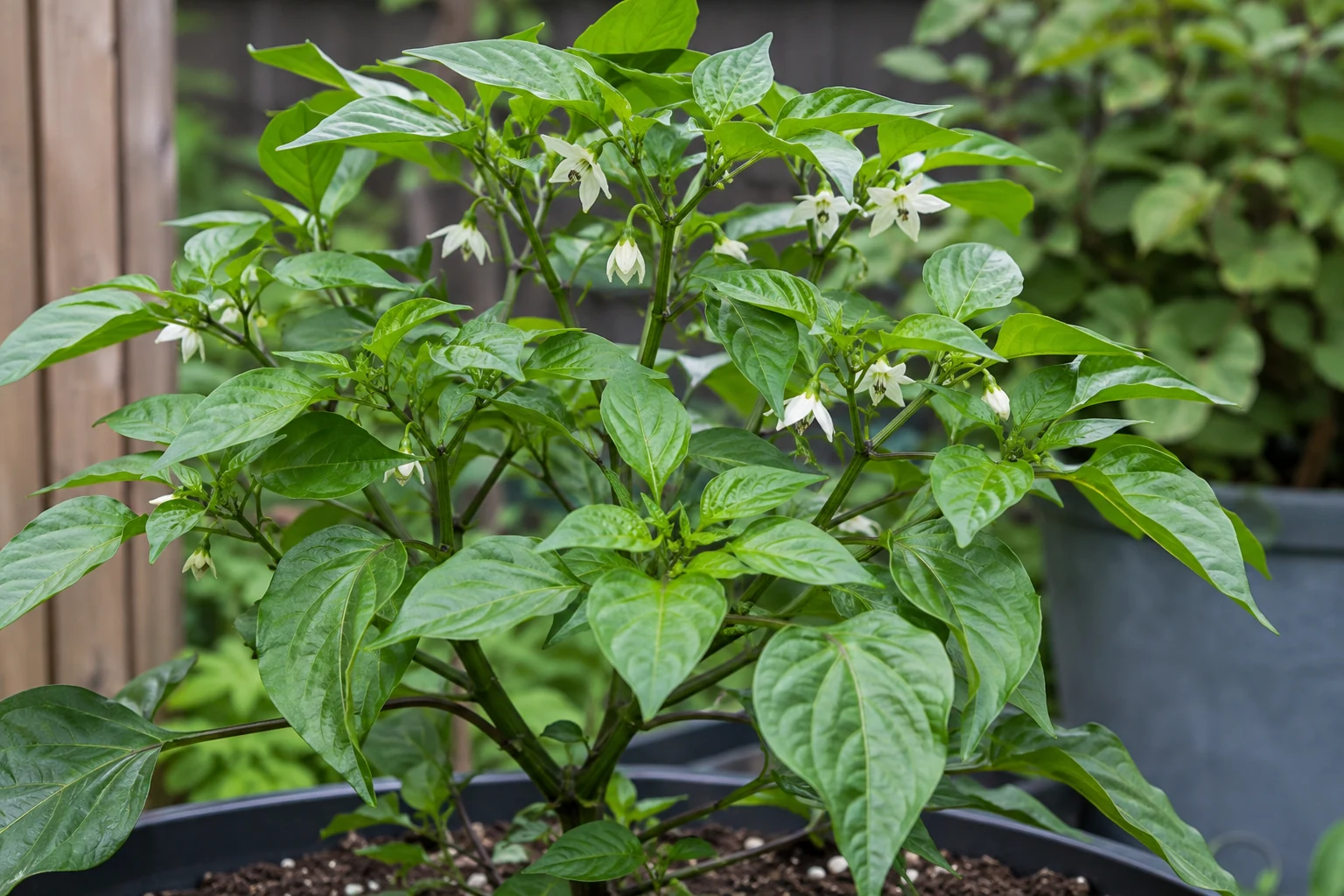
Look behind open flowers for small developing peppers. Few flowers on a shaded plant point toward growth conditions; many fallen blossoms during heat suggest failed fruit set. Check the variety’s expected maturity, because slow varieties need more time than early peppers.
| What you see | Most likely clue | What to check next |
|---|---|---|
| Flowers fall during heat wave | Heat-related blossom drop | Keep moisture even and wait for cooler weather |
| Huge leafy plant, few flowers | Excess nitrogen | Stop high-N feeding |
| Flowers but no set indoors/greenhouse | Poor pollen movement possible | Increase airflow or gently vibrate flowers |
| Flower drop after wilting | Water stress | Deep, consistent irrigation |
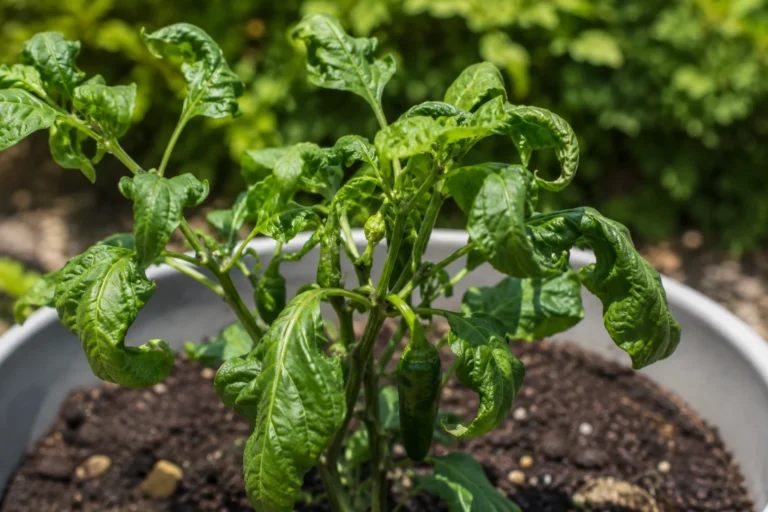
| Poor fruit set + distorted leaves | Pest/virus stress | Inspect new growth |
Heat Is Causing Blossom Drop
Peppers can shed flowers during very hot weather, particularly when nights stay warm. Keep plants evenly watered and avoid stressing them further with heavy pruning or fertilization. Fruit set often improves when temperatures moderate.
Nights Are Too Cool
Cool conditions can also reduce flower function and slow pepper growth. Early transplants may bloom but fail to set well until warmer weather arrives.
Too Much Nitrogen
If the plant is huge, deep green, and leafy but has few flowers or fruits, excessive nitrogen is a strong possibility. Stop high-nitrogen feeding and use a soil test to guide future fertilizer.
Water Stress
Flowers are often the first tissues a plant sacrifices during drought or root stress. Keep moisture consistent through flowering. Avoid alternating between bone-dry soil and heavy soaking.
Poor Pollination or Low Air Movement
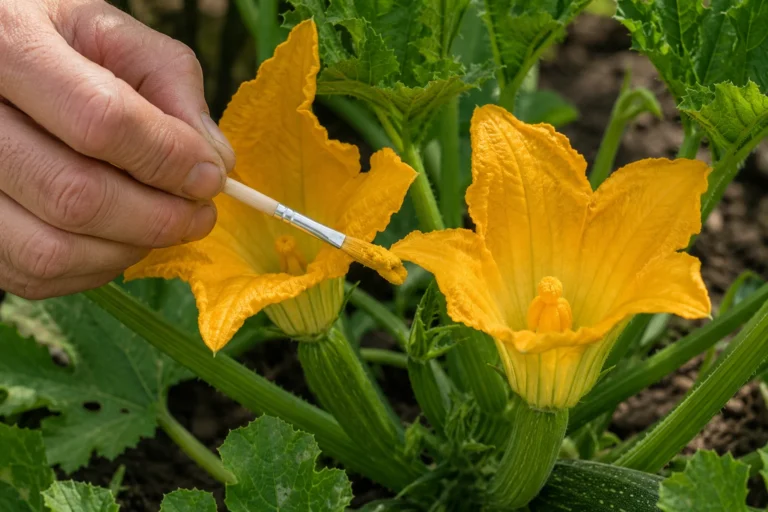
Pepper flowers are generally self-pollinating, but gentle movement helps pollen transfer. In greenhouses or enclosed spaces, airflow or light vibration of flowering stems can improve pollen movement.
Pests or Disease
Thrips, aphids, mites, viruses, and root problems can reduce vigor enough to stop fruit set. Inspect flowers, growing tips, and leaf undersides if foliage is distorted or unhealthy.
How to Get Pepper Plants Fruiting Again
- Protect plants from severe moisture stress.
- Stop unnecessary high-nitrogen fertilizer.
- Wait out extreme heat or cold rather than forcing the plant.
- Inspect flowers and new growth for pests.
- Encourage airflow in enclosed growing spaces.
- Once conditions improve, watch new flowers; they should be the first to set normally.
Try Pollination Only When Conditions Fit
Peppers can self-pollinate, so a second plant is usually unnecessary. Gentle vibration can help in an enclosed, still growing area. If blossoms are aborting during severe heat or drought, improving plant stability is more useful than repeatedly brushing every flower.
Why does my pepper plant have flowers but no peppers?
Heat, cold, water stress, excess nitrogen, or poor pollen movement are common reasons. Look at recent weather and the overall growth pattern.