Brown Rose Leaves: Scorch Edges or Disease Spots?
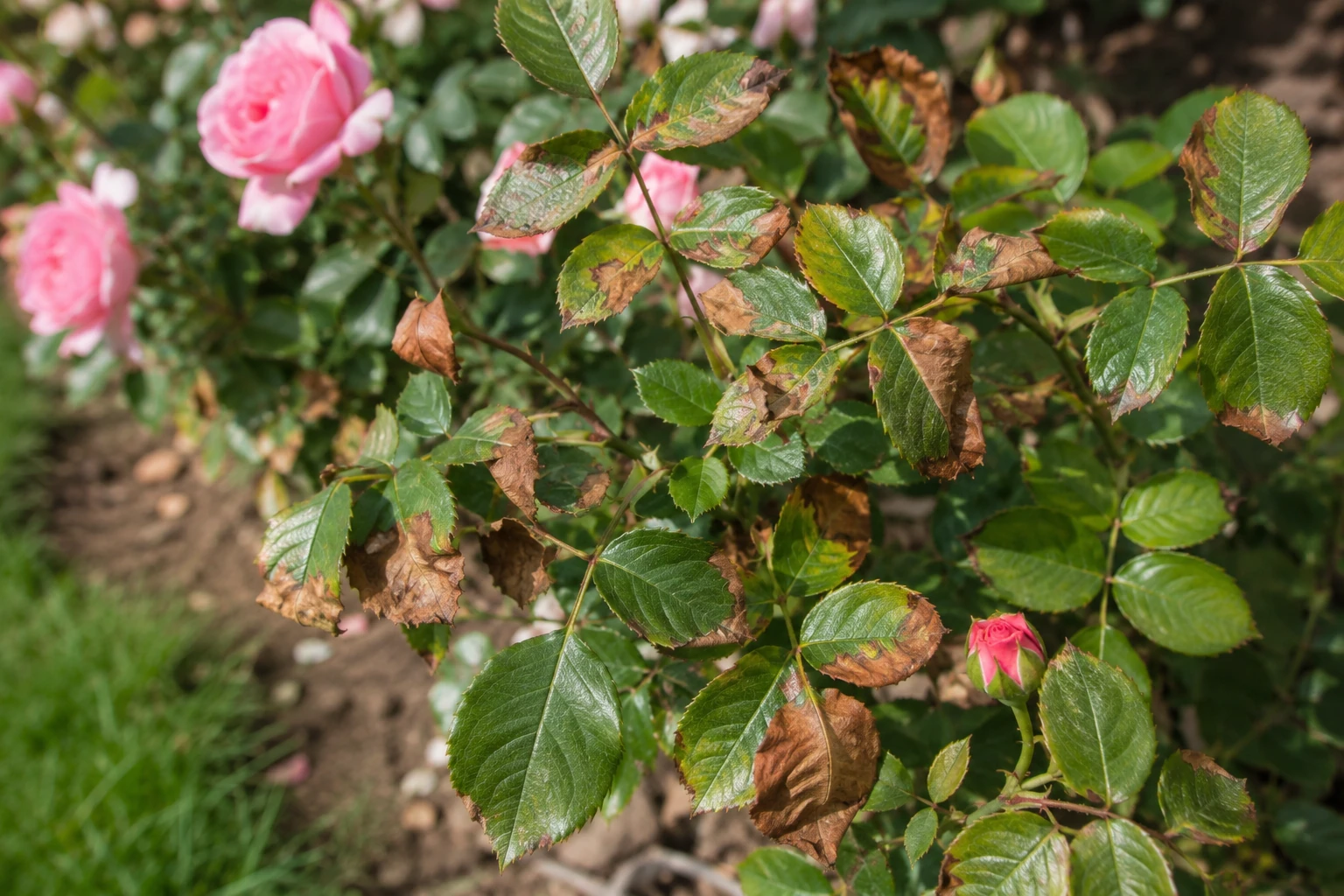
A rose leaf browned around its edge often reflects environmental stress, while discrete lesions may indicate disease. Compare exposed leaves, sheltered growth, and the timing of recent feeding or dry weather.
Look for a Pattern Across the Bush
Damage mostly on the hottest side supports exposure stress; spots appearing on several lower leaves call for a disease check. Black spot, rust, and other problems have different visual clues. Inspect undersides and fallen leaves instead of diagnosing from one brown patch.
| What you notice | Likely cause | What to do |
|---|---|---|
| Crispy brown edges in hot weather | Heat or drought stress | Water deeply and mulch the root zone |
| Spots that spread and leaves drop | Fungal disease | Improve airflow and remove badly affected leaves |
| Only old inner leaves browning | Natural aging | Monitor new growth and prune lightly |
| Brown tips after heavy feeding | Salt or fertilizer stress | Flush the soil and reduce feeding |
Check the pattern
Uniform edge burn usually points to environmental stress. Distinct spotting or blotches may signal black spot or another disease issue.
Review watering and weather
Hot, windy periods can dry rose plants fast, especially in containers or sandy soil. Inconsistent watering often shows up first on leaf edges.
Reduce Wet Crowding Inside the Rose Canopy
Dense growth stays wet longer after dew or rain, which encourages disease. Pruning lightly and watering at the soil line can help.
Follow the Next Rose Leaves After Scorch
The newest leaves reveal whether the problem is getting better. Cleaner new foliage is a good sign that care changes are working.
Keep Leaching Advice Site-Specific
Extra water to remove salts is only useful where it can drain away. Saturating a poorly drained rose bed can worsen root problems. Stop excessive feeding, assess the soil, and retain enough functional foliage while the cause is corrected.
If spotting accompanies brown edges, two problems may be present at once. A drought-stressed rose can also develop leaf disease, so correcting one clue does not explain every lesion. Photograph several representative leaves and note recent watering and feeding. Keep healthy canopy where possible while addressing the identified causes, instead of pruning the bush severely to remove all visible imperfection.