Why Are My Snake Plant Leaves Curling?
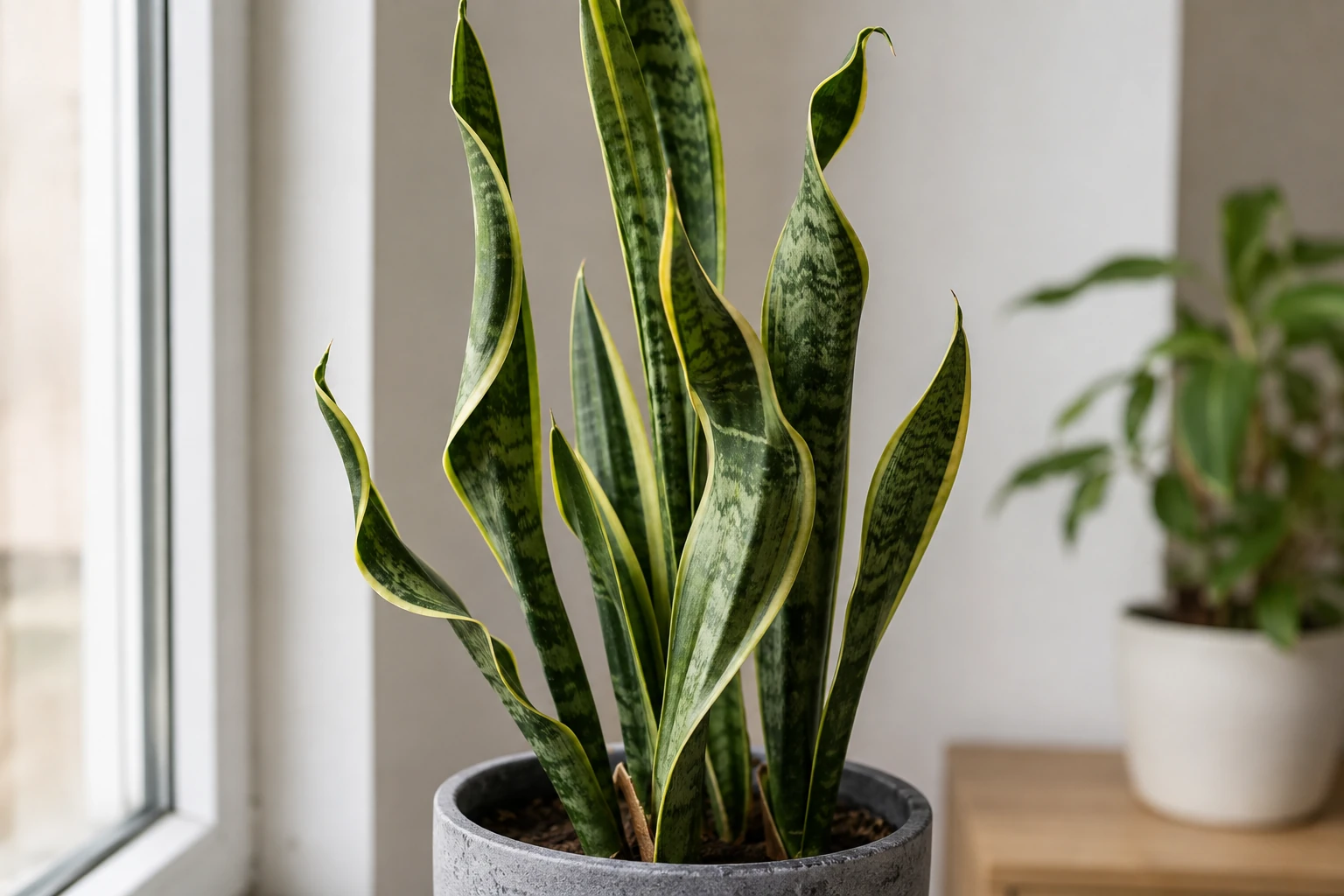
Snake plant leaves can bend or curl while remaining firm, but soft tissue at the base is more concerning. Read the leaf texture together with moisture deep in the pot.
Compare a Dry Fold With a Soft Collapse
A dehydrated leaf may look wrinkled or folded while its base remains firm. A soft translucent base in wet mix suggests tissue breakdown. Do not try to straighten either condition with extra water until the root-zone state is clear.
Check Texture as Well as Shape
With snake plants, leaf firmness matters. A firm curled leaf tells a different story from a soft one.
| What you see | Most likely clue | What to check next |
|---|---|---|
| Curled but firm leaves | Underwatering | Check dry depth of the potting mix |
| Curled and soft leaves | Root trouble | Inspect roots and drainage |
| Curling after cold exposure | Temperature stress | Move to warmer spot |
| Repeated curling in dense mix | Poor root environment | Repot into freer-draining mix |
Infrequent but incomplete watering
Snake plants tolerate dryness, but they still need a full drink when watered. If only the top of the mix gets wet, roots deeper in the pot can stay too dry.
Root stress in wet soil
Overwatering can eventually cause curl, softness, and decline. If the potting mix stays damp for long periods, investigate drainage holes, pot size, and soil texture.
Cold stress
Snake plants dislike cold drafts and chilly windows in winter. Sudden exposure can affect leaf shape and overall vigor.
Old compacted potting mix
A dense, tired mix makes water move poorly and can create both dry pockets and soggy zones. Refreshing the medium may solve repeated problems.
Confirm whether the plant is too dry or too wet, then correct the care pattern slowly. Avoid repeated little sips of water.
Inspect for Feeding Scars and Cold Exposure
Thrips or other pests can leave scars and distorted growth, while contact with cold glass can injure succulent tissue. Check the sheltered leaf surfaces and recent placement. Old bends may persist even after the cause is corrected, so intact new growth is the better recovery sign.