Why Are My Tomato Leaves Curling? Causes and Solutions
Tomato leaves can roll tightly while remaining healthy and productive. The more useful warning is a change in new growth: narrow, mottled, or twisted leaves deserve a different investigation from green older leaves rolled upward.
Separate Rolled Leaflets From Twisted Shoots
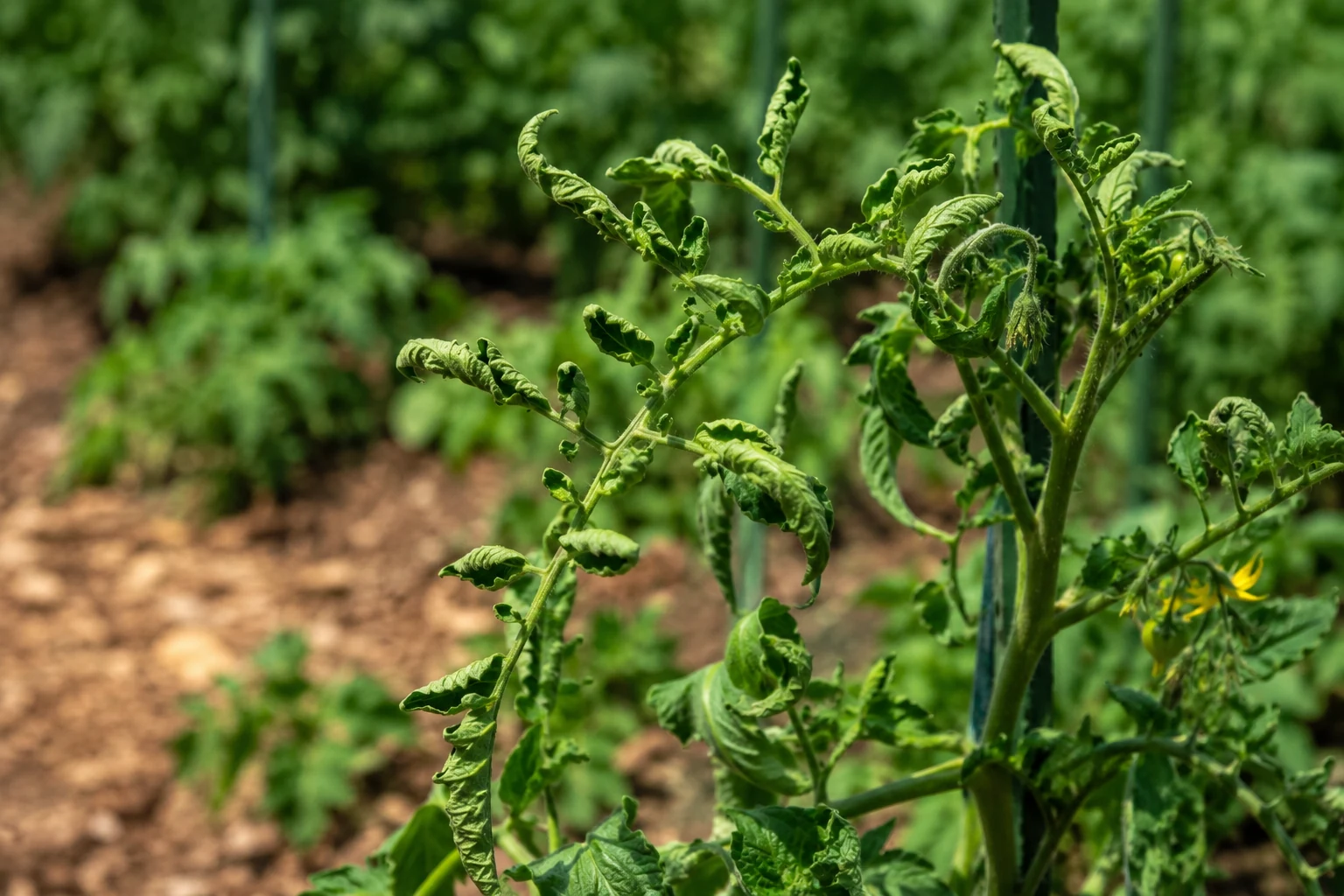
Examine the entire shoot rather than one leaf. Thick, green rolled leaflets after hot weather fit physiological stress; misshapen new leaves following nearby weed treatment suggest exposure. Check for aphid colonies before attributing every curl to insects. Virus-like patterns require confirmation because herbicide injury can look similar.
| What you see | Most likely clue | What to check next |
|---|---|---|
| Older leaves roll upward, stay green | Physiological leaf roll | Check heat, pruning, and moisture stress |
| Tender growth curled + sticky residue | Aphids | Inspect undersides for colonies |
| Curling + mosaic/mottling + stunting | Virus possible | Compare nearby plants and fruit symptoms |
| Twisted, cupped, strap-like new growth | Herbicide injury possible | Review nearby spraying and compost sources |
| Curling + wet heavy soil | Root oxygen stress | Improve drainage and reduce irrigation |
Physiological Leaf Roll
Tomatoes commonly roll leaflets upward during hot, dry, windy, or otherwise stressful conditions. The leaves may become thick or leathery while staying mostly green. This response often starts on older leaves and, by itself, does not mean the plant has a virus. Stabilize watering and reduce stress rather than treating the leaves.
Heat and Drought Stress
Hot weather can cause leaves to fold inward as the plant tries to reduce water loss. Check moisture deeper in the root zone rather than judging only the surface. Water deeply in the morning and mulch the soil to reduce rapid drying.
Root Stress From Excess Water
Roots sitting in saturated soil can cause weak, curled, pale foliage. If the bed drains slowly or a container has blocked drainage holes, correct that first. More water will make the problem worse.
Aphids
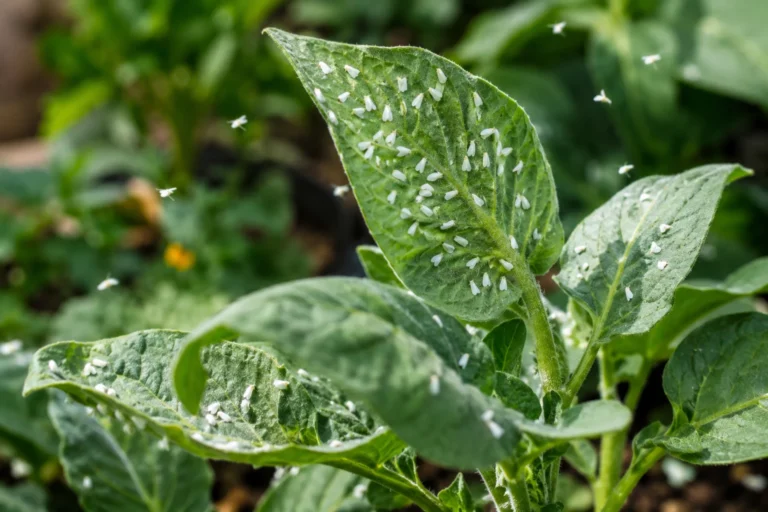
Heavy aphid feeding can curl and stunt tender growth. Look under leaves and along young stems for clusters of tiny pear-shaped insects and sticky honeydew. A firm stream of water is often enough for light infestations; insecticidal soap may be used when appropriate and labeled for the crop.
Viral Disease
Virus symptoms are usually more than simple rolling. Look for mottled light and dark green or yellow patterns, distorted narrow leaves, stunting, and abnormal fruit. Viral infections cannot be cured with fungicides or fertilizers. Remove severely affected plants when a virus is strongly suspected and manage insect vectors such as aphids.
Herbicide Drift or Contaminated Material
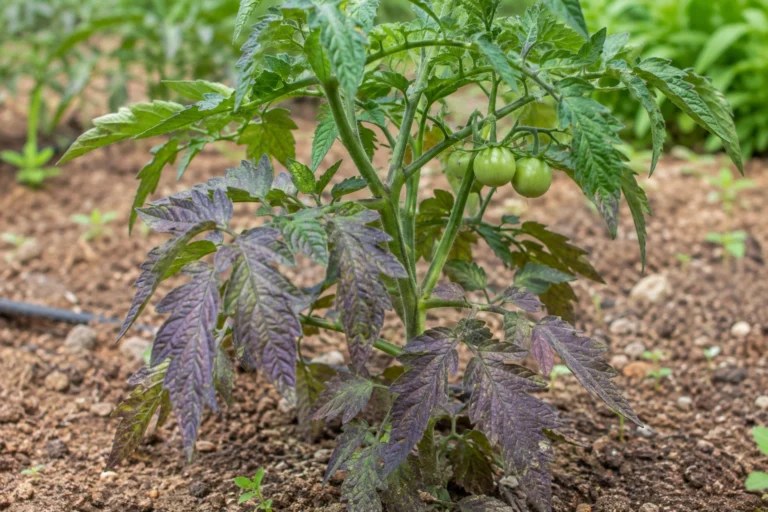
Herbicide injury can cause twisting, cupping, narrow strap-like growth, thickened veins, and severe distortion. Damage may be worse on the side facing a nearby treated lawn or field. Avoid using grass clippings, manure, or compost from uncertain sources around sensitive vegetables.
How to Fix Curling Tomato Leaves
- Check whether the leaves are simply rolled upward but remain green.
- Feel the soil several inches down and correct moisture extremes.
- Inspect leaf undersides for aphids and mites.
- Look for mosaic patterns, stunting, or malformed fruit.
- Consider recent herbicide use nearby.
- Keep care steady for 7–14 days and judge recovery from new growth, not old curled leaves.
Avoid Chasing Old Curls
Do not try to flatten leaves by flooding the bed or increasing fertilizer. Mark the youngest expanding shoot and follow its next leaves. Continued distortion despite stable conditions is a reason to seek local diagnostic help, especially when neighboring plants develop similar symptoms.
Does leaf curl mean tomato virus?
Not necessarily. Physiological leaf roll is common. Virus is more suspicious when curling is accompanied by mottling, stunting, severe distortion, or abnormal fruit.
Should I prune curled tomato leaves?
Do not remove healthy green leaves just because they are rolled. Remove leaves only when they are dead, badly diseased, or interfering with airflow near the soil.