Spider Mites on Garden Plants: Confirm Stippling Before Spraying
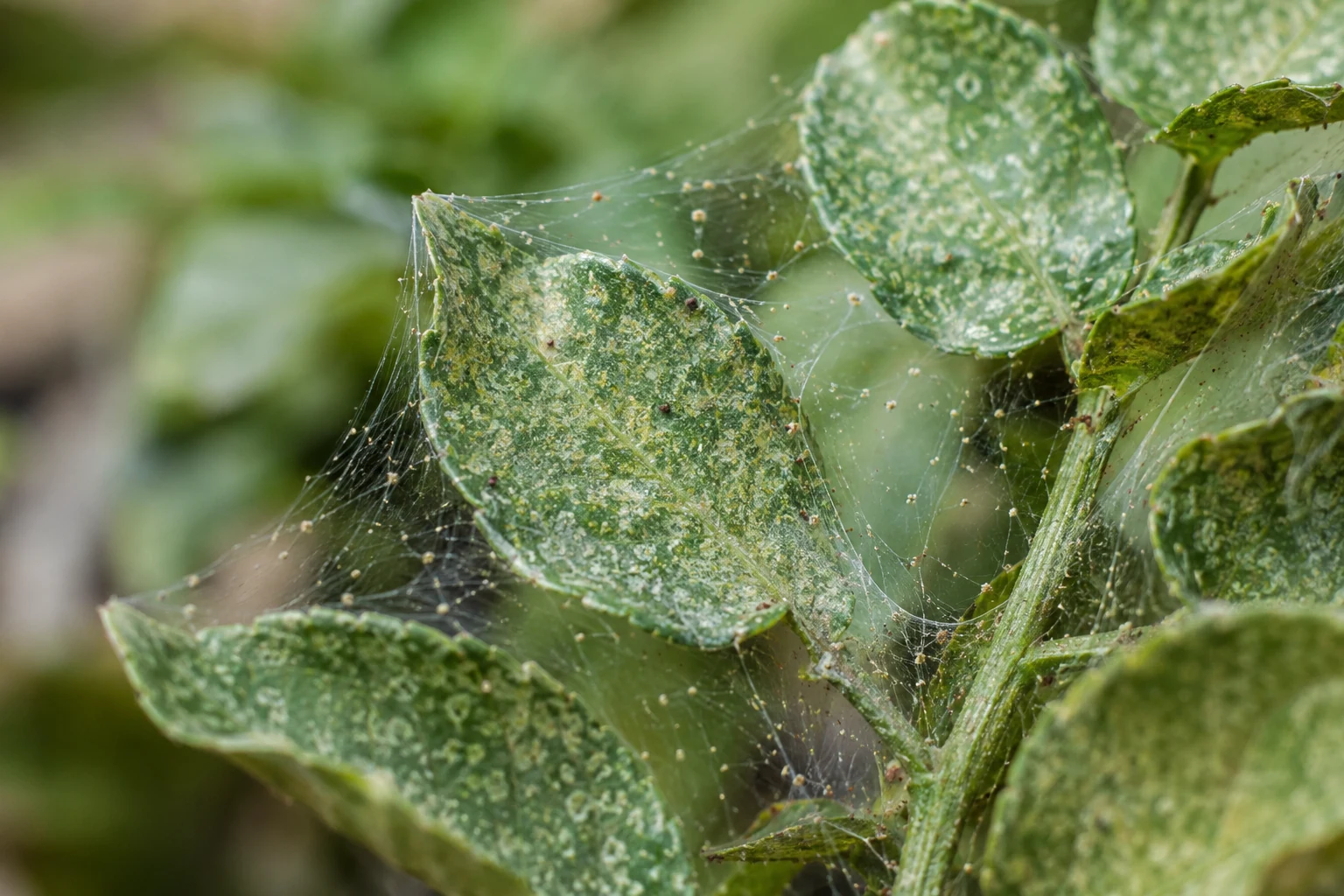
Spider mite injury begins as many tiny pale feeding marks and may appear before obvious webbing. On outdoor plants, confirm active mites and assess predators before choosing a treatment that could worsen the outbreak.
| What you see | Most likely clue | What to check next |
|---|---|---|
| Fine pale speckles on leaves | Early mite feeding | Inspect undersides with magnification |
| Fine webbing between leaves | Heavy spider mite population | Isolate plant and act promptly |
| Tiny moving dots on white paper | Mites confirmed | Begin mechanical control |
| Leaf bronzing and drop | Advanced damage | Remove worst foliage and reduce population |
Confirm spider mites
Tap a suspect leaf over white paper and look for tiny moving dots. A hand lens helps. Webbing is a strong clue but usually appears after the population has already grown.
Use the Paper Test Alongside a Hand Lens
Tap several suspect leaves over white paper and examine moving specks. Dust does not crawl, and a few beneficial mites may also be present. Look for colonies, eggs, and matching stippling on leaf undersides before deciding that every moving dot requires control.
Isolate indoor plants
Move an infested houseplant away from others while you treat it. Mites move between touching foliage and can spread through a collection.
Use water first
Rinse foliage thoroughly, especially leaf undersides. On outdoor plants, a firm water spray can knock mites off. Repeat because eggs and hidden mites may survive the first cleaning.
Remove heavily damaged leaves
Badly stippled or webbed leaves will not regain their color. Removing the worst foliage reduces the pest load and makes remaining leaves easier to treat.
Use labeled products carefully
If needed, use insecticidal soap or horticultural oil labeled for mites and the plant. Thorough coverage of leaf undersides is essential. Repeat only as the label directs. Some conventional insecticides can worsen mite outbreaks by killing natural enemies.
Prevent rebound
Keep plants appropriately watered, avoid chronic drought stress, and inspect nearby plants. Warm, dry conditions often favor rapid mite buildup.
Protect Predators During Outdoor Control
Broad-spectrum insecticides can remove natural enemies without solving a mite problem. Reduce drought stress and dust, and use water sprays on suitable foliage. If further control is warranted, choose a labeled mite treatment and respect heat and plant-sensitivity restrictions.