Whiteflies on Plants: Inspect the Nymphs Beneath the Leaves
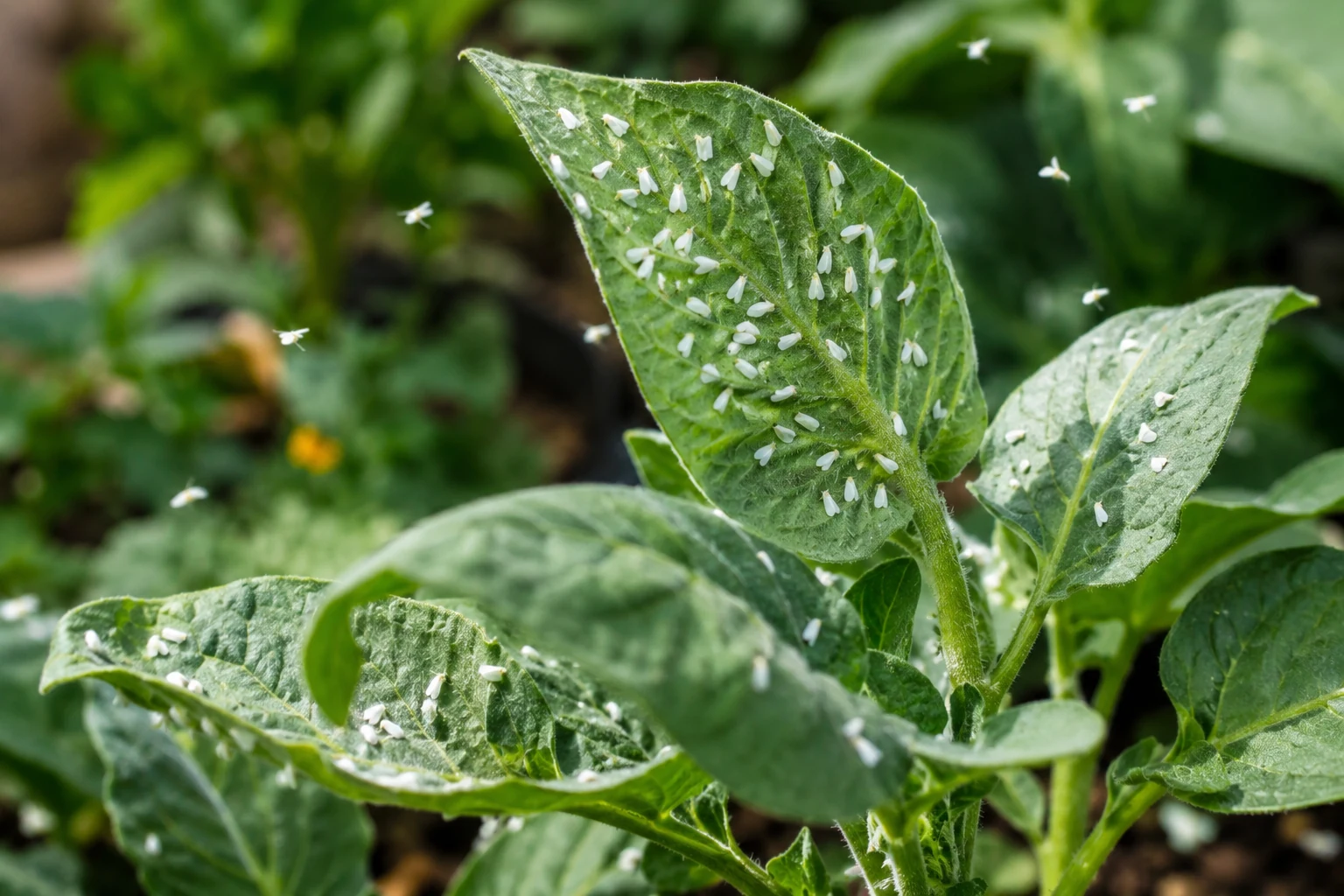
A cloud of white adults is easy to spot, but attached immature whiteflies sustain the infestation after the adults disperse. Leaf-underside inspection is therefore more useful than counting insects flying above the canopy.
| What you see | Most likely clue | What to check next |
|---|---|---|
| Tiny white insects fly when leaves are tapped | Adult whiteflies | Inspect leaf undersides |
| Flat pale scales on leaf undersides | Whitefly nymphs | Target the underside during treatment |
| Sticky honeydew or black sooty coating | Heavy sap feeding | Reduce population and wash foliage |
| Plant stunted or leaves yellow | Severe infestation | Combine sanitation, monitoring, and labeled treatment |
Confirm the infestation
Shake or tap a branch gently. Adult whiteflies rise briefly and settle back on leaves. Turn leaves over to look for eggs and flat nymphal stages.
Choose Leaves With Attached Young Stages
Check several mature leaves as well as new growth. Flat nymphs may be harder to see than adults and often remain on protected surfaces. Removing a few densely colonized leaves can reduce numbers, but stripping the canopy is not a substitute for a sustained control plan.
Remove the worst leaves
If only a few leaves are heavily colonized, prune and discard them. On indoor plants, isolate the infested plant from the rest of your collection.
Use sticky traps for monitoring
Yellow sticky cards can catch adults and help track population trends, but they do not remove nymphs attached to leaf undersides.
Wash and treat leaf undersides
A strong water spray can reduce adults and nymphs on sturdy plants. If the infestation persists, an insecticidal soap or horticultural oil labeled for the specific plant and pest can help. Coverage of the underside is critical.
Protect natural enemies outdoors
Predatory insects and parasitoid wasps can suppress whiteflies. Avoid unnecessary broad-spectrum pesticides that remove these beneficial organisms.
Prevent introduction
Inspect new transplants and houseplants before bringing them into the garden or plant collection. Whitefly problems are much easier to manage before numbers explode.
Use Sticky Cards as a Trend, Not a Cure
Adult catches can rise when a plant is moved or disturbed, so compare cards under similar conditions. Combine monitoring with underside inspection. Any labeled soap or oil needs direct coverage and follow-up as directed; one spray rarely removes every stage.