Fungus Gnats in Houseplants: Treat the Breeding Mix, Not Just Flies
The flies around a damp pot are only the visible part of a fungus gnat problem. Adult trapping helps track numbers, but larvae in the mix require a compatible change in watering and, when warranted, a labeled larval treatment.
| What you see | Most likely clue | What to check next |
|---|---|---|
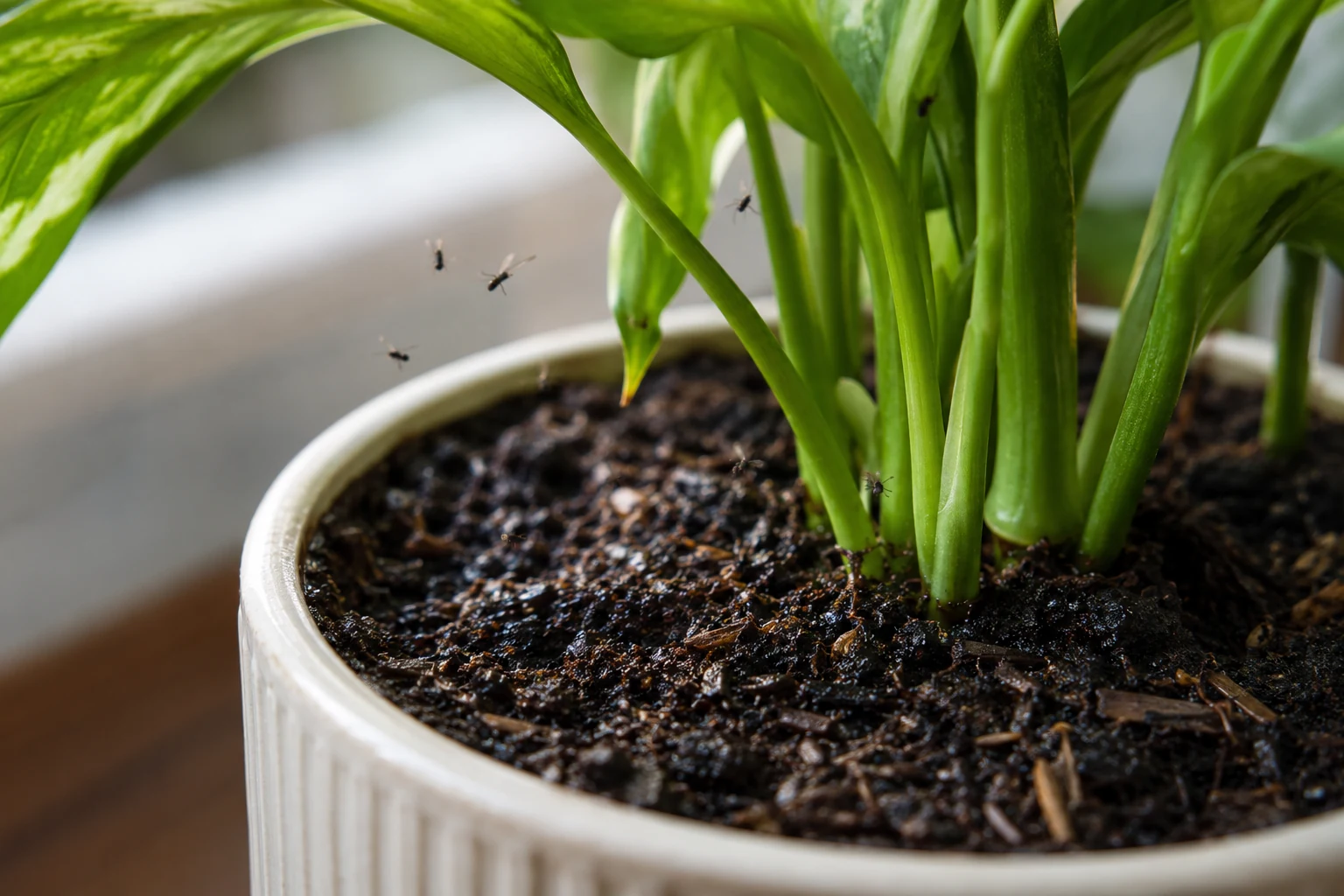
| Small dark flies around pots/windows | Adult fungus gnats | Use yellow sticky traps to monitor |
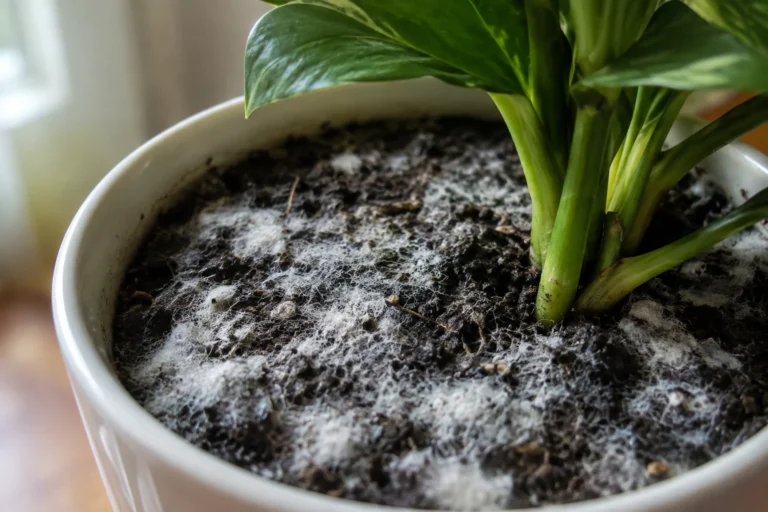
| Potting mix stays wet for days | Ideal breeding conditions | Lengthen the interval between waterings |
| Many gnats but plant looks healthy | Mostly nuisance population | Focus on life-cycle control |
| Seedlings or weak roots decline | Larval feeding possible | Use targeted larval control and improve drainage |
Confirm they are fungus gnats
Fungus gnats are small dark flies with slender bodies and long legs. They often run over the soil surface or flutter near pots and windows. They are not the same as fruit flies.
Check Every Damp Pot in the Room
One pot may seem responsible while larvae persist in another moist container. Place monitoring cards near individual pots and inspect unused wet mix or propagation trays. A coordinated check is more useful than repeatedly treating only the plant closest to the window.
Dry the upper layer appropriately
Larvae thrive in persistently moist media. For plants that tolerate it, let the upper layer of potting mix dry more between waterings. Do not force drought on moisture-loving species; adjust within the needs of the plant.
Trap adults
Yellow sticky cards placed near the soil catch adults and help you judge whether numbers are falling. Traps alone will not eliminate larvae already in the mix.
Target larvae if the problem persists
Bacillus thuringiensis israelensis (Bti) is used in some products labeled for fungus gnat larvae. Use only according to the product label. Multiple treatments may be needed because the life cycle continues over several weeks.
Correct the environment
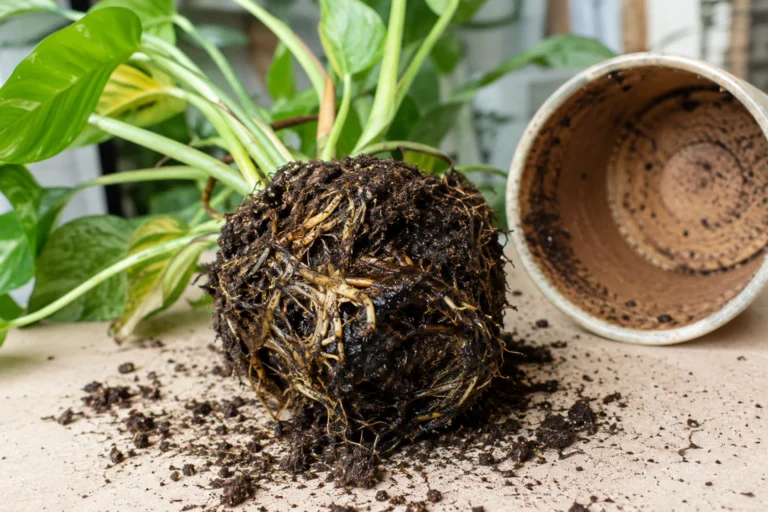
Empty standing water, use containers with drainage, and avoid decorative pots that trap runoff. If the mix is badly broken down and stays swampy, repotting into fresh, appropriate medium can help.
Avoid gimmicks that ignore the soil
Killing only the flying adults gives temporary relief. The breeding site is the moist potting mix, so long-term control depends on changing that environment.
Bti and Adult Traps Have Different Jobs
A product labeled for fungus gnat larvae targets the immature stage, while sticky cards mainly catch adults. Use the permitted application interval rather than inventing a concentration from mosquito-control instructions. Keep moisture-loving plants within their needs instead of forcing every pot bone dry.
Will sticky traps get rid of them?
Sticky traps reduce and monitor adults but do not kill larvae in the soil, so use them as part of a broader plan.