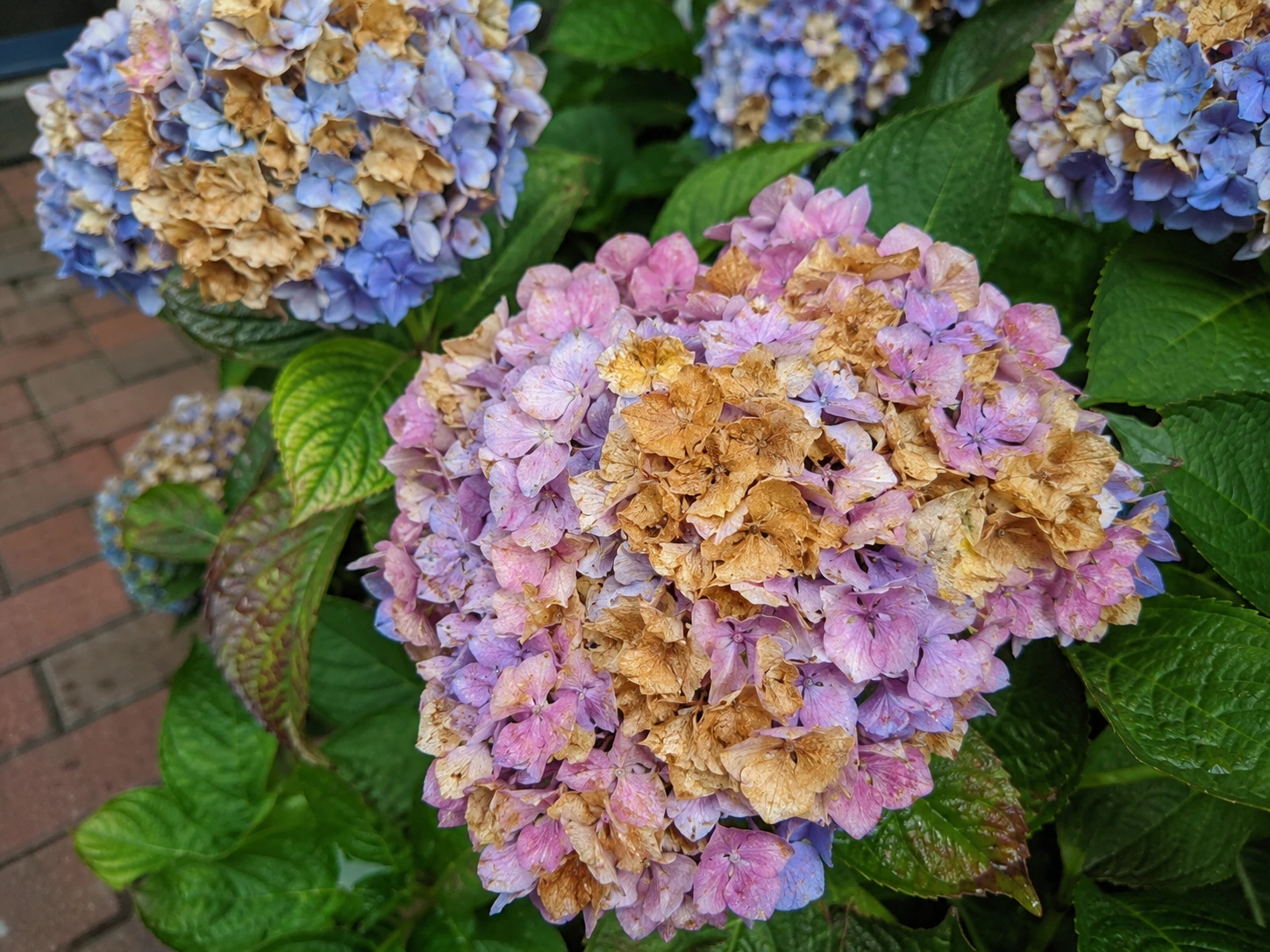
Why Are My Hydrangeas Wilting?
Hydrangeas can sag dramatically in afternoon heat, yet a new shrub may also have a dry nursery root ball surrounded by damp garden soil. Check both situations before deciding on more water.
Inspect the Original Planting Volume
Feel the mix immediately around the old root ball as well as the surrounding soil. If the two differ, water slowly where roots actually are. Surface sprinkling or rain on the bed may not have hydrated that concentrated root zone.
What Wilting Hydrangeas Usually Mean
| What you see | Likely cause | Best next step |
|---|---|---|
| Afternoon droop, evening recovery | Heat stress | Mulch and monitor moisture |
| Dry soil and limp stems | Needs water | Water deeply at the root zone |
| New planting wilts often | Transplant stress | Maintain even moisture and shade from harsh sun |
| Wilt with soggy soil | Root or drainage problem | Improve drainage and inspect roots |
Check whether it is just midday stress
Hydrangeas have large leaves that lose moisture quickly in heat. Temporary afternoon wilt is common, especially in bright sun.
Water deeply and slowly
Frequent shallow sprinkling does not help much. Soak the root zone thoroughly and let the water penetrate beyond the top layer.
Reduce afternoon stress
Too much hot afternoon sun can overwhelm hydrangeas. Morning sun with afternoon shade is often more comfortable.
Watch for root stress
If wilting persists despite moist soil, roots may be damaged, crowded, or sitting in poorly drained ground.
Use the Morning Canopy as a Check
A shrub that recovers before heat builds may be coping with temporary transpiration stress. One that remains wilted needs assessment of roots, drainage, and establishment. Provide species-appropriate afternoon protection without assuming every hydrangea type requires identical shade.
A hydrangea in a container may have an outer root layer that dries quickly while the center stays moist. Check more than one position and make sure runoff does not accumulate below. For planted shrubs, compaction or nearby tree roots can alter water availability. A fixed daily watering rule cannot distinguish these conditions from temporary heat droop.