Dry-Looking Lavender: Spent Blooms, Dead Wood, or Root Trouble?
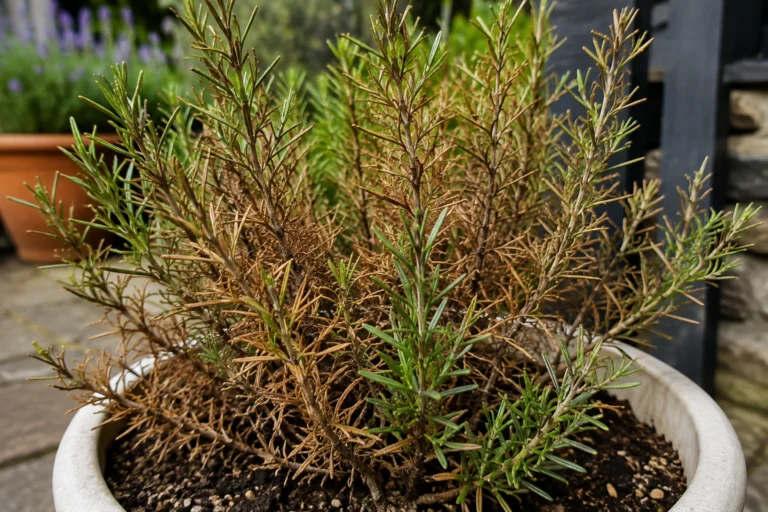
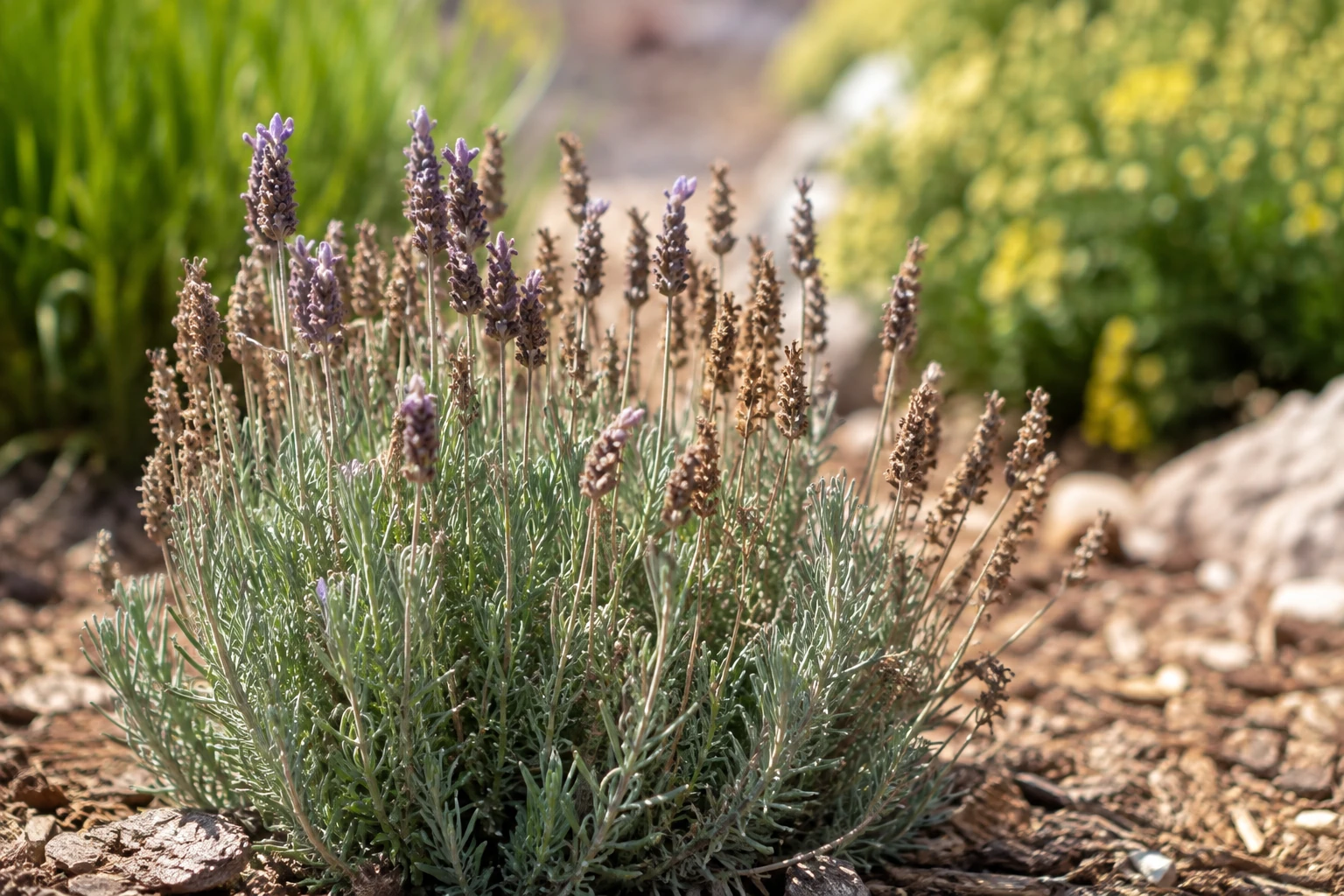
Finished lavender flower spikes are naturally dry; that does not mean the whole plant is dying. Check the leafy stems and crown before changing irrigation or cutting deeply into older wood.
Separate Flower Cleanup From Structural Pruning
Spent spikes can be removed above healthy leafy growth. A severe cut into old bare stems is a different operation and may leave little capacity to regrow. Locate live buds or leafy shoots before each cut, and avoid trying to reshape a stressed plant in one session.
Check the stems, not just the flowers
Many gardeners worry when spent lavender flower spikes turn brown, but that is normal after bloom. The more important question is whether the leafy stems below still look silver-green and alive. Scratch a small stem lightly. Green tissue under the surface means the plant is still alive.
- Spent blooms left on the plant after flowering
- Too much water or soil that drains slowly
- Older woody growth with less vigorous regrowth
- Winter injury or crown rot
- Severe drought in very hot, exposed sites
What to do
| Situation | Best response |
|---|---|
| Only the flower spikes are brown | Shear off spent blooms lightly |
| Leaves and stems browning from the base | Check drainage and root condition |
| Plant woody and thin | Prune lightly into green growth after flowering |
| Crown stays wet | Improve drainage or move the plant |
Best long-term care
Lavender thrives in full sun, lean soil, and excellent drainage. Avoid rich fertilizers and frequent watering. Light annual pruning after bloom keeps the plant compact and productive, but avoid cutting deep into old leafless wood where regrowth is poor.
Compare the Crown With the Soil
A firm crown and dry root zone differ from a soft dark crown in persistently wet ground. Established lavender tolerates some dryness, while fresh transplants need enough moisture to establish roots. Adapt watering to establishment stage rather than treating every lavender as drought-proof.
Newly planted lavender is not managed exactly like an established shrub. Roots confined to the nursery ball can dry while the wider bed remains damp. Check that planting volume during establishment and water according to its condition. Later, repeated heavy irrigation in a poorly drained site may become the more important risk. Dry flowers alone are not an irrigation guide.