Why Does My Monstera Have Brown Spots?
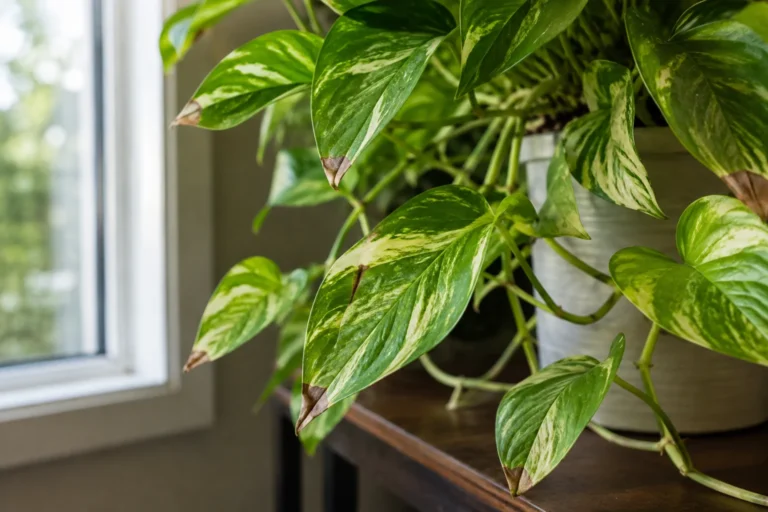
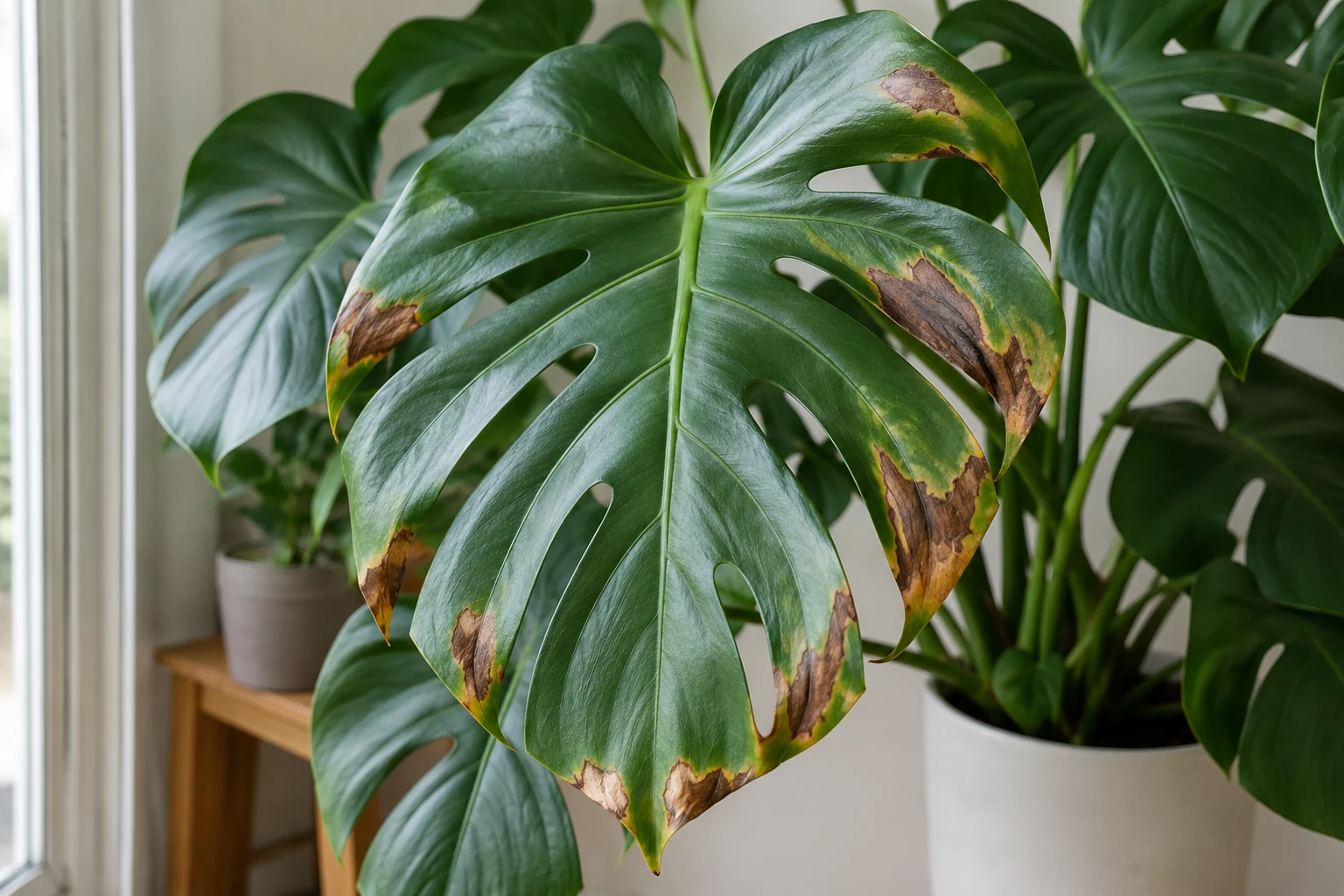
A fixed dry patch on a window-facing monstera leaf differs from a wet lesion that keeps enlarging. Record spot location, texture, and growth before making several care changes at once.
Photograph the Boundary of One Lesion
Mark a representative leaf in photographs and compare the margin over subsequent checks. Stable scars after a light change are less concerning than new lesions on unexposed leaves. Inspect the underside for pests and keep leaves from rubbing against hot or cold glass. Tissue already browned cannot be turned green with misting.
- Overwatering and poorly aerated roots
- Direct sun scorch
- Low humidity combined with erratic watering
- Pests or leaf-spot disease
How to narrow it down
Check the soil first. If it stays wet for too long, start there. Then look at light exposure and whether the spotting is isolated to window-facing leaves.
How to help recovery
Give the plant bright indirect light, a fast-draining mix, and more consistent watering. Remove badly damaged leaves only after the plant is stable.
Isolate When Spots Keep Spreading
Separate a plant with unexplained expanding lesions while investigating the cause, and avoid splashing affected foliage. Check roots if the mix stays wet and multiple leaves decline together. A bacterial or fungal problem needs a different response from sunscald, so do not use a generic treatment solely because spots are brown. Retain functional leaf area and improve the diagnosed conditions; removal of every blemished leaf can weaken an otherwise recoverable plant.
Brown damage can also follow mechanical tearing as a leaf unfolds or rubs against a support. These marks usually follow the injury location rather than spreading into untouched leaves. Check ties and nearby surfaces while examining roots and exposure. If the lesion boundary remains stable, preserve the useful green part of the leaf instead of treating the entire plant for an unconfirmed infection.