Brown Rosemary: Check Living Shoots Before Cutting Back
A brown rosemary branch may be dead even when the rest of the shrub is salvageable. Identify living leafy growth and inspect drainage before making a hard cut into bare woody stems.
Find the Boundary Between Live and Dead Wood
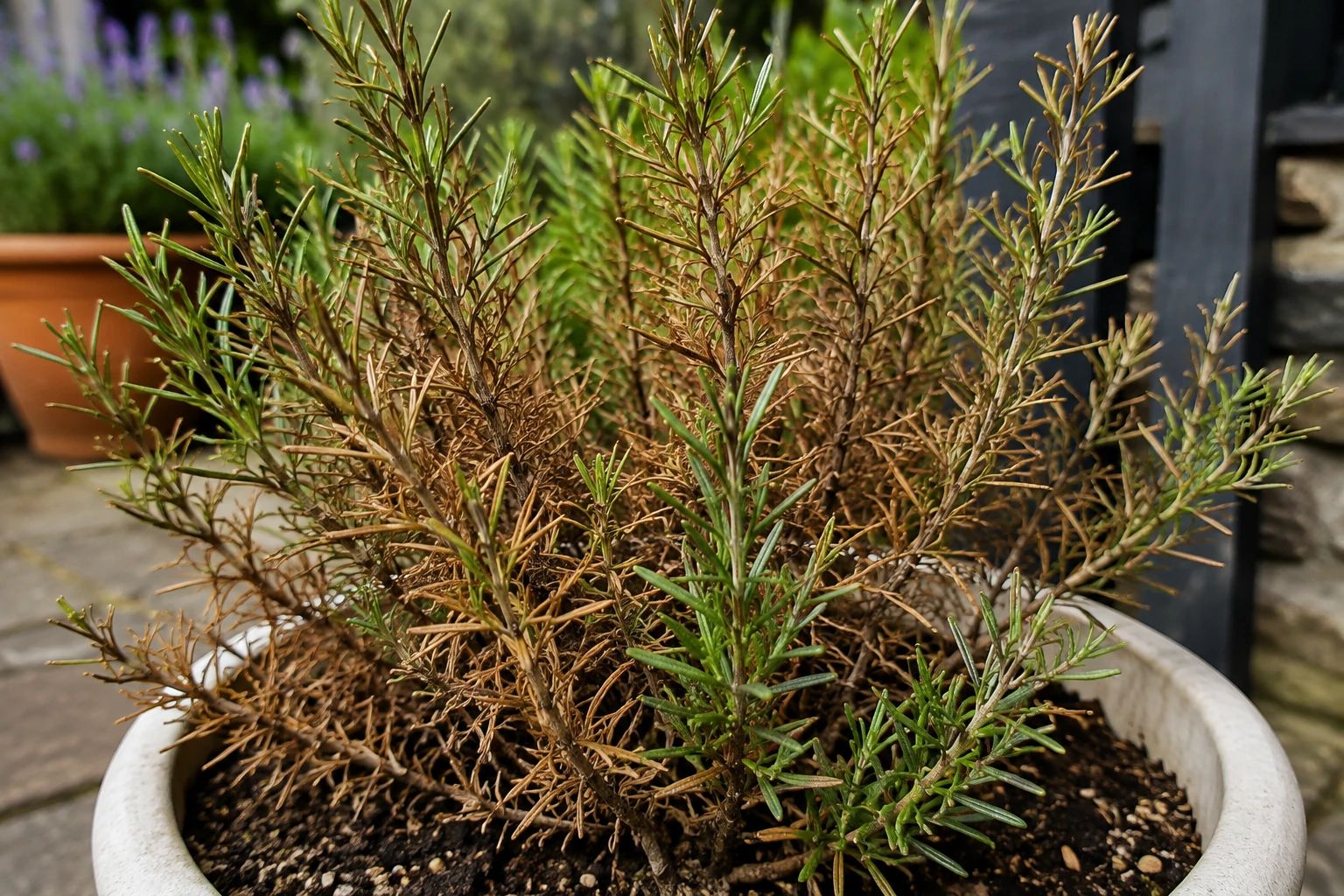
Test a small section of a suspect shoot rather than scraping the whole plant. Green tissue and flexible tips support continued life; brittle brown wood is less promising. Prune dead portions back to a living leafy section, because old leafless rosemary wood may not reliably resprout.
What brown rosemary usually means
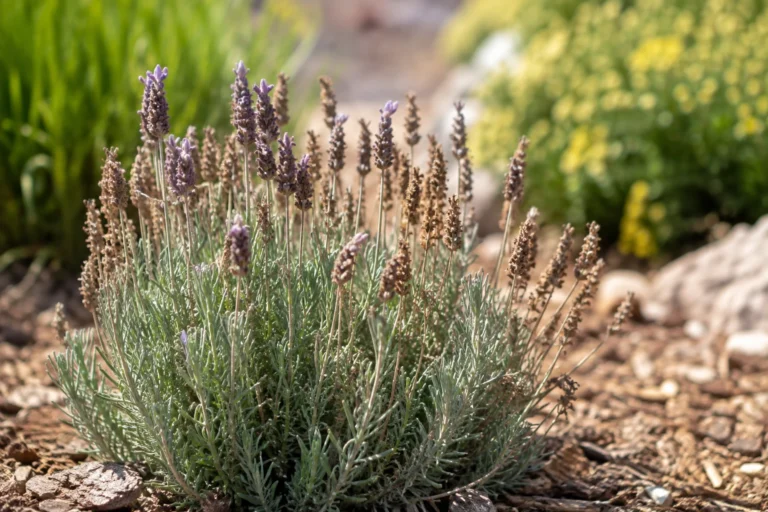
Browning that begins inside the plant or near the base often points to old growth and poor airflow. Browning that spreads after wet weather or frequent watering usually points to root stress. Tip browning after cold or wind can be environmental damage instead.
| Symptom | Likely cause |
|---|---|
| Brown from the center outward | Age and dense woody growth |
| Brown with wet soil | Poor drainage or overwatering |
| Brown tips after cold weather | Cold injury or wind burn |
| Patchy decline in a pot | Root crowding or exhausted potting mix |
1. Poor drainage
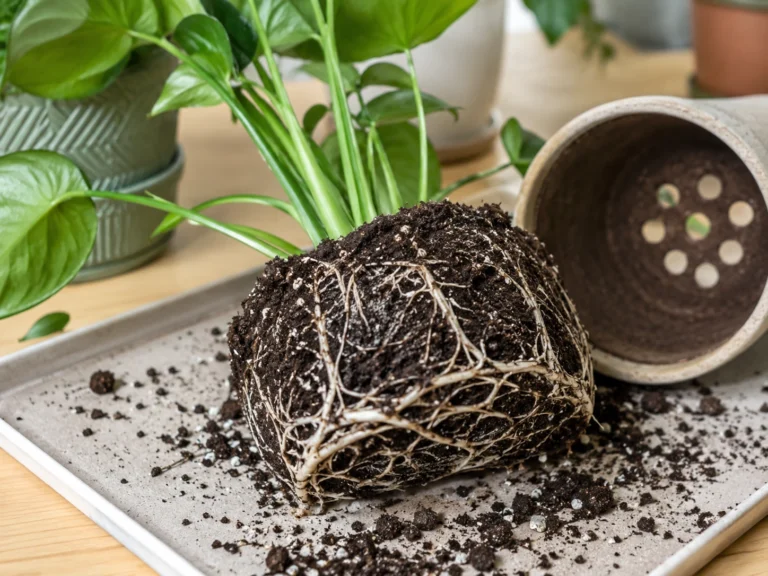
Rosemary hates sitting in soggy potting mix. If the pot drains slowly or the soil stays wet, roots weaken and stems begin to brown.
2. Old woody growth
Older interior stems naturally thin out over time, especially if the plant has not been lightly trimmed. Regular light pruning keeps new leafy growth coming.
3. Winter or weather damage
Cold snaps, drying winds, and winter wet can damage foliage and stems, especially in containers.
- Move rosemary to the sunniest, airiest position you have.
- Repot in a gritty, fast-draining mix if the pot stays wet.
- Trim back only dead growth, cutting to live green tissue.
- Water deeply but infrequently, allowing the mix to dry somewhat between waterings.
Can brown rosemary recover?
If stems still have green tissue and the roots are not rotten, rosemary can recover well. If stems are brittle and brown all the way through, prune those sections off and encourage new growth from living parts of the plant.
Winter Wet Can Look Like Drought
Rosemary damaged by saturated winter soil can appear dry above ground. Adding more water because the leaves are crisp can compound root decline. Container drainage and protection from prolonged winter wet may matter more than richer soil or extra feeding.