How to Tell If a Peace Lily Is Overwatered
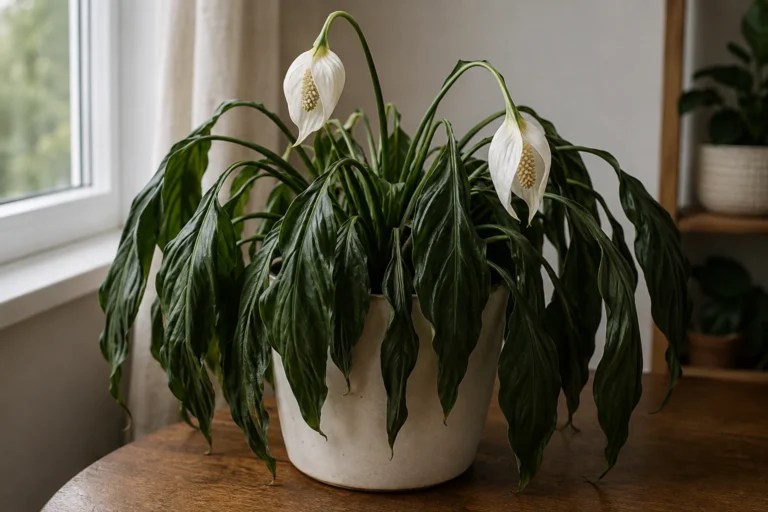
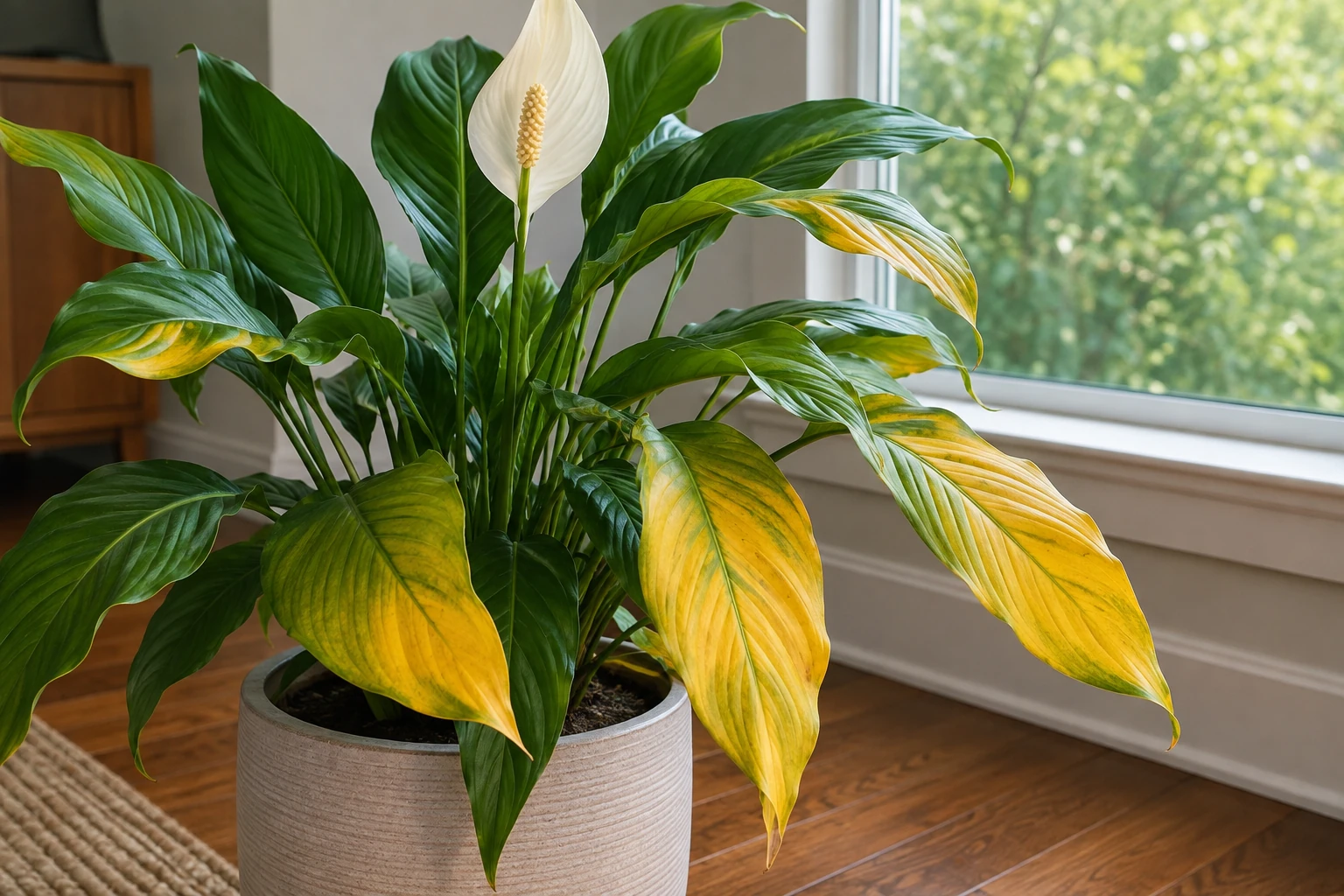
A drooping peace lily is not enough to diagnose overwatering. Persistent wetness, declining growth, yellow leaves, and damaged roots form a more useful pattern when considered together.
Check the Bottom of the Inner Pot
Water can remain trapped below an apparently dry surface, especially inside a decorative container. Lift the nursery pot and inspect the drainage path. Empty retained runoff and compare pot weight over time to see whether the plant is actually using water.
Signs of an Overwatered Peace Lily
| Sign | What it suggests | Next step |
|---|---|---|
| Yellow leaves plus wet soil | Too much moisture | Let the mix dry somewhat |
| Drooping despite wet soil | Root stress | Check drainage |
| Pot stays wet for many days | Dense mix or low light | Improve conditions |
| Soft roots or sour smell | Root rot possible | Inspect and repot if needed |
Stop watering on a fixed schedule
Peace lilies use water at different rates depending on light, temperature, pot size, and season. Feel the mix before deciding to water again.
Make sure excess water can escape
A decorative cachepot can trap drainage water around the root ball. Empty saucers and outer pots after watering so roots are not left standing in water.
Give the plant bright indirect light
Very low light slows water use, which means the pot stays wet longer. Moving the plant to brighter indirect light can improve the moisture cycle.
Inspect roots if symptoms worsen
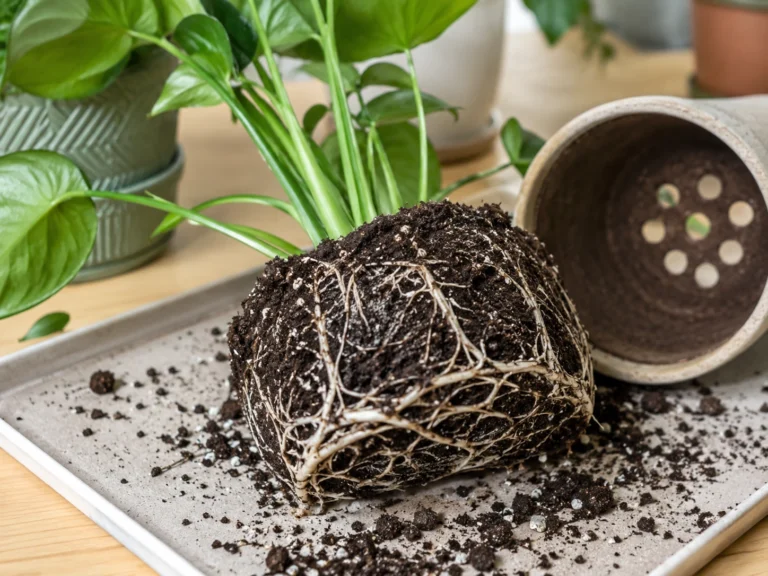
If the plant remains limp and yellow while soil stays wet, slide it from the pot and inspect the roots. Healthy roots are generally firm; rotten roots are soft and deteriorating.
Distinguish Excess Water From Established Rot
A plant in overly wet mix may recover once aeration improves, while soft deteriorating roots need removal and an appropriate repotting plan. Avoid treating firm roots as rotten solely because they are dark. Fertilizer is not a repair for roots that cannot function.
Review the saucer or outer pot immediately after watering, then check it again later if drainage continues. A small amount of delayed runoff can keep the bottom roots submerged unnoticed. If the drainage path is clear but the pot still remains wet unusually long, compare light, room temperature, medium condition, and root volume before deciding that watering frequency alone is responsible.