Why Is My Pothos Losing Variegation?
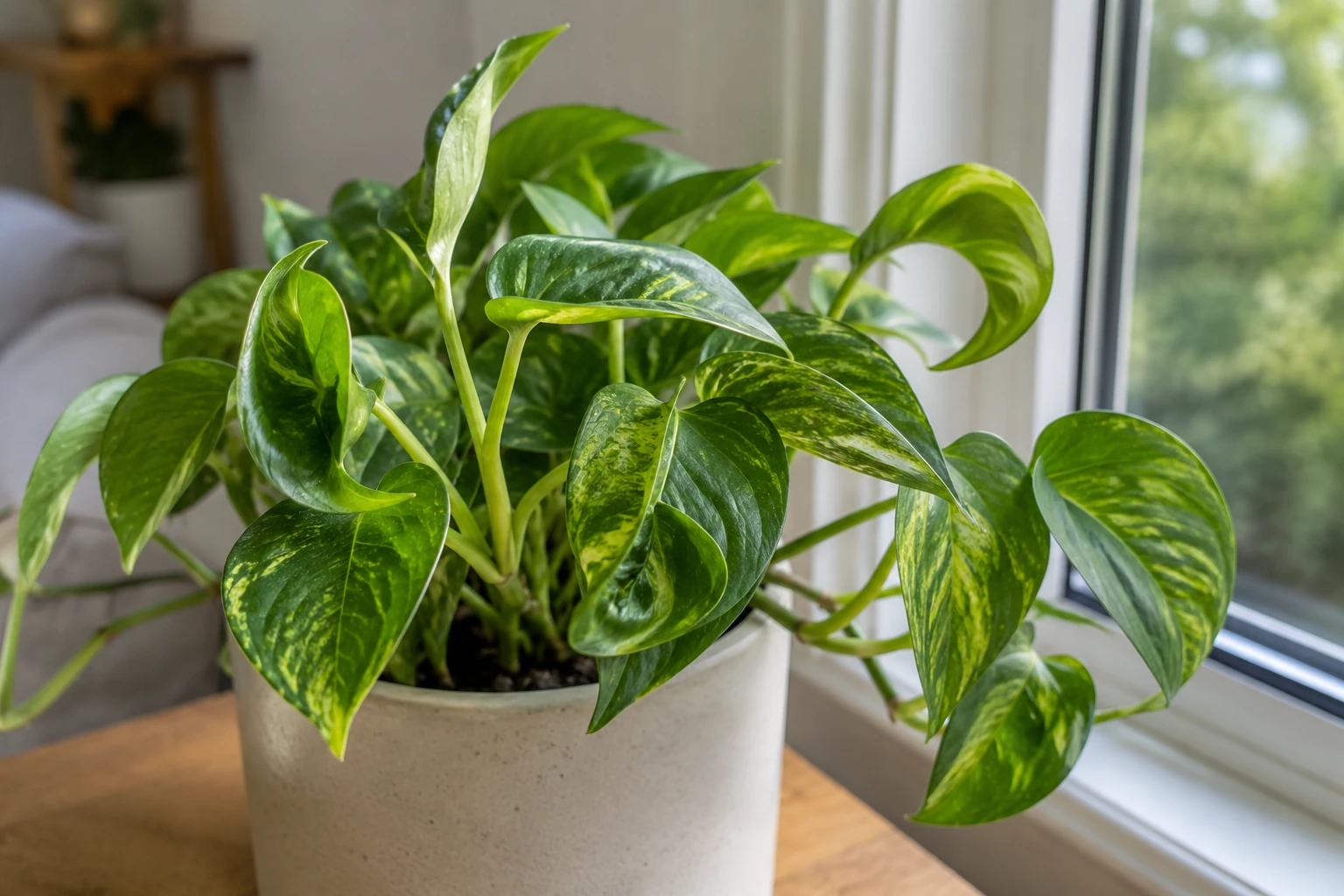
A pothos producing greener new leaves may be reacting to low light, while an entirely green shoot can be a more persistent reversion. Compare consecutive leaves along the same vine before pruning.
Move Toward Bright Indirect Light Gradually
Variegated tissue has less chlorophyll, so suitable light supports vigorous patterned growth. Avoid replacing deep shade with harsh direct sun in one move. Existing leaves will not reliably develop a new pattern; evaluate leaves formed after the adjustment.
Main Reasons Variegation Fades
| What you notice | Likely cause | What to do |
|---|---|---|
| New leaves mostly green | Too little light | Move to brighter indirect light |
| Long gaps between leaves | Low light stretch | Prune and improve placement |
| One stem fully green | Reversion | Prune back to a more variegated node |
| Older plant with mixed pattern | Normal variation | Monitor new growth over time |
Improve the light
Pothos likes bright indirect light. Closer to a window usually improves color without exposing the leaves to harsh direct sun for hours.
Prune reverted growth
If one vine becomes strongly green, trim it back to a more variegated section so the greener growth does not dominate the plant.
Keep care balanced
Healthy growth supports better color expression. Avoid long periods of deep shade or severe stress.
Be patient with new leaves
Old leaves will not regain lost pattern, so watch fresh growth after you adjust placement.
Prune a Reverted Shoot to a Patterned Node
If a vine remains fully green, locate a healthy patterned section before cutting back. Regrowth is not guaranteed to match a desired pattern, and different cultivars vary naturally. Do not remove all green tissue from a stressed plant merely to improve its appearance.
A mostly cream or white pothos leaf has limited photosynthetic tissue, so a run of heavily pale growth may also weaken a vine. The goal is sustainable healthy variegation, not removing every green section. Compare cultivar expectations before labeling normal variation as reversion. If a green shoot is removed, preserve enough sound patterned growth to support the remaining plant.