Why Are My Rose Leaves Curling?
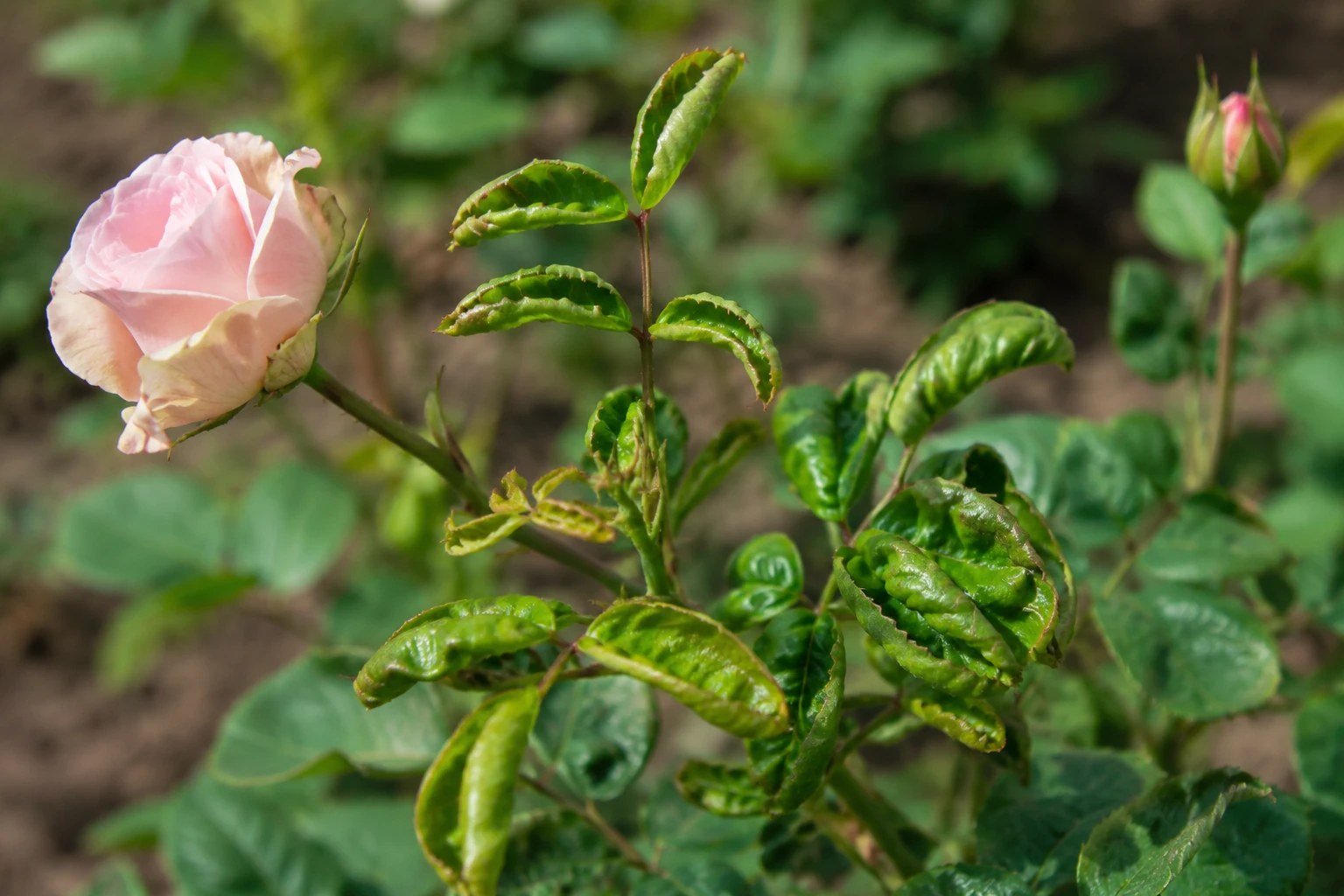
Rose leaves may curl around aphid colonies or twist after chemical exposure. Look at the youngest shoots and compare the pattern across the garden before deciding that every curl is a water issue.
Aphids Often Hide Where the Leaf Fold Begins
Check shoot tips, buds, and leaf undersides for living colonies and shed skins. Old distortion can remain after insects leave, so active colonies matter more than a curled leaf alone. Outdoors, look for predator larvae and aphid mummies before choosing control.
Read the Curl Pattern
| What you see | Likely clue | Check next |
|---|---|---|
| Curled tender leaves with insects | Aphids | Inspect buds and shoot tips |
| Leaves curl in heat then improve | Heat/water stress | Check root-zone moisture |
| Twisted narrow new growth | Herbicide injury possible | Review nearby spraying |
| Curling with spots or discoloration | Disease or feeding damage | Inspect both leaf surfaces |
Check for aphids
Aphids gather on soft rose shoots and buds. Their feeding can distort new leaves before the foliage fully expands. A strong stream of water can reduce small infestations, and natural predators often help.
Stabilize watering
Roses perform best with deep, consistent watering. Drought followed by heavy soaking can stress foliage and contribute to curling or scorch.
Consider environmental damage
Hot wind, intense reflected heat, and sudden weather changes can temporarily roll leaves. Mulching the root zone helps moderate moisture and temperature.
Rule out chemical injury
Some herbicides can drift or move from treated lawns and create distorted rose growth. If new leaves are unusually twisted after nearby weed treatment, avoid further exposure and wait for healthy new growth.
Unusual Brooms of Growth Need Assessment
Severe distortion with excessive thorniness or abnormal dense shoots can require investigation for rose rosette where it occurs. Those signs are not diagnosed from curling alone. Seek local advice instead of treating repeatedly for aphids when the wider growth pattern does not fit.
Aphids may be present on a rose that also has unrelated heat or chemical injury. Their presence is not proof that all distortion comes from feeding. Reduce confirmed colonies appropriately, then observe new growth. If abnormal stems, unusual thorn production, or severe stunting continue, seek advice with photographs of the whole shoot rather than just its curled leaves.