How to Stake Tomato Plants
A tomato support needs to carry a mature canopy and heavy fruit, not just hold a seedling upright. Choose the stake, cage, or trellis based on growth habit and how you intend to train the stems.
Basic Staking Setup
| What you need | Why it matters | Tip |
|---|---|---|
| Strong stake | Keeps the plant upright | Use a stake tall enough for the mature plant |
| Soft ties | Prevents stem damage | Loop ties loosely around the stem |
| Regular checks | Supports new growth | Add ties as the plant grows taller |
Plan for Determinate and Indeterminate Growth
Bush types and continuously growing vines need different support arrangements. A single stake works best with a training plan, while a cage may suit a bushier plant. Install early where practical and avoid driving supports through a large established root ball.
Stake early
It is easier to place a stake near a small plant than around a sprawling one later. Early support also reduces root disturbance from last-minute installation.
Tie loosely
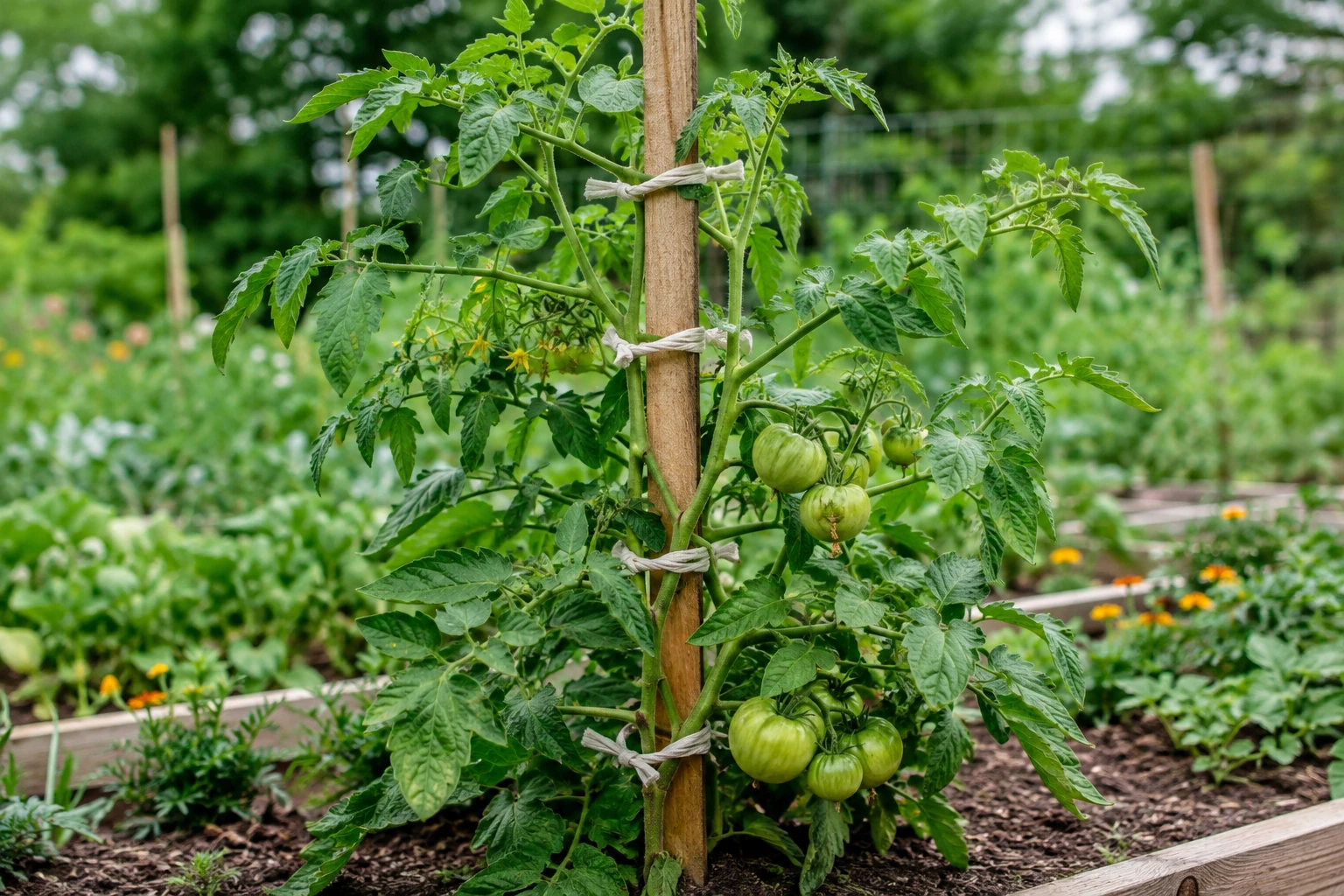
Secure the stem gently in a figure-eight pattern or with a soft loop so it can expand without being cut by the tie.
Train upward growth
As the tomato gets taller, continue tying the main stem or strongest leaders at intervals. Remove only what is necessary for airflow and space.
Watch after storms
Heavy fruit and windy weather put extra strain on ties and stakes. Check support points regularly and tighten or replace them when needed.
Check Ties Where Fruit Weight Increases
Soft ties should hold stems without constricting them as they thicken. Inspect after storms and as clusters gain weight. Add support above growing sections rather than tightening one old tie until it cuts into the stem.
A leaning stake can damage roots and lever a stem during wind, so anchor the support securely before the crop becomes heavy. Inspect the soil around its base after storms without digging through established roots. Smooth broad ties spread contact pressure better than thin wire. Leave enough room for stem thickening and replace worn ties rather than relying on one tight knot throughout the season.