Why Are My Hydrangea Leaves Curling?
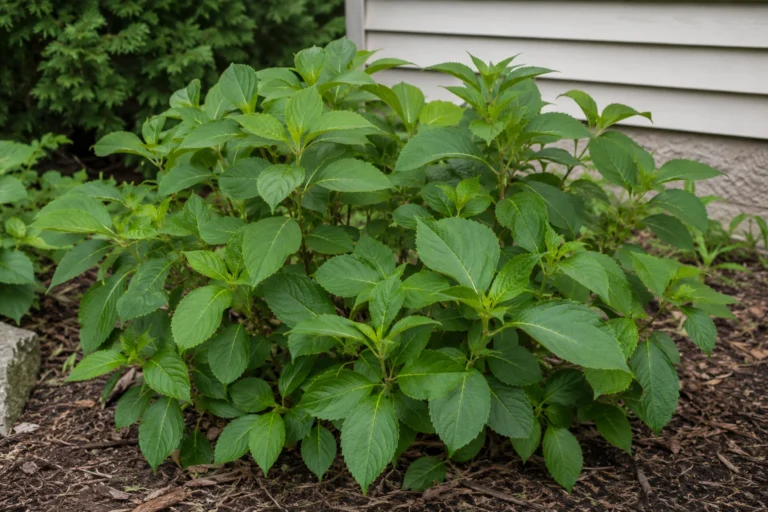
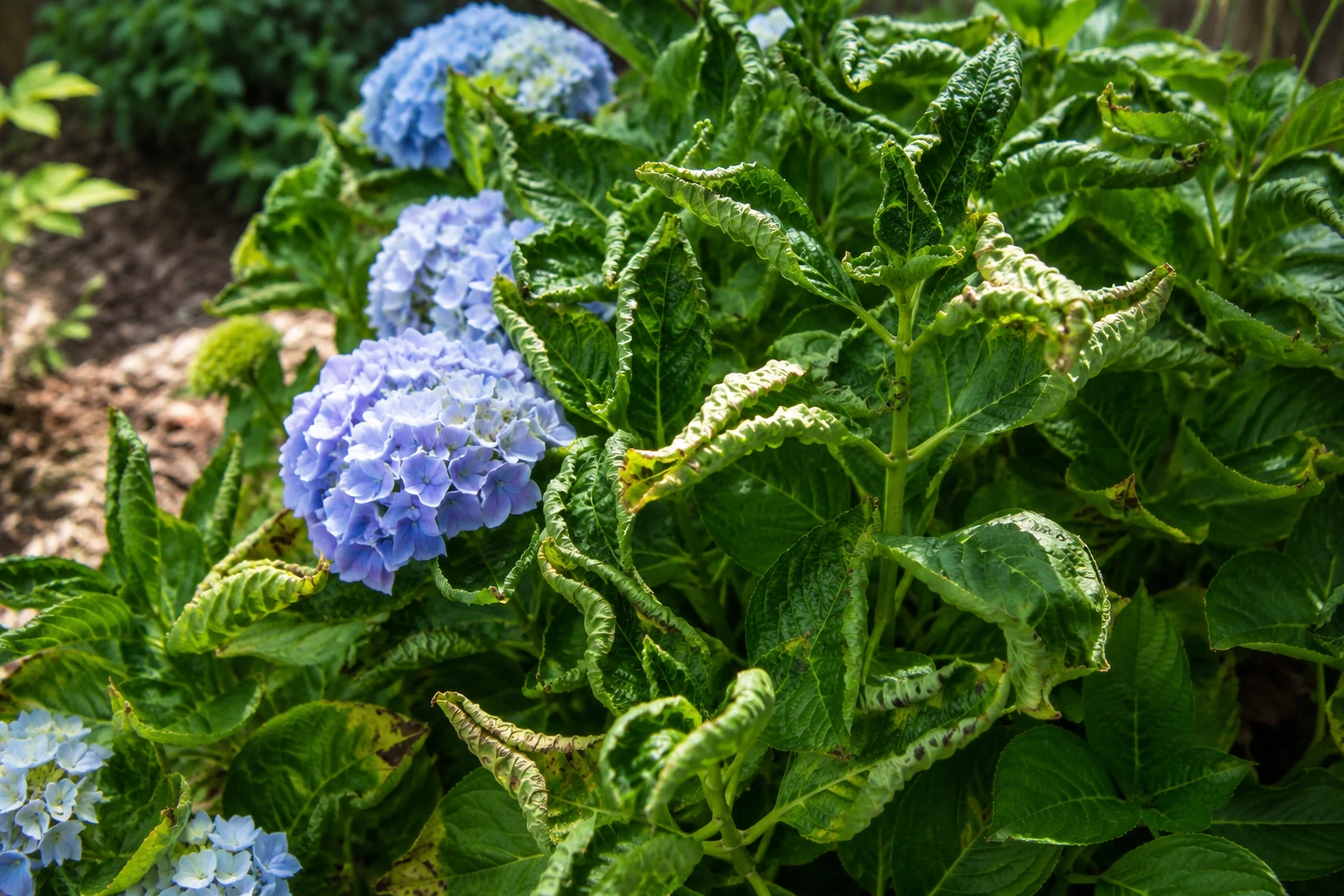
A hydrangea leaf that curls in afternoon heat may be reducing water loss. Tight distortion on new shoots, leaf ties, or lasting deformation requires a closer look for insects or exposure.
Look for Leaves Bound Together
Some insects shelter between leaves held together with silk. Open a suspect leaf pair carefully and look for a larva or feeding injury. This local pattern differs from the whole shrub drooping during heat, and does not justify spraying every plant in the bed.
| What you notice | Likely cause | What to do |
|---|---|---|
| Leaves curl during hot afternoons | Heat or moisture stress | Water deeply and protect roots with mulch |
| New leaves twisted or cupped | Chemical or pest damage | Inspect growth closely and review nearby sprays |
| Curling with browning edges | Drought stress | Increase consistent soil moisture |
| Widespread distortion plus spotting | Disease stress | Remove badly affected leaves and improve airflow |
Test soil moisture
Hydrangeas are thirsty shrubs, especially in warm weather. Check the soil a few inches down before assuming the plant needs more water.
Look at the newest leaves
Older leaves often react first to heat, while unusual distortion in tender new growth can suggest another cause.
Consider nearby sprays
Weed killer drift is a common cause of strange twisting or curling in ornamental plants. Even light exposure can affect soft growth.
Reduce extra stress
Keep mulch away from the stem, water deeply, and avoid heavy pruning while the plant is already under pressure.
Connect Twisted Shoots With Nearby Weed Control
Chemical injury can affect tender hydrangea growth after drift or contaminated applications nearby. Record the timing and direction of exposure. New healthy leaves after exposure stops are more informative than whether an old misshapen leaf becomes flat again.
A hydrangea may keep some curled leaves even after a short stress episode ends. Check whether newly expanding leaves are normally shaped and whether the shrub holds water balance under cooler conditions. Persistent new deformation carries more diagnostic value than one old leaf. Keep tools and spray equipment used for herbicides separate from routine ornamental care to avoid preventable exposure.