Brown Rose Buds: Inspect Petals, Thrips, and Weather Damage
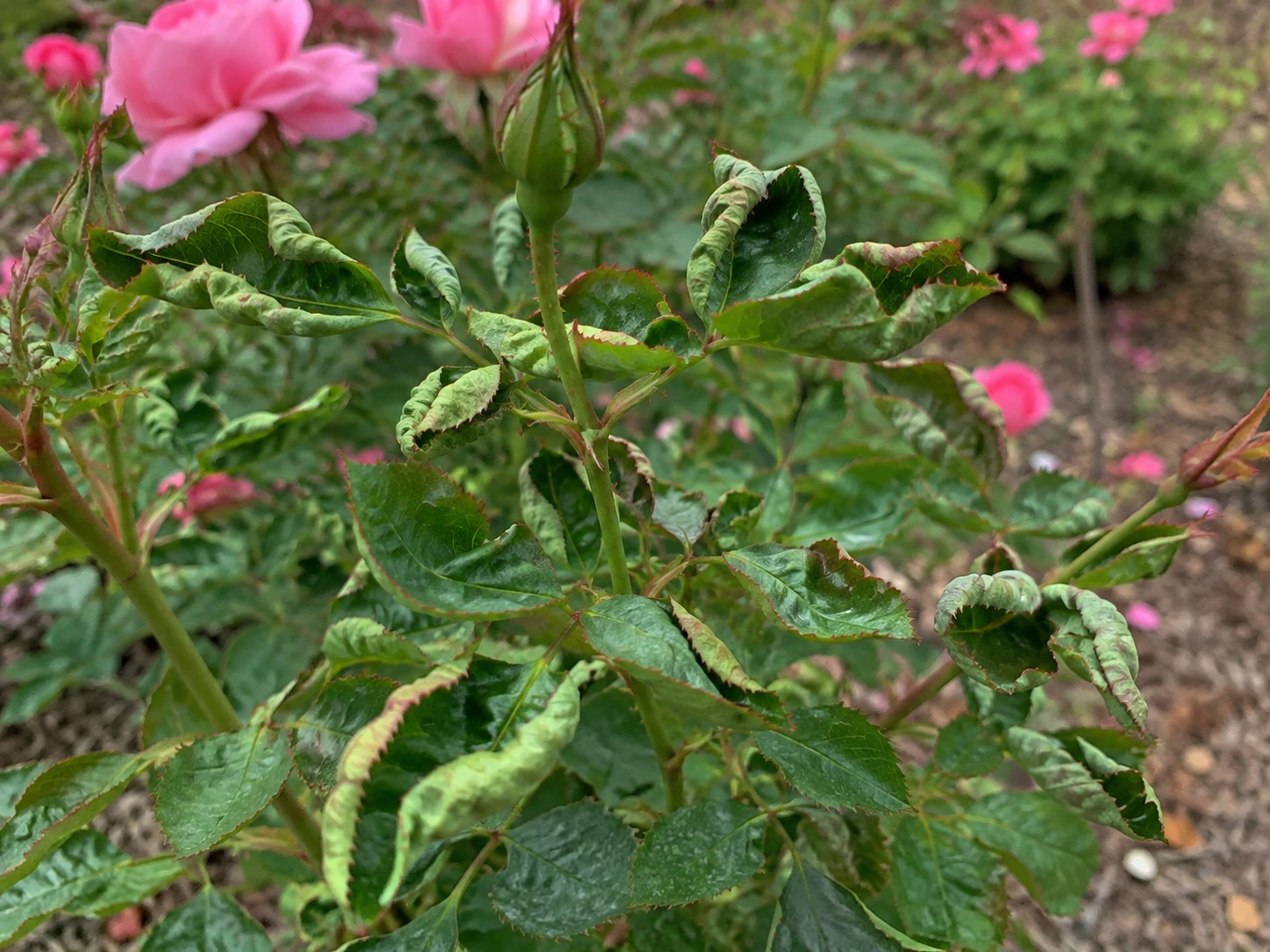
A rose bud browning before opening may have wet damaged petals, hidden thrips, or fungal decay. Examine one failed bud closely so the next response matches what actually happened.
Open a Failed Bud Over White Paper
Tiny narrow insects inside the petals support a thrips investigation. Gray mold or soft rotting petals suggest a disease problem instead. The two can overlap, so record both insects and tissue appearance rather than assuming the outside color identifies one cause.
Brown Bud Clues
| What you notice | Likely cause | What to inspect |
|---|---|---|
| Bud stays closed and browns | Balling, moisture, or disease | Check petals and weather history |
| Edges look dry or scorched | Heat or drought stress | Check watering consistency |
| Distorted or damaged petals | Thrips possible | Open a bud and inspect inside |
| Gray fuzzy growth | Botrytis | Remove affected buds promptly |
Inspect the bud closely
Look at outer petals, the bud base, and nearby leaves. This helps separate insect feeding from disease or weather damage.
Remove damaged buds
Dead or clearly infected buds should be cut off so the plant can redirect energy to healthier growth.
Help Damp Rose Buds Dry Between Wet Periods
Crowded rose growth stays wetter longer and is more likely to develop bud and petal problems.
Stabilize watering
Even moisture supports consistent bud development. Avoid repeated drought followed by heavy soaking.
Compare Tight Buds With Opening Flowers
If rain-damaged outer petals stick together but the inner flower remains sound, bud balling may be involved. Remove ruined buds selectively and monitor the next flowering flush. Avoid forcing every tight bud open, which can injure flowers still developing normally.
If damage appears mainly after rain, note whether densely petaled varieties suffer more than open flowers nearby. This comparison can support a weather-related explanation while still leaving room for disease. Avoid spraying every bud without checking inside at least one failed example. Continued failure through dry weather warrants renewed inspection rather than assuming rain explains the entire season.