Yellow Spider Plant Leaves: Roots, Light, and Leaf Age
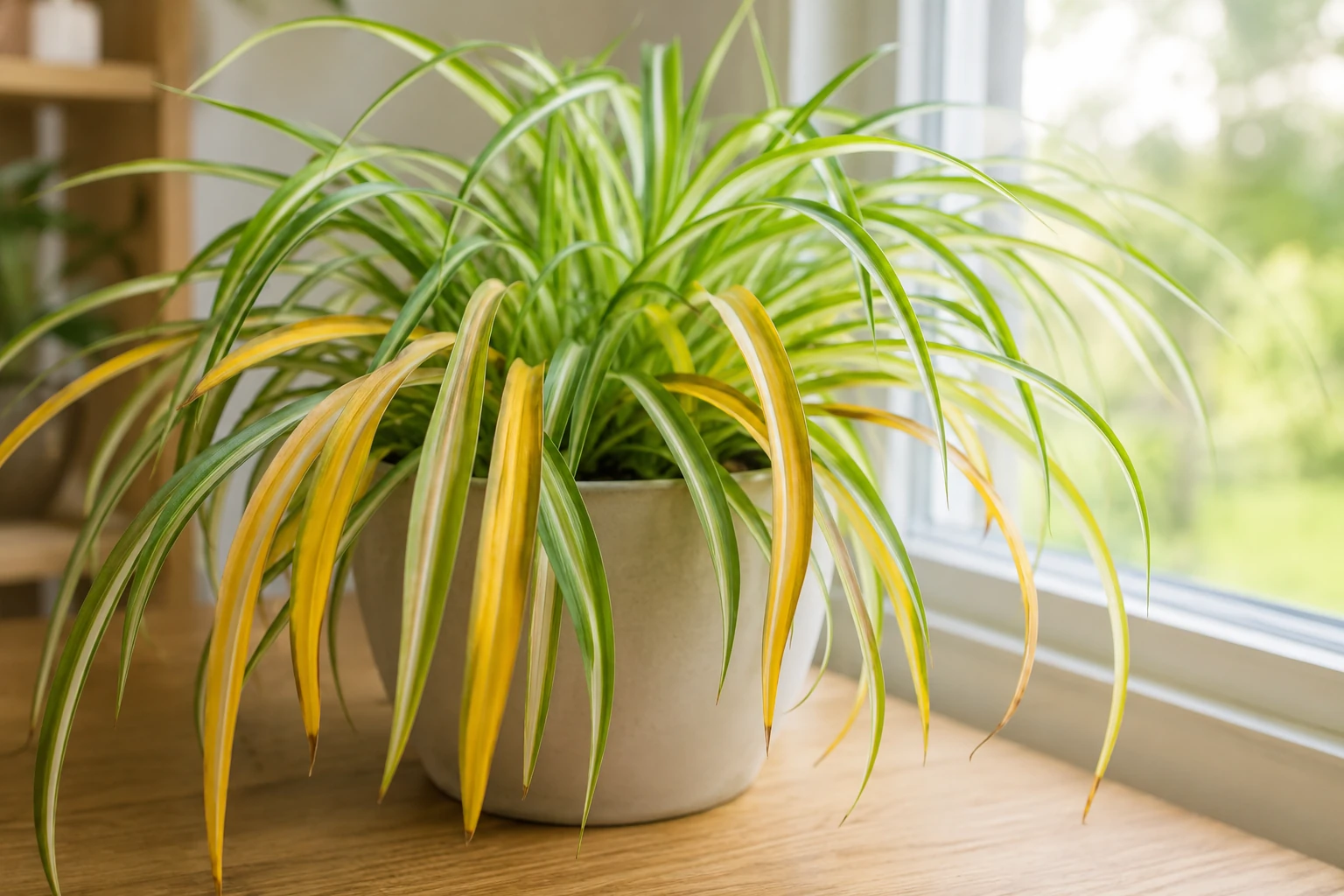
A few old spider plant leaves may fade naturally, but widespread yellowing suggests a shared root or light problem. Distinguish whole-leaf yellowing from the more limited brown-tip pattern.
Do Not Treat Thick Roots as Disease
Spider plants naturally develop fleshy storage roots. Their thickness alone is not evidence of rot or an urgent need for repotting. Check whether roots are firm, whether the pot dries reasonably, and whether crowding makes watering difficult.
Use the Pattern to Narrow It Down
| What you see | Most likely clue | What to check next |
|---|---|---|
| One oldest leaf yellow | Normal aging | Remove when fully yellow |
| Several yellow leaves; mix wet | Overwatering | Let mix dry and improve drainage |
| Pale floppy growth in dim room | Low light | Move to brighter indirect light |
| Yellowing plus crowded roots | Rootbound plant | Consider repotting |
Too much water
Spider plants have fleshy roots that store water. Constantly wet soil can stress those roots and produce widespread yellowing.
Low light
In very low light, growth becomes weaker and soil dries slowly. Bright indirect light generally supports stronger color and more balanced water use.
Root crowding
Spider plants can tolerate being somewhat pot-bound, but extreme crowding can make watering difficult and lead to stress.
Mineral or fertilizer buildup
Excess soluble salts can stress foliage. Avoid overfeeding and periodically flush containers if appropriate.
Compare Color With the Plant’s Normal Pattern
Variegated leaves include pale bands that are not chlorosis. Look for a change from the plant’s usual pattern and inspect the newest leaves. Very low light can slow growth and water use, so correcting exposure may also require a longer interval between waterings.
Yellowing that follows repeated feedings should prompt a check of the label rate and retained runoff. In a hanging pot, salts and a root-filled medium can make watering uneven. Check the root ball directly before choosing between leaching, a medium refresh, or a modest pot-size change. Thick firm storage roots should remain protected during handling.