Powdery Mildew: Protect Healthy Growth and Confirm the Coating
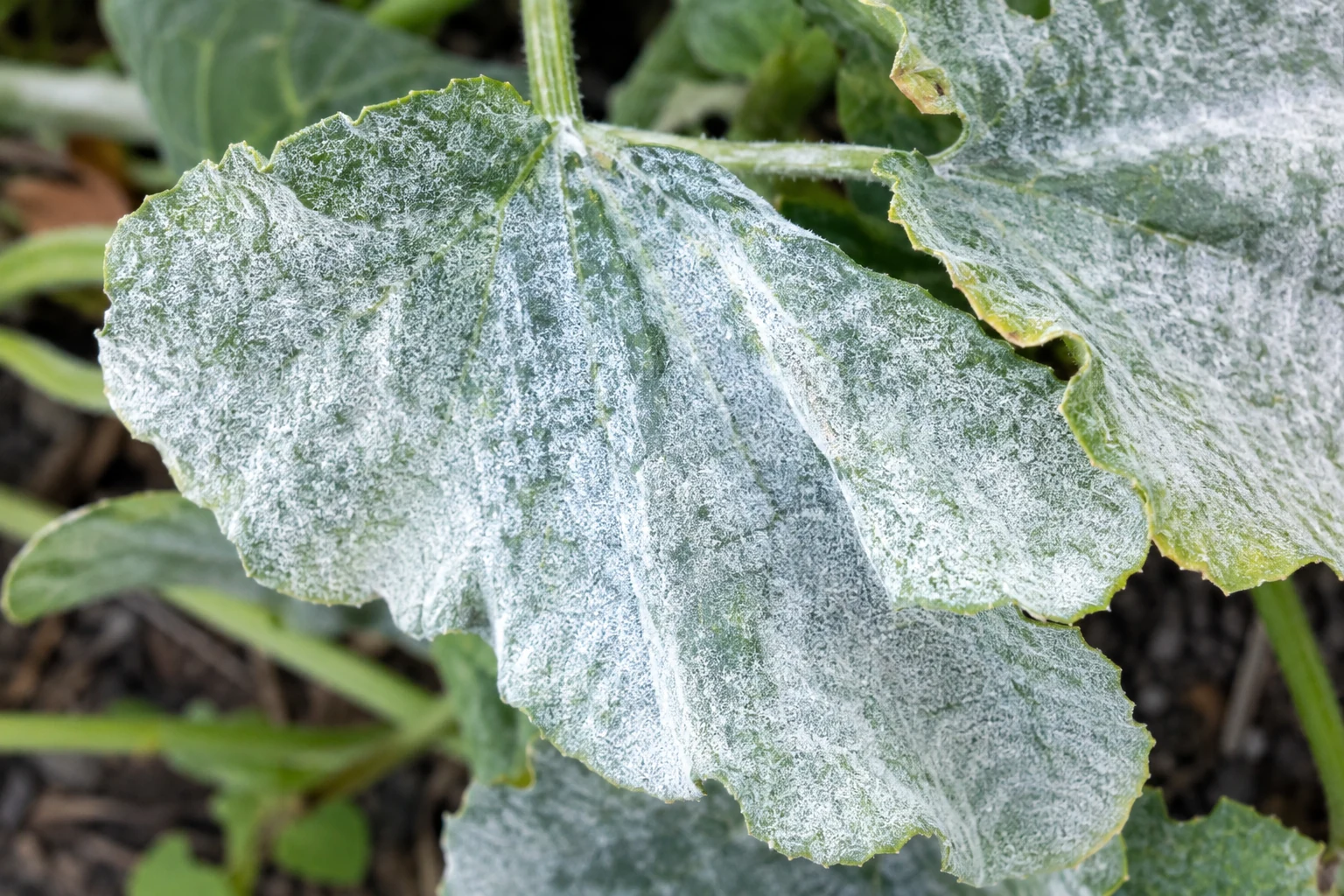
Powdery mildew is a surface-growing disease, yet pale leaves and white residue have other explanations. Confirm an expanding powdery coating before treating, and match any product to the affected plant species.
| What you see | Most likely clue | What to check next |
|---|---|---|
| White powder wipes or rubs from leaf surface | Powdery mildew likely | Inspect nearby leaves and stems |
| Patch starts small then expands | Active infection | Remove heavily infected tissue |
| Dense shaded growth affected most | Poor airflow favors disease | Thin and space plants |
| Repeated annual outbreaks | Susceptible cultivar/site | Use resistant varieties and prevention |
Make sure it is powdery mildew
Powdery mildew usually forms distinct white powdery patches that expand across the surface. It can distort young leaves and buds. Do not confuse it with harmless natural leaf markings or dried spray residue.
Dry Leaves Do Not Rule Out Powdery Mildew
Unlike many splash-spread leaf diseases, powdery mildew can develop without prolonged free water on foliage. Better spacing and appropriate light can help, but avoiding overhead irrigation alone will not guarantee prevention. The host species and local disease pressure still matter.
Remove the worst infection
Prune or pick off heavily infected leaves when that can be done without stripping the plant bare. Dispose of infected debris rather than leaving it around susceptible plants.
Improve airflow and light
Crowded, sheltered foliage stays in the microclimate powdery mildew prefers. Increase spacing, thin congested growth, and provide appropriate light for the plant species.
Adjust watering habits
Water the soil rather than routinely wetting foliage late in the day. Keep plants vigorous without pushing excessive soft growth with too much nitrogen fertilizer.
Use fungicides preventively when needed
On highly susceptible plants or severe recurring problems, a fungicide labeled for the plant and powdery mildew may be warranted. Most fungicides protect healthy tissue better than they restore badly infected leaves, so timing matters. Follow the label exactly.
Plan for next season
Choose resistant cultivars when available, clean up infected plant debris, and avoid planting the same susceptible species in an overcrowded site every year.
Do Not Expect Diseased Leaves to Reset
Removing severe infection and protecting remaining healthy tissue are realistic goals. Choose resistant cultivars for repeated problems and verify product compatibility before use. Avoid untested baking soda or detergent recipes that can scorch foliage without providing dependable disease control.
Does powdery mildew require wet leaves?
Unlike many leaf diseases, powdery mildew does not need prolonged free water on leaves to infect; humid, crowded conditions can still favor it.