Black Spot on Roses: Clean Up Infection and Protect the Next Leaves
Rose black spot often starts low on the bush and leads to yellowing and leaf loss. A useful treatment plan separates removal of infected material from protection of the next healthy flush.
| What you see | Most likely clue | What to check next |
|---|---|---|
| Black spots with feathery edges | Black spot likely | Remove infected leaves and inspect lower canopy |
| Yellow leaves dropping from bottom upward | Disease progressing | Clean debris and improve airflow |
| Dark lesions on canes | Possible overwintering source | Prune affected canes during proper season |
| Repeated disease every rainy season | High site/cultivar susceptibility | Use resistant roses and preventive program |
Recognize black spot
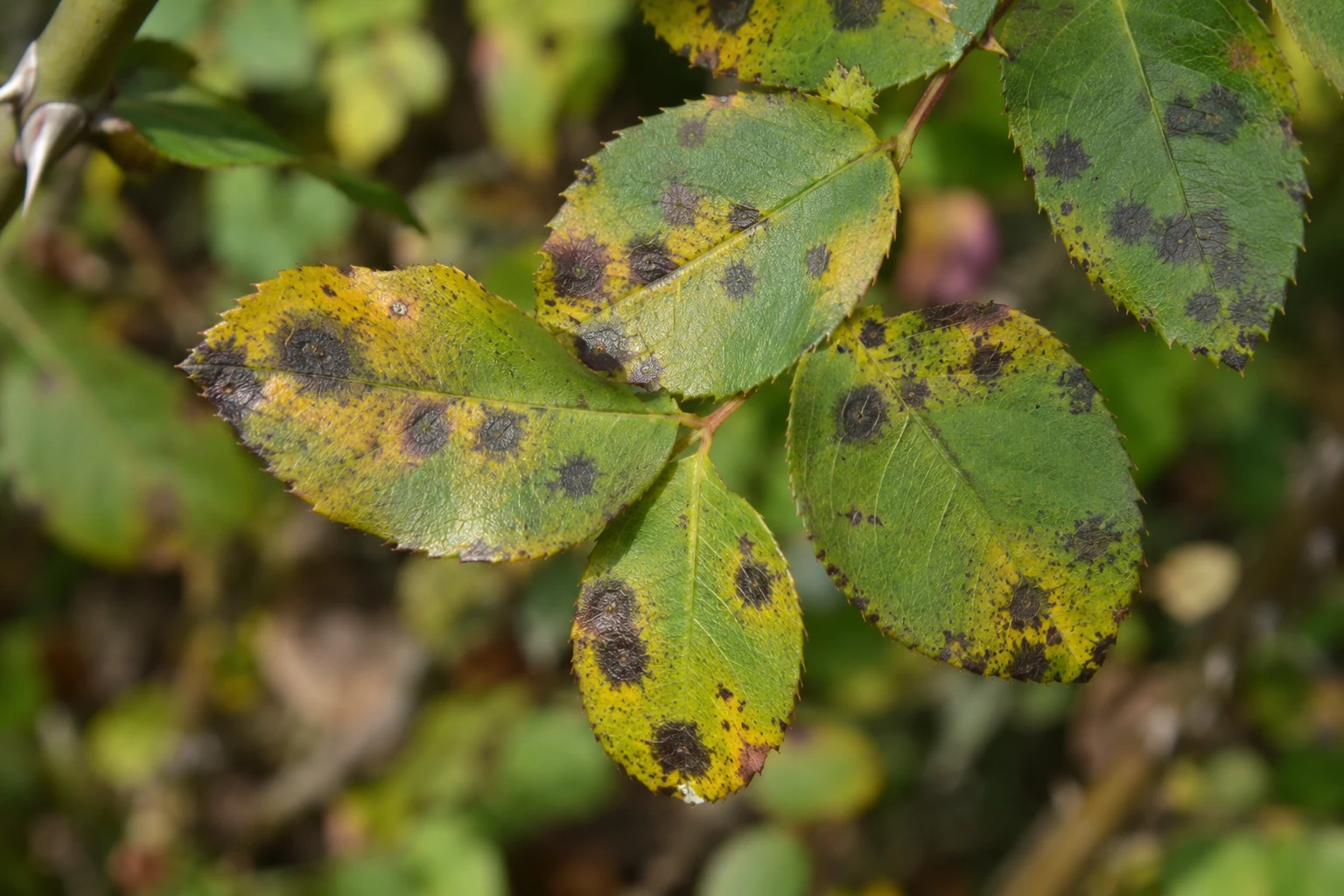
The classic symptom is a dark round to irregular lesion with a fringed or feathery margin. Yellowing often develops around the spots, and infected leaves may fall prematurely. Disease often starts low on the bush and moves upward.
Check the Leaf Margin and Lesion Edge
Typical lesions have irregular fringed edges, but other rose problems also make dark spots. Collect photographs of upper and lower leaf surfaces and note whether wet weather preceded spread. Rust pustules or a powdery coating suggest a different disease pathway.
Remove infected material
Pick off heavily infected leaves and collect fallen leaves from beneath the plant. Do not leave diseased debris piled around the rose. Prune clearly infected canes when appropriate for the season and rose type.
Keep foliage drier
Water at the base when practical, space roses for airflow, and avoid dense growth. Morning sun helps leaves dry faster after dew or rain.
Do not overfertilize
Heavy nitrogen can produce soft, dense growth that is harder to keep dry. Feed roses according to plant needs, not as a response to spotting.
When fungicide is appropriate
Highly susceptible roses in climates favorable to black spot may need a preventive fungicide program. Use only products labeled for roses and black spot, follow all directions, and rotate active ingredients when the label or local guidance recommends it.
Long-term prevention
Disease-resistant rose cultivars are the strongest long-term tool. Combine resistant genetics with sanitation, spacing, and careful watering to reduce disease pressure year after year.
Plan Prevention for a Susceptible Rose
A fungicide cannot turn badly spotted tissue healthy. Where black spot recurs, combine resistant varieties, debris cleanup, and a locally appropriate preventive program. Match pruning to the rose type so disease cleanup does not accidentally remove its main flowering wood.
Will black spot go away on its own?
Existing spots will not disappear. Disease pressure may slow in dry weather, but infected leaves and canes can remain a source of spores.