Yellow Zucchini Leaves: Read the Crown and Outer Foliage
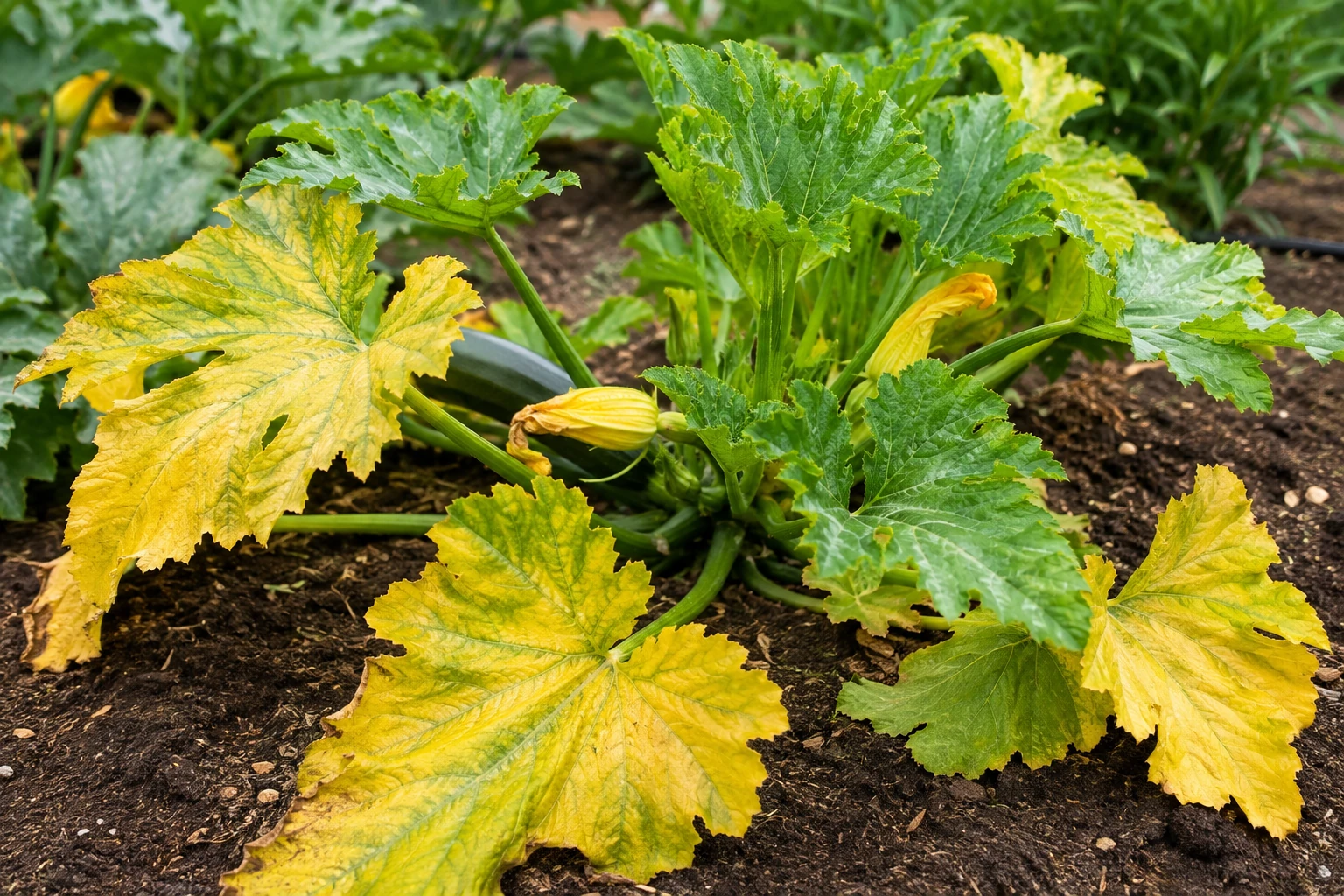
The oldest zucchini leaves can fade while the center continues making flowers and fruit. Widespread paling, a declining crown, or patchy lesions require a closer explanation than ordinary leaf turnover.
Look Beneath a Pale Leaf
Powdery mildew leaves a surface coating; downy mildew and other diseases can produce distinct patches. Natural silver markings on some zucchini cultivars are part of the leaf and should not be treated as infection. Check whether markings are stable across healthy leaves or expanding into damaged tissue.
Start with the leaf pattern
If the outer, oldest leaves are fading first while the center of the plant looks green and active, you are often looking at a natural turnover issue. Zucchini grows fast and sheds older foliage as it pushes new stems, flowers, and fruit. That kind of yellowing is usually not serious.
If the whole plant looks washed out or weak, think about fertility and root function. Heavy-feeding summer squash uses nitrogen quickly, especially in containers, raised beds, or lean soil. When nitrogen is short, leaves lose deep green color and the plant slows down.
If yellowing comes with limp stems, a dull crown, or persistently wet soil, roots may be stressed. Zucchini likes steady moisture, but it does not like constantly saturated soil. Roots sitting in soggy conditions cannot breathe well, and the plant begins to show that stress in the leaves.
Common causes of yellow zucchini leaves
1. Normal aging
Large outer leaves naturally wear out over time. If the center is healthy, flowers are forming, and fruit is setting, prune off the worst old leaves and continue normal care.
2. Nitrogen deficiency
Pale yellow lower leaves, slow growth, and a generally hungry look often point to low nitrogen. Side-dress with compost, diluted fish emulsion, or a balanced vegetable fertilizer. Avoid overfeeding, because too much nitrogen can produce lush leaves but fewer fruits.
3. Watering problems
Both dry spells and constant wetness can yellow zucchini leaves. Water deeply, then let the top layer of soil dry slightly before watering again. The goal is even moisture, not daily light sprinkling.
4. Powdery mildew or other disease
If leaves also look spotted, patchy, or dirty, disease may be involved. Remove badly affected leaves, avoid wetting foliage late in the day, and space plants so air moves through the canopy.
- Check the youngest leaves first. Healthy new growth means the plant can usually recover.
- Water deeply at the base instead of frequent shallow watering.
- Feed only if the plant truly looks hungry.
- Prune old or heavily damaged leaves to improve airflow.
- Mulch the soil to keep moisture more even and roots cooler.
Keep the Crown Dry and Visible
Clear dead leaves around the crown without damaging it or exposing all developing fruit. Water the root zone and avoid burying the stem base under wet mulch. If the crown becomes soft or the plant suddenly collapses, fertilizer is unlikely to solve the underlying problem.