Why Is My Zucchini Plant Wilting in Hot Weather?
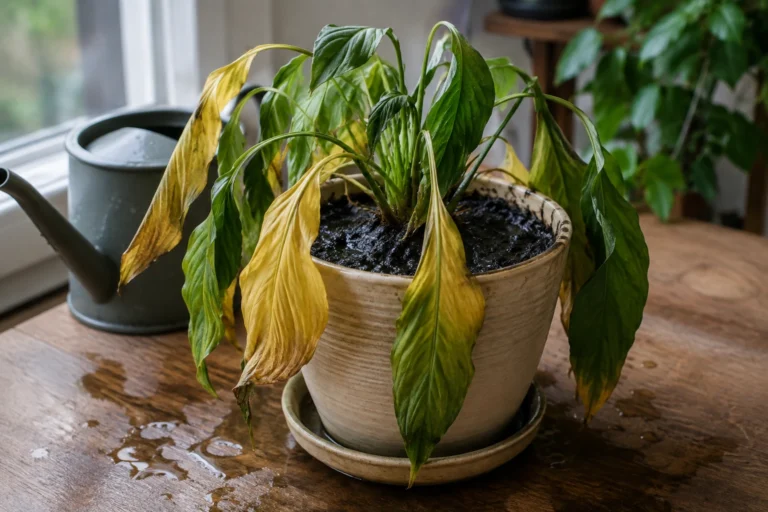
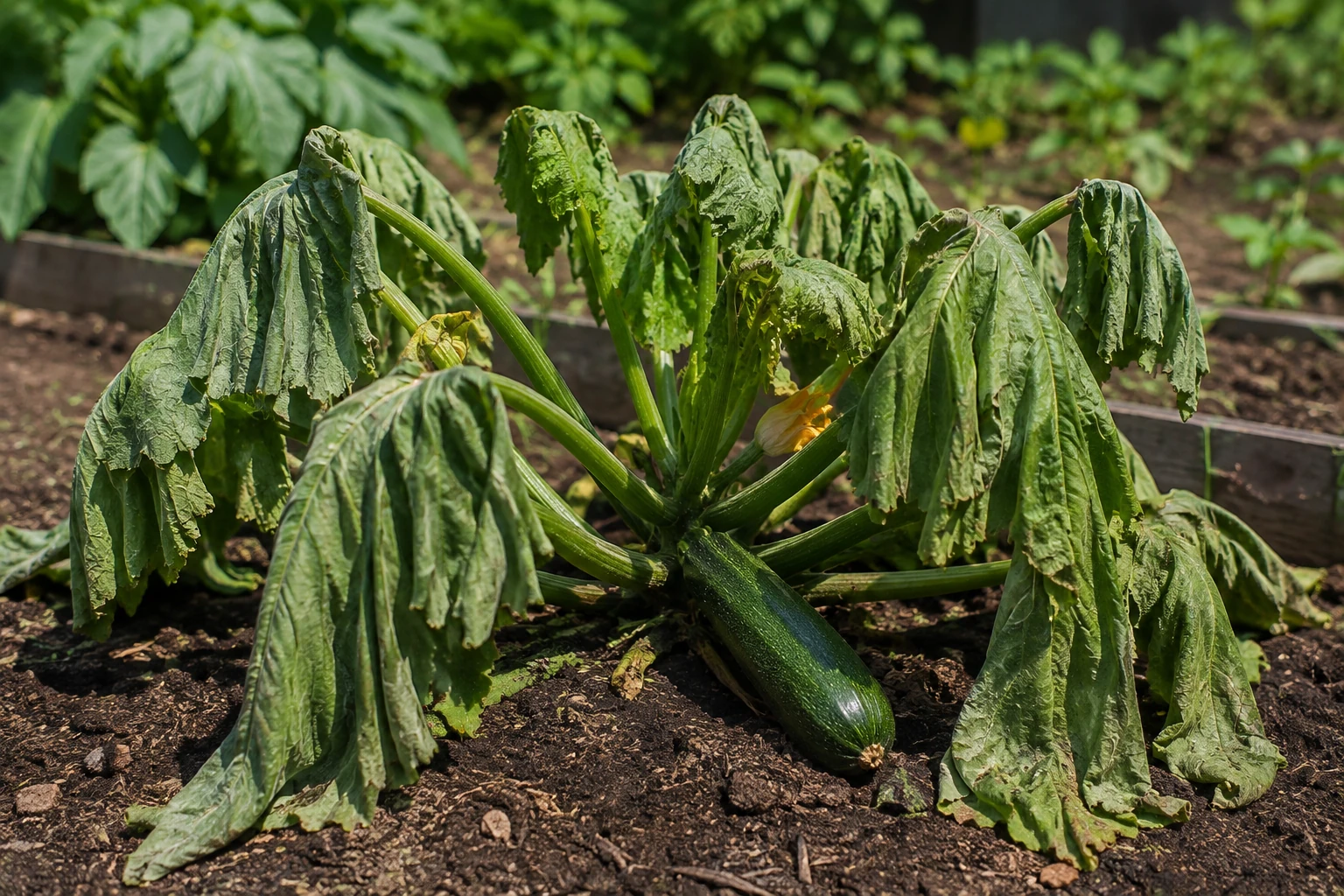
Large zucchini leaves may sag during intense afternoon heat and recover once transpiration slows. Persistent morning wilt calls for a root and crown check rather than an assumption that the weather is solely responsible.
Compare the Crown With the Leaf Blades
A firm crown and moist roots fit temporary heat stress more closely than a soft crown or a damaged stem. Look for actual frass or entry wounds if squash vine borer is locally common. Do not diagnose a borer from drooping leaves alone.
Separate Heat Wilt From a Real Water Problem
| What you see | Most likely clue | What to check next |
|---|---|---|
| Wilts only in afternoon | Heat stress | Check recovery after sunset |
| Wilts morning and evening; soil dry | Drought stress | Water deeply |
| Wilts while soil is soggy | Root stress | Improve drainage |
| One vine suddenly collapses | Stem or disease issue | Inspect crown and stem base |
Afternoon heat stress
During extreme heat, zucchini leaves can lose water faster than the roots can replace it. If the plant recovers later, avoid overwatering in response.
True drought stress
If soil is dry several inches down and wilt persists into cooler hours, give the plant a deep soak at the root zone.
Overwatering
Flooded roots cannot function properly. Water stress can occur even when soil is wet if oxygen is limited around the roots.
Flower and fruit stress
Heat and inconsistent water can also contribute to flower or small-fruit abortion in cucurbits. Stable moisture improves resilience.
Use Temporary Shade Without Trapping the Canopy
A ventilated shade cover can reduce extreme afternoon exposure while leaving airflow around the plant. Avoid wrapping foliage in material that retains heat. Check whether the plant recovers under cooler conditions before adding another irrigation to already moist soil.
Vigorous leaves and developing fruit can draw heavily on a zucchini root system during heat. If older leaves droop but the crown remains sound and the canopy recovers, preserve the plant rather than removing most of its foliage. A declining crown, persistent one-sided collapse, or stem debris justifies a different inspection even when the weather is hot.