Why Is My Basil Wilting?
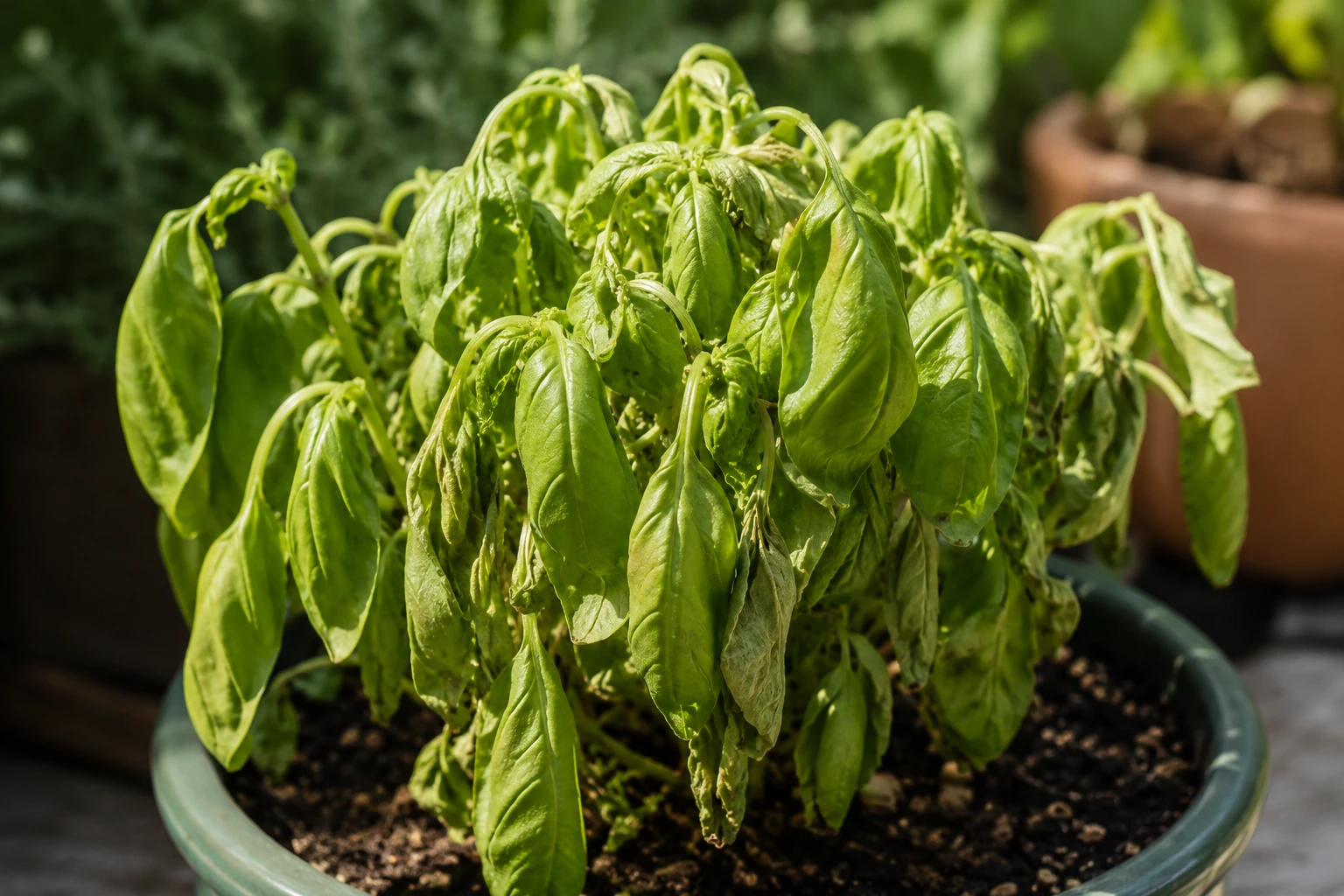
Basil can collapse quickly in a hot, dry container, yet a soggy pot can produce the same drooping leaves. Lift the pot and feel the root-zone mix before treating the symptom as thirst.
Check Whether Water Reaches the Root Ball
Very dry potting mix sometimes repels water, allowing it to run down the pot sides. Apply water slowly in stages and verify that the center becomes moist. Do not leave basil standing indefinitely in a bowl of runoff once the root ball is hydrated.
When wilt means thirst
Basil has soft, fast-growing tissues and loses water quickly in heat. If the pot dries out fully, the plant can collapse fast. The good news is that a thirsty basil often perks back up quickly after a deep watering.
When wilt means too much water
If the soil is already wet and the plant still droops, roots may be struggling from lack of oxygen. This type of wilt usually feels heavier and less reversible than simple thirst. Yellow leaves, a stale smell from the soil, or blackened roots all support this diagnosis.
Other possible reasons
- Heat stress during intense afternoon sun
- Cold nights or exposure to wind
- Root disturbance after transplanting
- Crowded plants competing in one small pot
How to help wilted basil recover
- Check the soil before watering. Do not guess.
- If dry, water thoroughly until excess drains out.
- If soggy, stop watering and let the root zone breathe.
- Give the plant morning sun and a little shade during extreme heat.
- Harvest lightly rather than heavily until recovery begins.
Inspect a Wilted Stem Near Soil Level
A dark, constricted, or soft stem base changes the outlook. Healthy roots cannot supply a shoot through badly damaged tissue. Remove severely failed plants and clean containers before reuse; watering more often cannot repair a rotting stem.
After a thirsty basil recovers, compare how quickly the pot dries again. Immediate repeat wilt can indicate a very small root volume, crowding, or uneven wetting rather than a need for constant saturation. Keep harvesting light until several shoots hold their posture, then review whether the plant needs more room or simply a more even irrigation method.