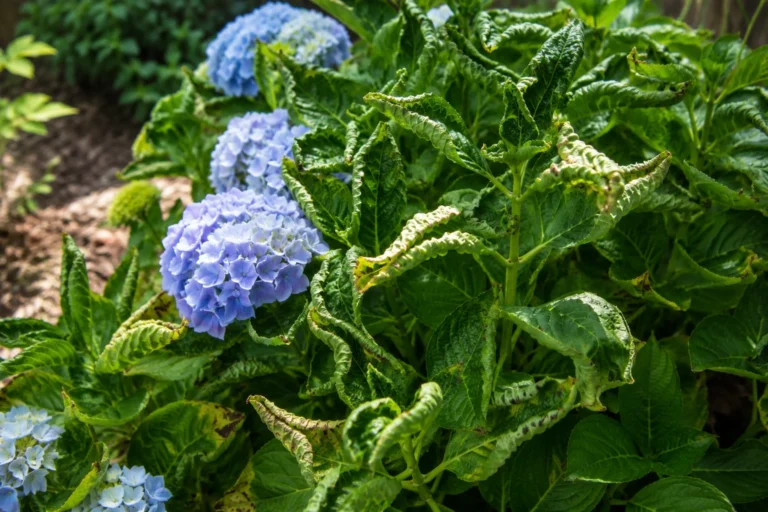
Why Isn’t My Hydrangea Blooming?
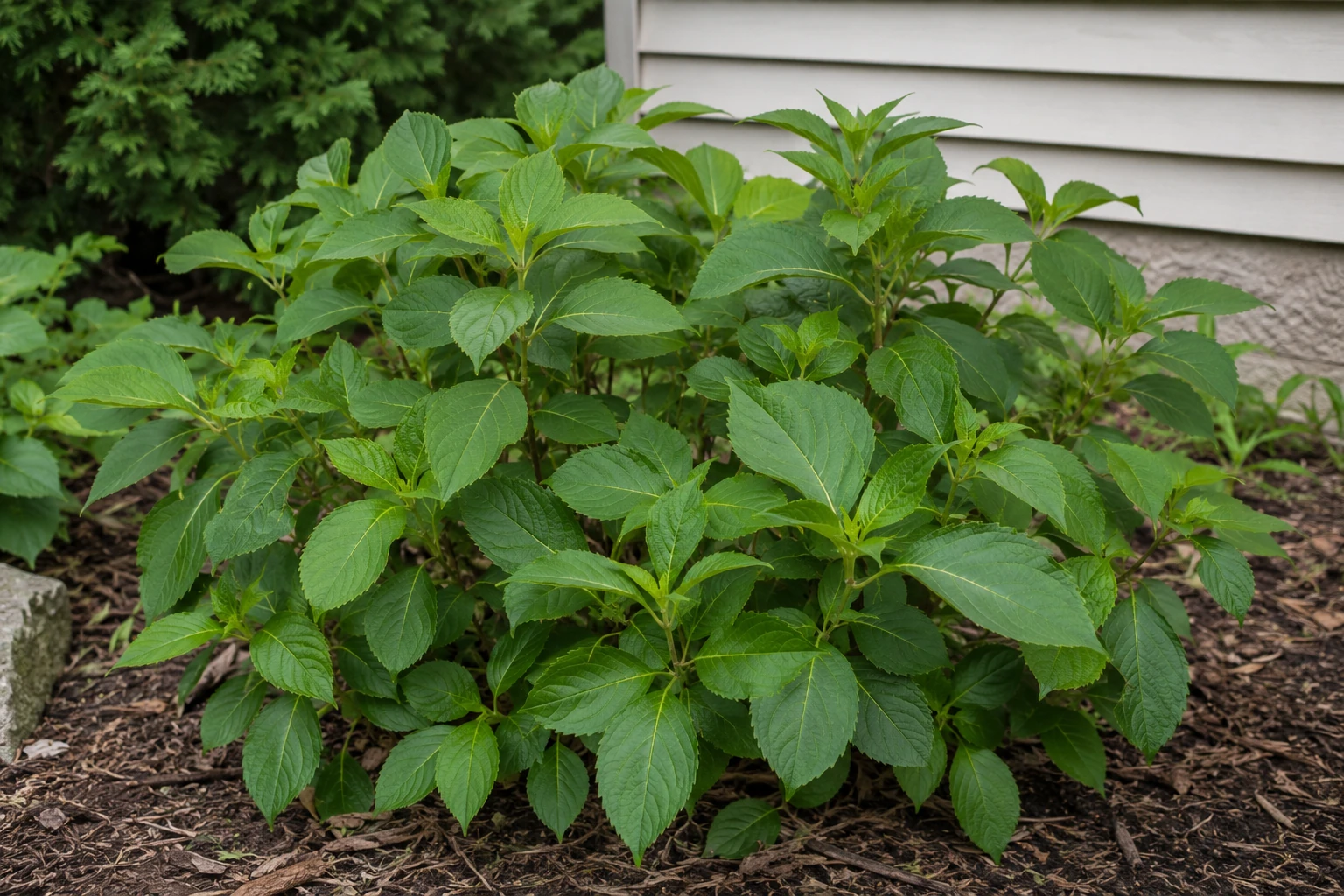
Hydrangea flowers depend on the plant type and the survival of its buds. A vigorous leafy shrub can miss flowering if last year’s bud-bearing stems were cut or damaged.
Recover the Plant’s Identity
Look for the original label or identify the hydrangea group before choosing a pruning date. Bigleaf and oakleaf types often carry flower buds on older wood; smooth and panicle types flower on new growth. Reblooming cultivars complicate that distinction, so their specific care guidance matters.
The most important question: what type of hydrangea is it?
Bigleaf and oakleaf hydrangeas usually set buds on old wood, which means next year’s flower buds may already be present before winter. If those buds are cut off in fall, winter, or early spring, the plant will grow leaves but produce few or no blooms. Panicle and smooth hydrangeas bloom on new growth and are more forgiving.
Top reasons hydrangeas do not bloom
- Pruning at the wrong time
- Late frost or winter cold damaging flower buds
- Too much shade and not enough morning sun
- Excess nitrogen causing leafy growth
- Young or recently transplanted plant still settling in
| Clue | Likely reason |
|---|---|
| Healthy leaves, zero buds | Pruning or winter damage |
| Tall soft green growth | Too much nitrogen |
| Few flowers in deep shade | Not enough light |
| Plant was recently moved | Establishment stress |
How to get blooms back
- Stop pruning until you know which type of hydrangea you have.
- Give the plant at least some morning sun if possible.
- Avoid heavy nitrogen feeding; use a balanced bloom-friendly approach.
- Protect buds from severe late frosts when practical.
Be patient with recovery
When hydrangeas miss one blooming season because of pruning or winter damage, they often recover the following year with corrected care. The key is not to keep repeating the same pruning mistake.
Make This Season a Bud-Preservation Season
If the variety is uncertain, limit cutting to clearly dead or broken stems. Note where any flowers appear and when growth starts next spring. Changing fertilizer cannot recreate buds already removed, and repeated corrective pruning may delay another season’s bloom.