How to Hand Pollinate Zucchini
Zucchini hand pollination requires an open female flower and fresh pollen from a compatible male flower. The tiny fruit behind the female bloom helps identify the right target before you begin.
How to Identify the Flowers
| Flower type | How it looks | Role |
|---|---|---|
| Male flower | Long thin stem behind the bloom | Supplies pollen |
| Female flower | Small swelling like a baby zucchini behind the bloom | Develops into fruit after pollination |
Transfer Pollen While Both Flowers Are Fresh
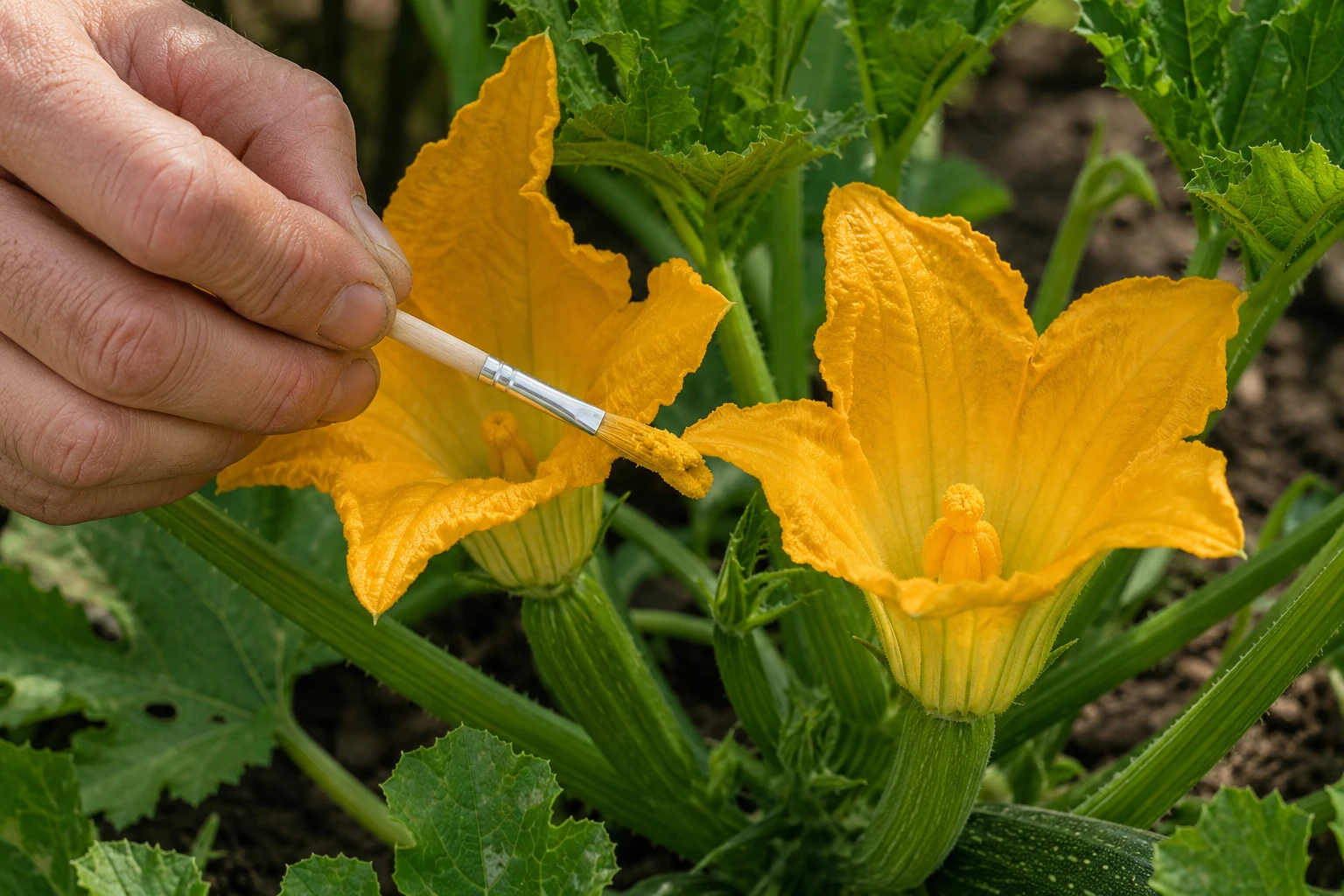
Work during the morning opening period. Use the pollen-bearing center of a male flower or a clean soft brush to contact the female stigma gently. A closed, spent, or already aborting bloom is not a good target, and pollen from unrelated vegetables will not help.
Work early in the day
Flowers are freshest in the morning and pollen transfers best then. Try to pollinate shortly after blooms open.
Collect pollen from a male flower
You can remove a male flower and brush its anther directly onto the female flower, or use a small soft brush to move pollen.
Pollinate the female bloom
Gently touch the pollen to the center of the female flower. Make sure pollen contacts the stigma well.
Repeat when needed
During low pollinator periods, you may need to repeat the process for newly opened flowers on several mornings.
Track the Tiny Fruit Over the Next Days
Successful development appears as continued growth behind the faded flower. Mark the pollinated bloom rather than assuming petal drop means failure. If young fruit still shrivels, review heat, moisture, and plant vigor; hand pollination cannot overcome every source of abortion.
If no male flower is open when a female bloom appears, brushing the female with an empty tool will not help. Confirm a source of fresh compatible pollen before attempting transfer. Young plants sometimes need time before both flower types overlap reliably. Keep a record of female-fruit growth so a missed flowering window is not mistaken for a persistent fertilizer deficiency.