How to Prune Tomato Plants
Tomato pruning depends on whether the plant keeps extending new flowering stems or has a more limited determinate habit. Choose a training goal before removing suckers simply because they are present.
When pruning helps most
- To improve airflow around dense plants
- To reduce lower leaves touching wet soil
- To train indeterminate tomatoes to stakes or strings
- To make harvest and monitoring easier
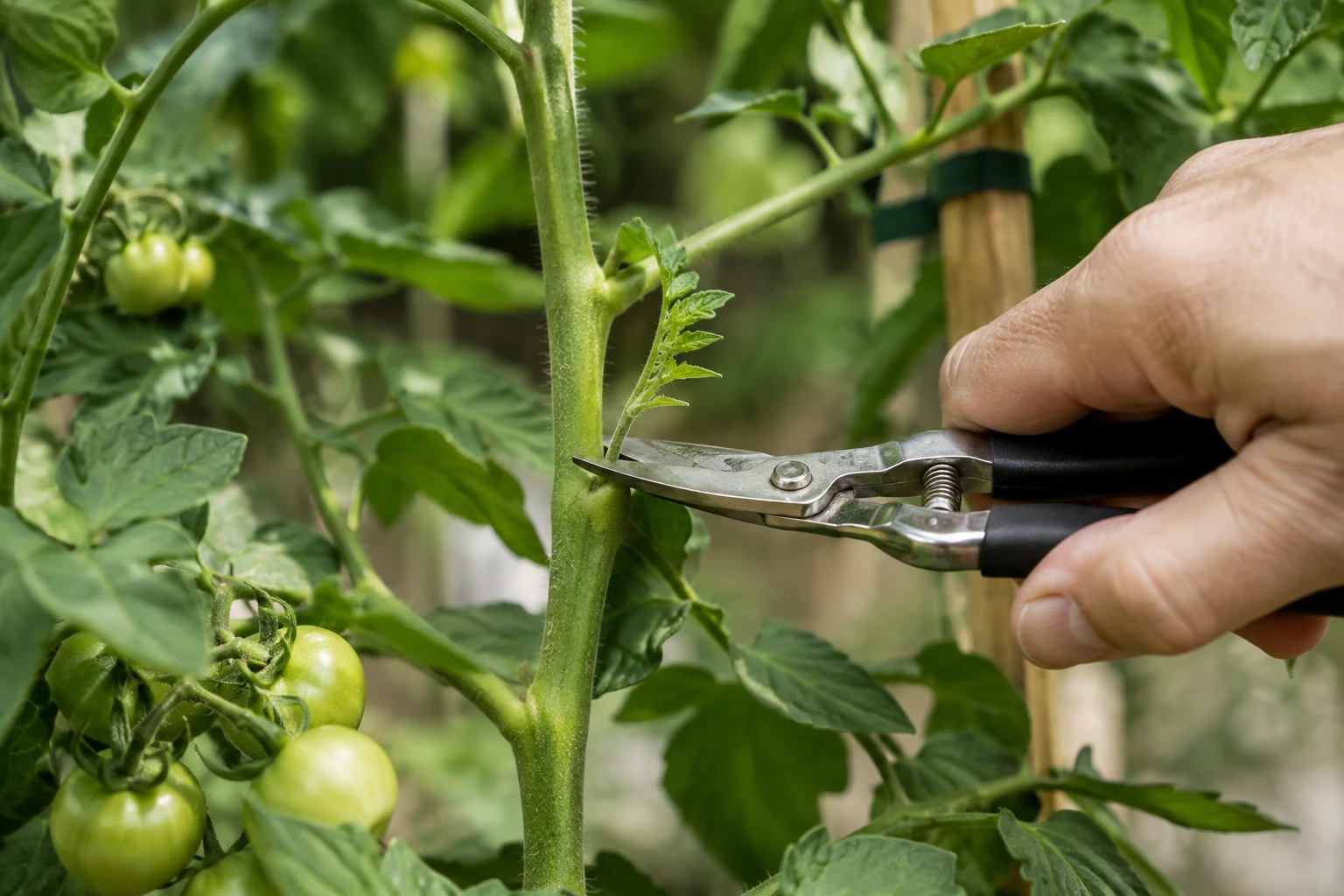
Identify the Sucker at the Leaf Axil
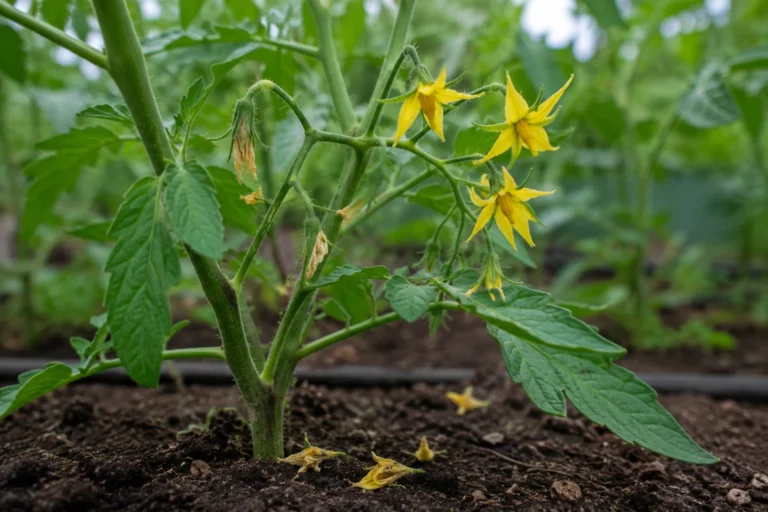
The leaf branch and the main stem meet at a junction where a new shoot can develop. That shoot is a sucker, not the flower cluster. Learn the distinction on a small shoot before cutting larger growth. For indeterminate plants, selective sucker removal can simplify a stake or string system; leaving more stems requires adequate support and spacing.
Start at the bottom
Remove any yellowing or damaged lower leaves, especially those brushing the soil. This helps reduce splash-up and improves ventilation near the stem base.
Know what a sucker is
A sucker grows in the joint between a main stem and a leaf branch. On indeterminate tomatoes, removing some suckers helps control size and directs energy into fewer stems.
Do not overprune determinate varieties
Determinate tomatoes produce a more limited set of flower clusters. Heavy pruning can reduce yield, so keep pruning minimal on these varieties.
Use clean tools and dry weather
Make cuts with clean pruners or pinch small suckers by hand. Dry conditions reduce the chance of spreading disease.
Support plants after pruning
Tie stems to stakes or cages as they grow. Pruning works best when plants are also physically supported.
Common mistakes
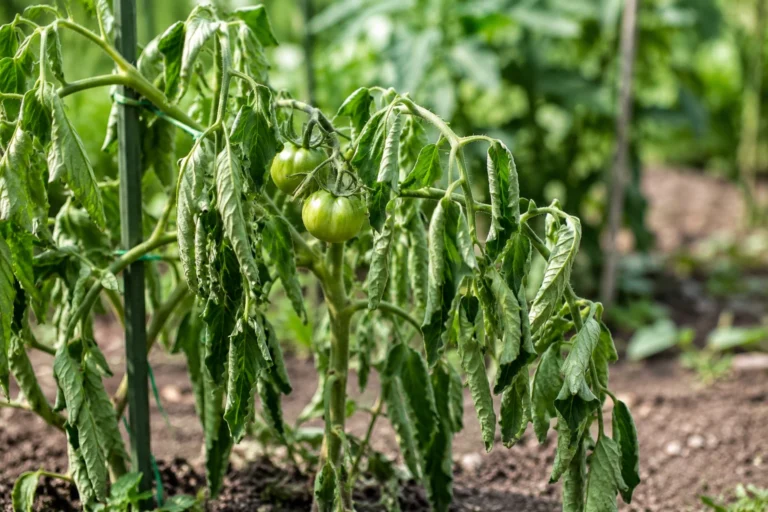
- Removing too much foliage during hot weather
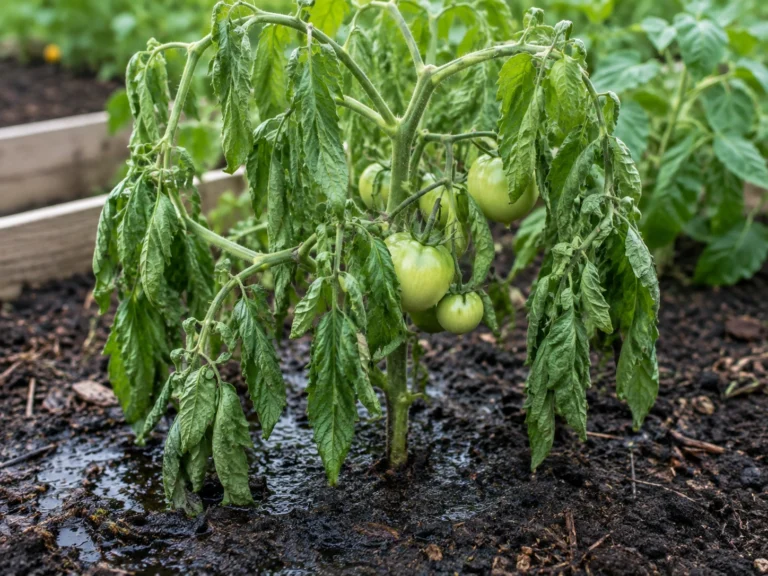
- Pruning wet plants and spreading disease
- Treating every variety the same way
Keep Fruit-Shading Leaves During Hot Weather
Healthy foliage shelters fruit from strong sun and supplies growth. Removing large amounts at once can trade a tidier shape for sunscald and reduced production. Determinate varieties usually need limited pruning because their flower-bearing structure is finite. Work with dry foliage, clean tools between suspect and healthy plants, and remove diseased lower leaves selectively. After pruning, review ties and support so the remaining stems do not bend under concentrated fruit weight.