How Often Should You Water Orchids?
Most indoor moth orchids need a thorough watering followed by a period of drainage and drying toward near-dry conditions. Bark and tightly packed moss behave differently, so a weekly rule can be misleading.
Check the Center of Moss, Not Just the Surface
Moss can feel dry above while remaining wet around roots. A clear pot helps, but inspect moisture and root firmness together. For phalaenopsis, avoid both constant saturation and extended complete dryness; other orchid groups may have different seasonal requirements.
How to Judge Orchid Watering
| Condition | What it means | Response |
|---|---|---|
| Potting mix still cool and damp | Not ready yet | Wait and recheck later |
| Roots silvery, bark dry | Likely time to water | Water thoroughly |
| Leaves limp with dry mix | Plant may be thirsty | Increase consistency |
| Musty, soggy medium | Too wet for too long | Reduce watering and inspect roots |
Learn your potting mix
Chunky bark dries much faster than moss-heavy mixes. A clear orchid pot also lets you monitor roots and moisture more easily.
Water thoroughly, then drain
Run water through the potting mix completely and let excess water escape. Never let the pot sit in standing water for long.
Adjust for your environment
Warm, bright rooms dry pots faster. Cool, dim locations slow drying and reduce how often watering is needed.
Watch the roots
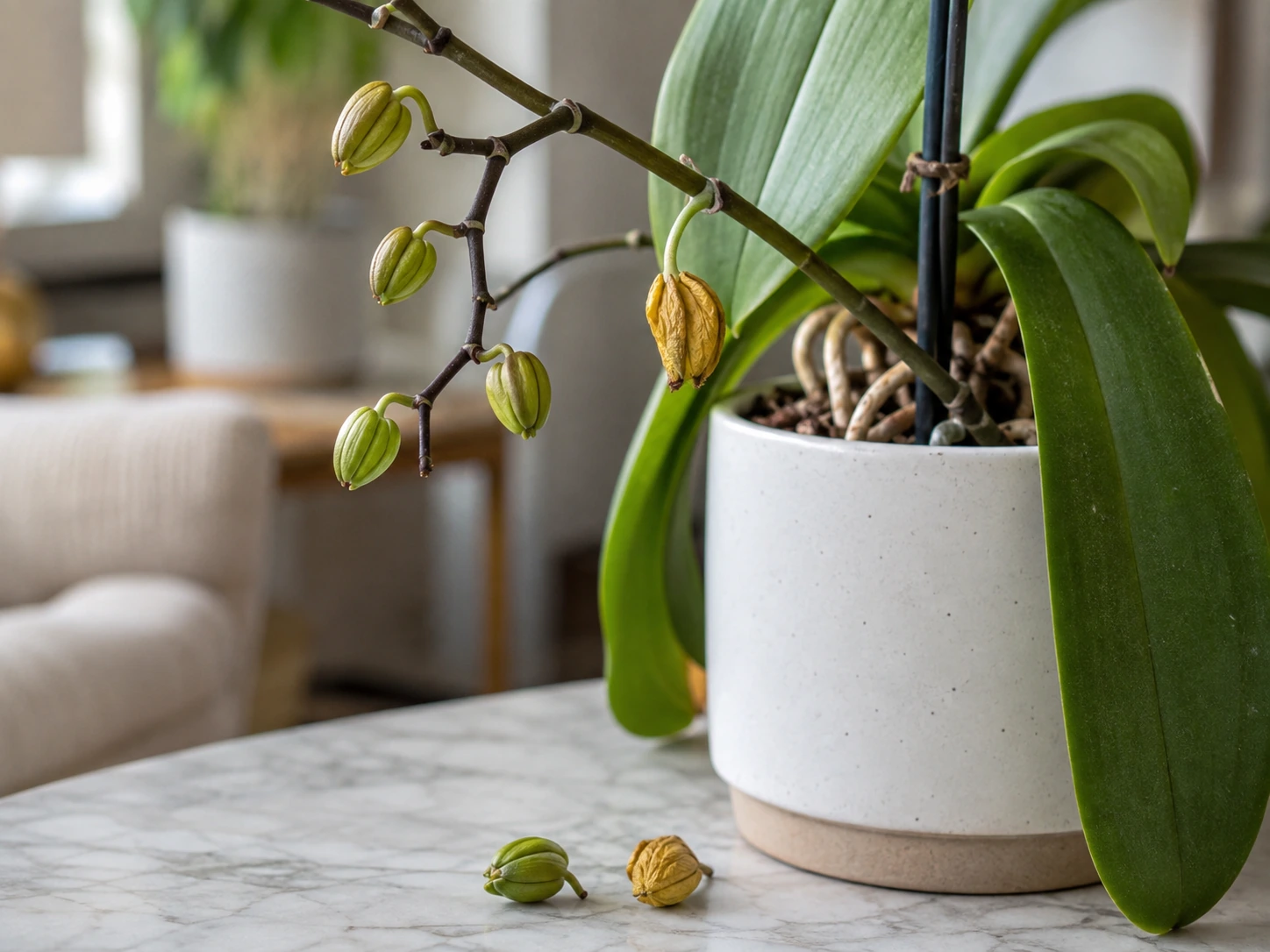
Plump, firm roots signal a healthier hydration balance. Mushy or brown roots often point to overwatering.
Water the Medium Without Flooding the Crown
Let excess leave the pot and empty the outer container. Remove accidental retained water from the leaf crown carefully. Root color can assist assessment, but color alone varies by condition and species; firm intact roots are more informative than a single color rule.
For a typical indoor moth orchid, compare the pot after a thorough watering with its weight near the next appropriate watering point. That difference builds a practical reference for your medium and room. Do not infer that bark always needs the same interval: piece size, container ventilation, root mass, and season all change how long usable moisture remains.