Bacterial Leaf Spot on Peppers: Limit Spread in the Bed
Suspected bacterial leaf spot calls for careful handling of wet foliage and splashing water. This guide focuses on managing an affected planting while protecting nearby healthy peppers.
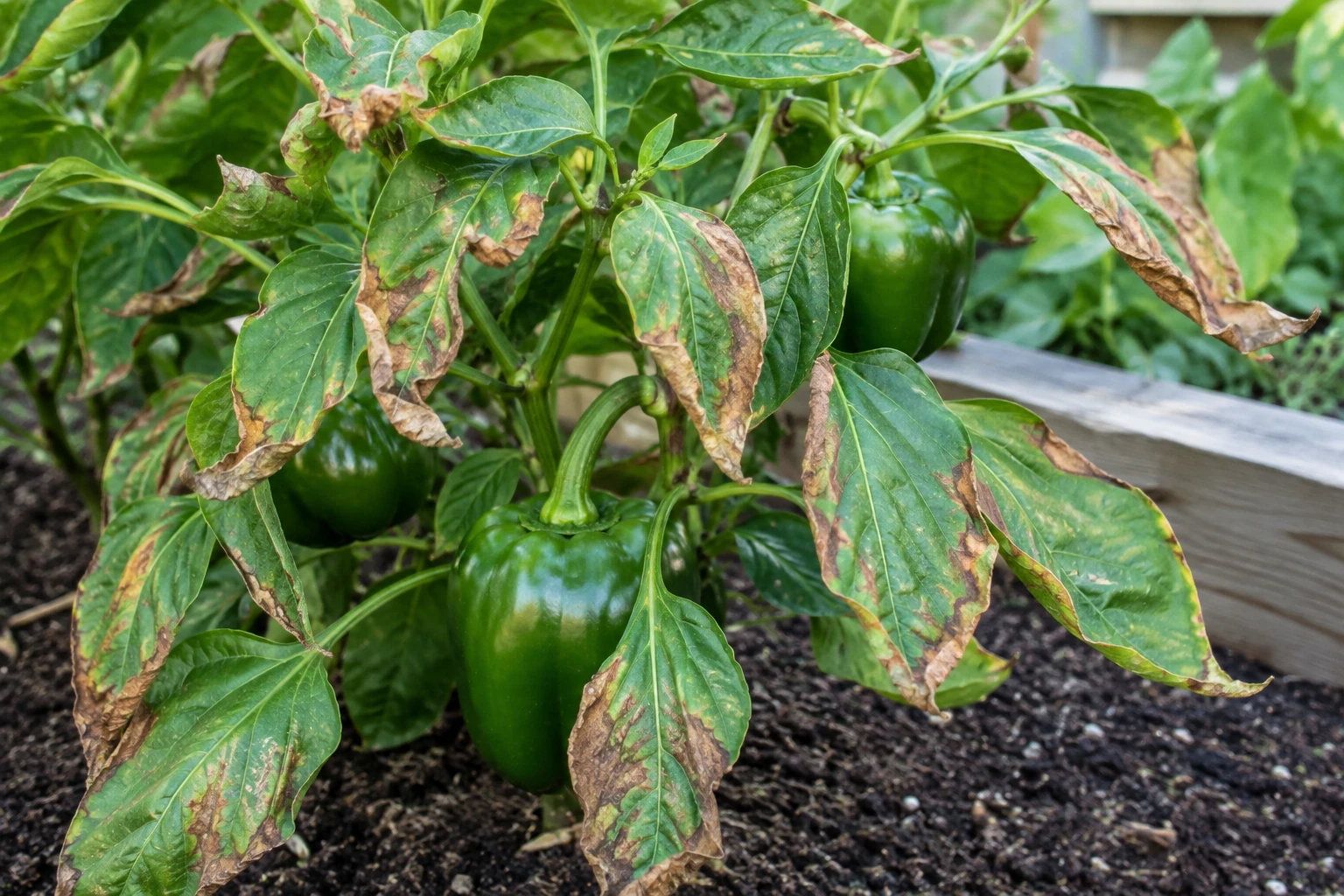
What Bacterial Leaf Spot Looks Like
| What you see | Most likely clue | What to check next |
|---|---|---|
| Small water-soaked spots | Early bacterial leaf spot | Watch lesions enlarge |
| Tan or gray centers with dark borders | Developing infection | Remove badly affected leaves |
| Yellowing and leaf drop in wet weather | Disease spreading | Reduce leaf wetness |
| Raised rough spots on fruit | Bacterial spot possible | Improve sanitation and monitor |
Wait for Dry Foliage Before Working
Tying, harvesting, and removing leaves can transfer bacteria when plants are wet. Plan these tasks after foliage dries and clean tools between affected and healthy plants. Avoid removing so many leaves that fruit becomes fully exposed to sun.
Remove heavily infected material
Prune badly affected leaves and dispose of them rather than composting heavily diseased material. Clean tools before moving to healthy plants.
Keep foliage dry
Water at the soil line instead of overhead. Splashing water can move bacteria from infected tissue to healthy leaves.
Avoid working with wet plants
Handling plants when leaves are wet can spread bacterial disease through the bed. Wait until foliage is dry before pruning, tying, or harvesting.
Improve prevention next season
Use clean seed or transplants, rotate peppers away from heavily infected locations, and clean up crop debris at the end of the season.
Treat Prevention as the Main Chemical Goal
No garden spray restores already damaged leaves. If a locally recommended labeled product is appropriate, its role is to limit further infection rather than erase lesions. Repeated ineffective spraying is a reason to confirm the diagnosis and review resistance issues with an extension service.
When only a few leaves are infected, targeted removal may be practical. When most of the canopy is affected, repeated leaf stripping can weaken the plant without controlling the disease. Discuss the scale of infection and local recommendations before continuing. Do not move suspect plants, irrigation splash, or contaminated tools into an unaffected part of the garden.