How to Propagate Pothos Cuttings in Water
A pothos leaf without a node cannot develop into a complete new vine. Identify the stem node before cutting, then keep that point in water while leaving foliage above the surface.
What You Need
| Item | Why it helps | Tip |
|---|---|---|
| Healthy vine cutting | Provides viable nodes | Choose non-damaged growth |
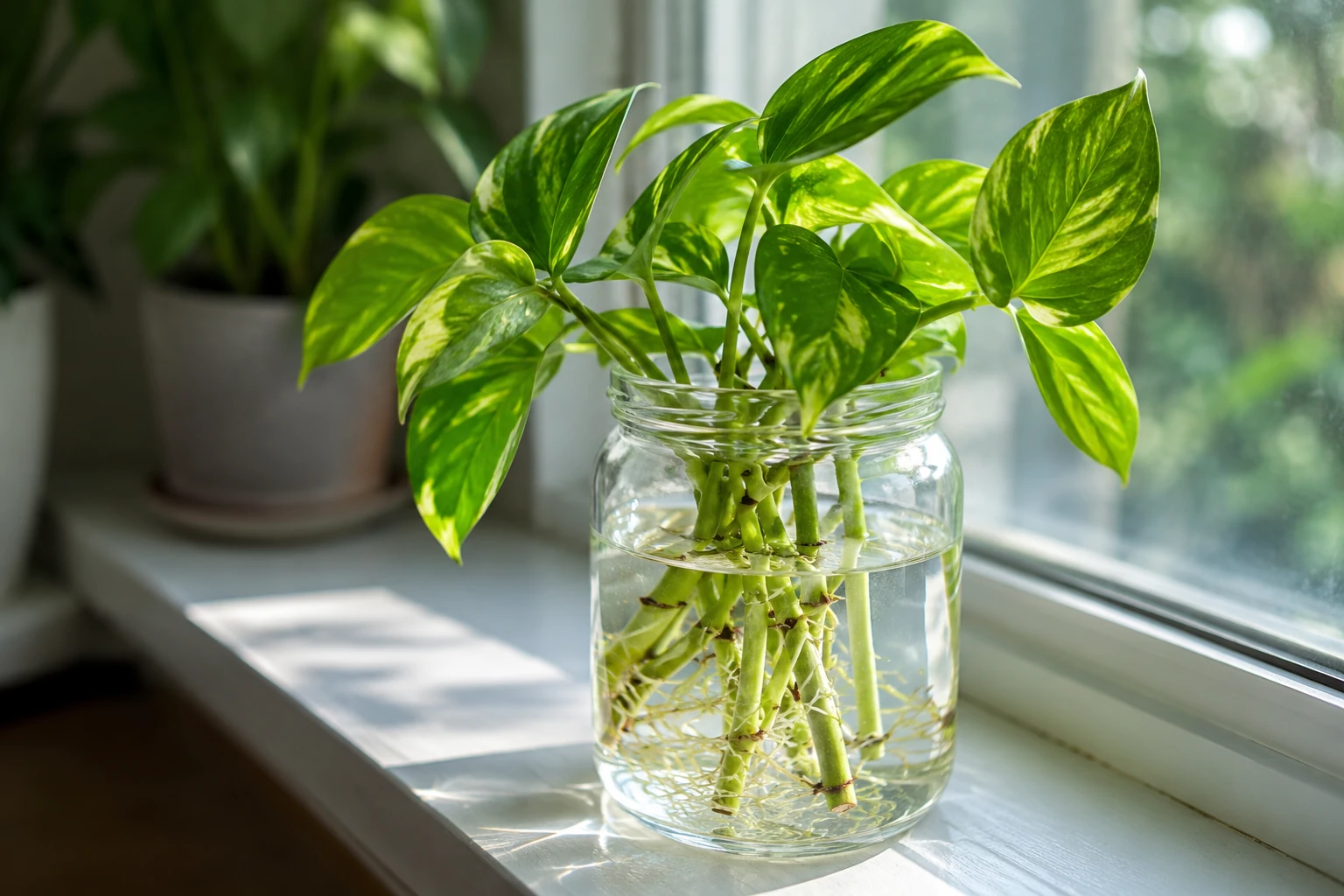
| Clean container of water | Supports rooting | Keep the node submerged |
| Bright indirect light | Promotes steady growth | Avoid harsh direct sun |
Locate the Node Beside the Leaf Attachment
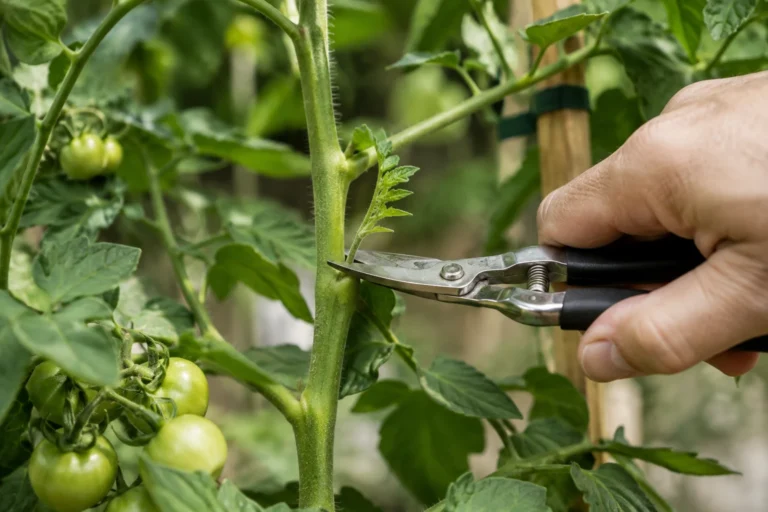
Look for the stem joint and often a small aerial-root nub. A leaf blade and petiole alone are not enough for a new shoot. Make a clean cut on healthy stem tissue and remove foliage that would be submerged, rather than leaving it to decay in the vessel.
Cut below a node
The node is the small bump where roots and leaves can emerge. Make sure each cutting includes at least one node.
Remove lower leaves
Leaves sitting underwater can rot, so strip off any foliage that would be below the water line.
Change the water regularly
Fresh water helps keep cuttings healthy. Top up as needed and replace cloudy water completely.
Pot up after roots develop
Once roots are a couple of inches long, move the cuttings into potting mix and keep them lightly moist while they adjust.
Transfer a Rooted Cutting Without Flooding It
When roots are established, pot into an airy mix and keep moisture appropriate while new roots adapt. Water roots may change as the cutting transitions to soil. Do not place the small cutting in a huge wet pot or assume cloudy water is harmless indefinitely.
Use a clean vessel and leave room for the node to remain submerged as water evaporates. A submerged leaf can decay and cloud the water, so remove it early. Keep the cutting in appropriate indirect light rather than direct heat through the glass. If the stem turns soft, remove failed material and reassess rather than allowing decay to contact other cuttings in the same container.