When Should I Repot My Houseplant?
Repotting is worthwhile when the root environment limits healthy growth, not whenever one root appears at a drainage hole. Inspect crowding and the condition of the mix before deciding between a larger pot and a medium refresh.
Choose the Job the Plant Actually Needs
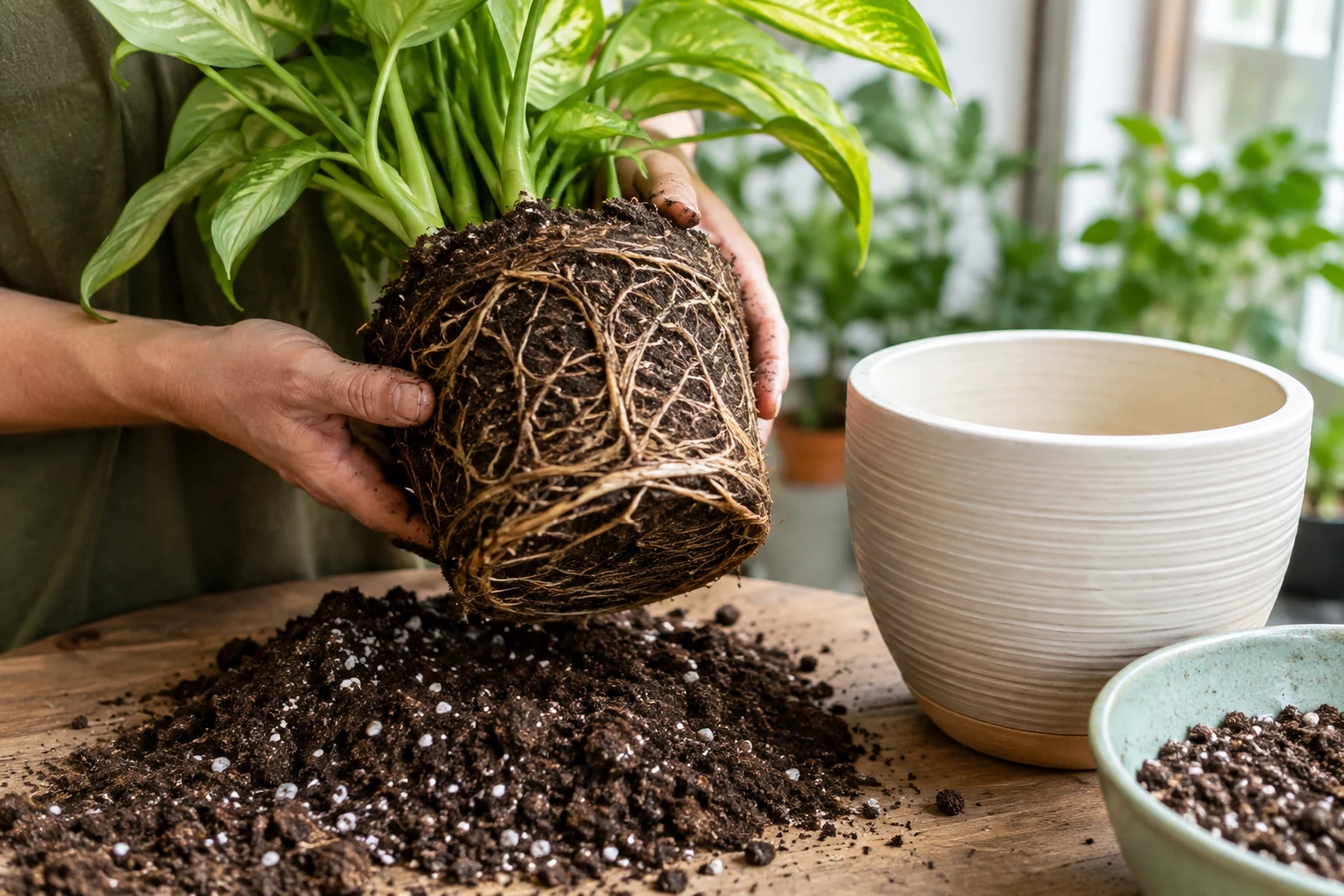
A dense healthy root mass with little remaining mix may need a modest size increase. A small root system in stale saturated medium may need fresh mix in the same size or a smaller effective volume. Simply moving either plant into a much bigger pot can prolong wetness and complicate recovery.
Signs it is time
- Roots growing from drainage holes
- Plant dries out unusually fast
- Water sits on top or runs straight through
- Growth is stalled and the plant is crowded
- The mix smells sour or has compacted badly
When to wait
Do not rush to repot a badly stressed plant unless the potting mix or roots are the core problem. Sometimes stabilizing light and watering first is safer.
How to repot with less stress
Choose a pot only slightly larger, use an appropriate mix, and water the plant lightly after repotting. Avoid jumping several pot sizes at once.
Delay Routine Repotting but Address Active Rot
For a healthy plant, active growth often makes recovery easier; recently purchased plants may benefit from a period of observation. A failing root system in persistently wet degraded mix is a different case and may need prompt intervention. Support the stem, loosen roots only as appropriate for the species, and keep aftercare stable. Fertilize according to the fresh mix and plant needs rather than adding a strong feed to an already stressed root ball.
Repotting can alter water use immediately, especially when the medium changes from dense peat to a chunky mixture. Recheck the new setup rather than keeping the old interval without observation. If the plant was severely root-bound, slow thorough watering helps wet both the original ball and surrounding fresh mix. Support tall plants while roots establish so rocking does not create further disturbance.