What Scale Insects Look Like: Covers, Honeydew, and Crawlers
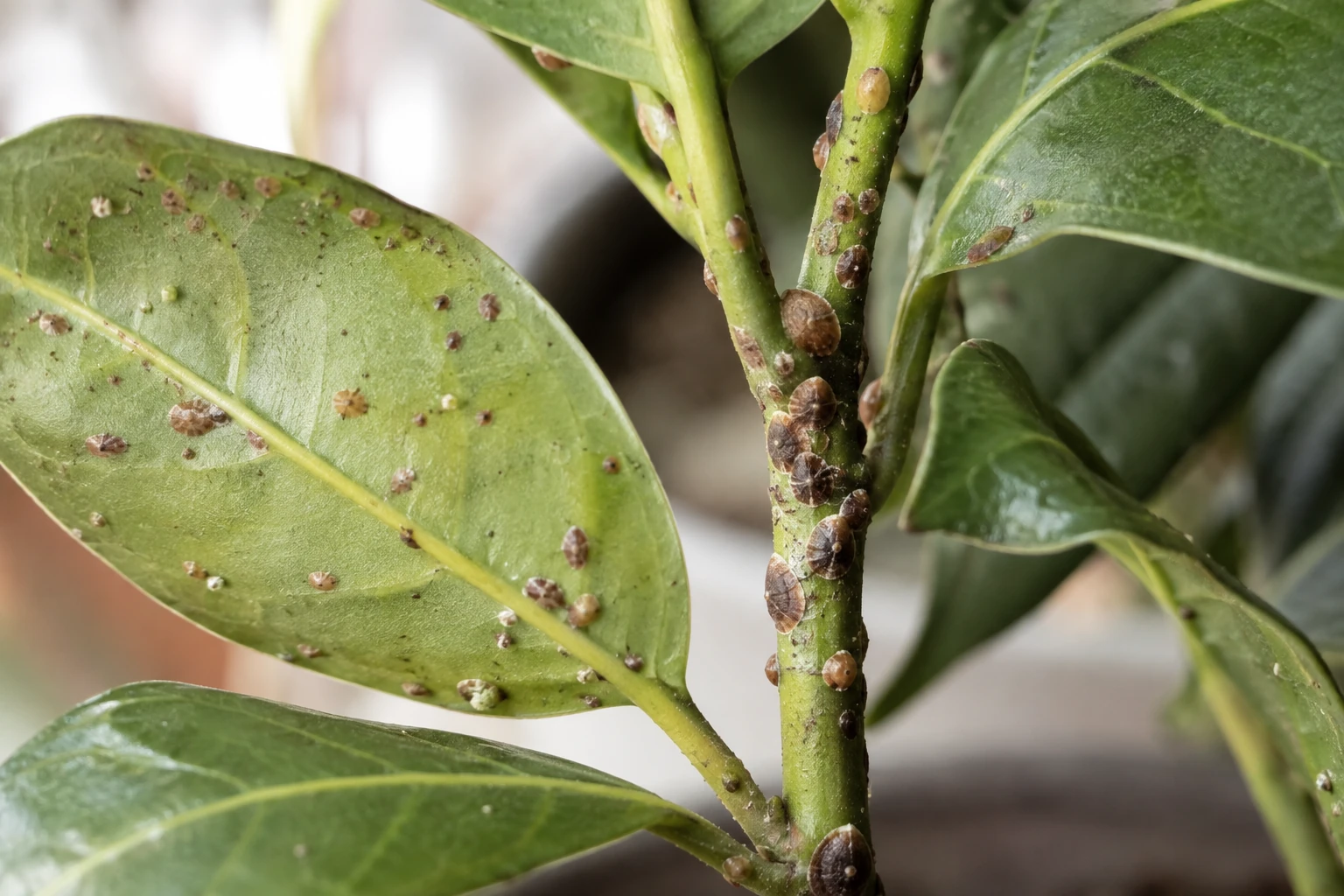
Scale can resemble a stem scar more than a recognizable insect. This identification guide separates attached insects from normal plant texture before any removal or treatment decision.
Inspect a Lifted Cover With Magnification
Gently lift one suspicious bump on sturdy tissue. An insect or body beneath a separate covering supports scale; continuous plant tissue supports a different explanation. Some coverings remain after the insect dies, so inspect several sites for evidence of an active population.
What Scale Looks Like
| Feature | Typical scale clue | What it can be confused with |
|---|---|---|
| Small brown or tan bumps | Fixed to stems/leaves | Dirt or corky plant tissue |
| Sticky residue | Honeydew from soft scales | Plant sap or spills |
| Clusters along veins | Feeding sites | Natural stem texture |
| Yellowing, weak growth | Heavy infestation | Water or nutrient stress |
Look at stems and leaf undersides
Scale commonly settles in protected areas such as stem joints, along major veins, and under leaves. Use bright light and examine the entire plant, not just the damaged leaf.
Try a gentle physical check
Dirt usually wipes away. Many scale insects can be lifted with a fingernail or cotton swab, although some attach firmly. Avoid damaging the stem while checking.
Look for honeydew and sooty mold
Some scale species excrete sticky honeydew. The residue can collect on leaves and furniture and may support dark sooty mold growth.
Inspect nearby plants
Once scale is confirmed, check surrounding plants. Early infestations are easier to manage before large colonies develop.
Identification vs. Treatment
This guide focuses on recognizing scale correctly. Once confirmed, isolate the plant and follow a targeted control plan rather than treating every brown spot as an insect problem.
Lack of Honeydew Does Not Exclude Scale
Soft scales commonly produce sticky residue, while armored scales generally do not. Crawlers can be tiny and briefly mobile before settling. Record close photographs of covers and their location along stems or veins to support identification rather than relying on brown color alone.