Rose Buds That Will Not Open: Balling, Thrips, and Decay
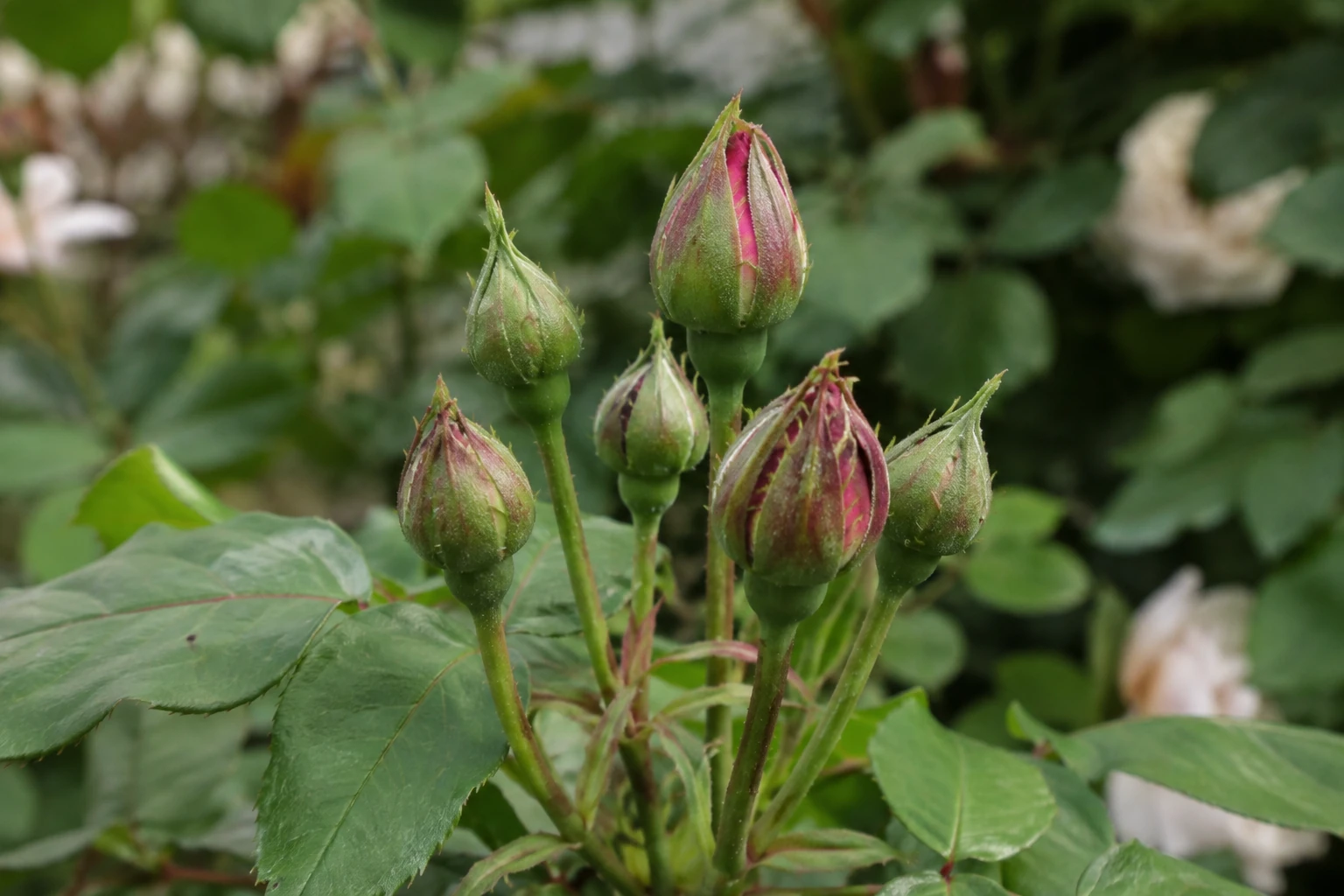
A rose bud can remain closed because damp outer petals stick together, insects feed inside, or tissue begins to rot. Inspect a failed bud before assuming that more water or fertilizer will make the next bloom open.
Unfold One Failed Bud for Evidence
Choose a bud already unsuitable for display and inspect it over white paper. Narrow insects and feeding scars support thrips involvement; gray fuzzy growth and soft petals suggest decay. Firm inner petals beneath stuck outer layers can fit balling after wet weather. The pattern may vary between rose varieties, especially densely petaled blooms.
Why Rose Buds Fail to Open
| What you see | Likely cause | What to check |
|---|---|---|
| Outer petals stuck together | Bud balling after wet weather | Recent rain, humidity, dense petals |
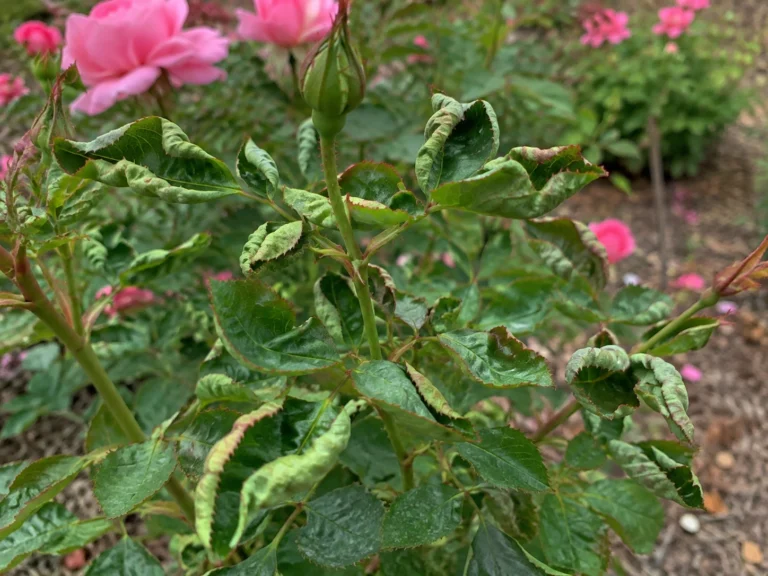
| Distorted buds with streaked petals | Thrips | Open a bud and inspect inside |
| Soft brown tissue or gray fuzz | Botrytis | Moisture, airflow, infected petals |
| Dry buds during hot weather | Heat or drought stress | Soil moisture and afternoon exposure |
Remove buds that are already ruined
Once a bud is badly browned, moldy, or tightly balled, it rarely becomes a good flower. Removing it redirects energy toward new buds and reduces decaying material around the plant.
Keep flowers drier
Water roses at the soil line instead of wetting buds and foliage. Better airflow and morning watering help petals dry faster after rain or dew.
Check for thrips
Gently open one failed bud over a white sheet of paper. Tiny narrow insects moving inside the flower are a clue that thrips may be interfering with bloom development.
Avoid Drought While Rose Buds Develop
Roses under drought stress may abort buds or produce flowers that do not open cleanly. Deep, consistent watering is more useful than frequent shallow watering.
Watch the next flush of buds
Old damaged buds will not recover. The real test is whether new buds open normally after weather improves and care conditions are corrected.
Judge the Next Flush, Not the Ruined Bud
A badly browned, moldy, or damaged bud is unlikely to become a sound flower. Remove failed material selectively, keep irrigation at the soil line, and preserve airflow. If the next buds open normally once weather improves, a persistent chemical-control program may be unnecessary. When insects are confirmed, choose a rose-compatible labeled method that accounts for pollinators and hidden feeding sites rather than spraying blindly into every blossom.